According to the several sources, this actually happened. A paramedic in North Carolina got into a small flying machine, flew straight to a 911 patient, and got there 20 minutes before the ambulance. Twenty whole minutes. For someone having a heart attack or bleeding badly, that kind of time gap can literally save their life.
This went down on August 11, 2026, in Hyde County, North Carolina. And yes — this is the first time anyone in America has used a flying vehicle on a real 911 call. Not a drill. Not practice. A real person needed help and the paramedic flew to them.
Here’s the actual story
Hyde County is out in eastern North Carolina. Think swamps, islands, long empty roads, and the Outer Banks area including Ocracoke Island. If you call 911 out there, the ambulance has to drive through all of that. Sometimes it takes 30, 40, even 50 minutes to reach you. That is way too long when someone is seriously hurt.
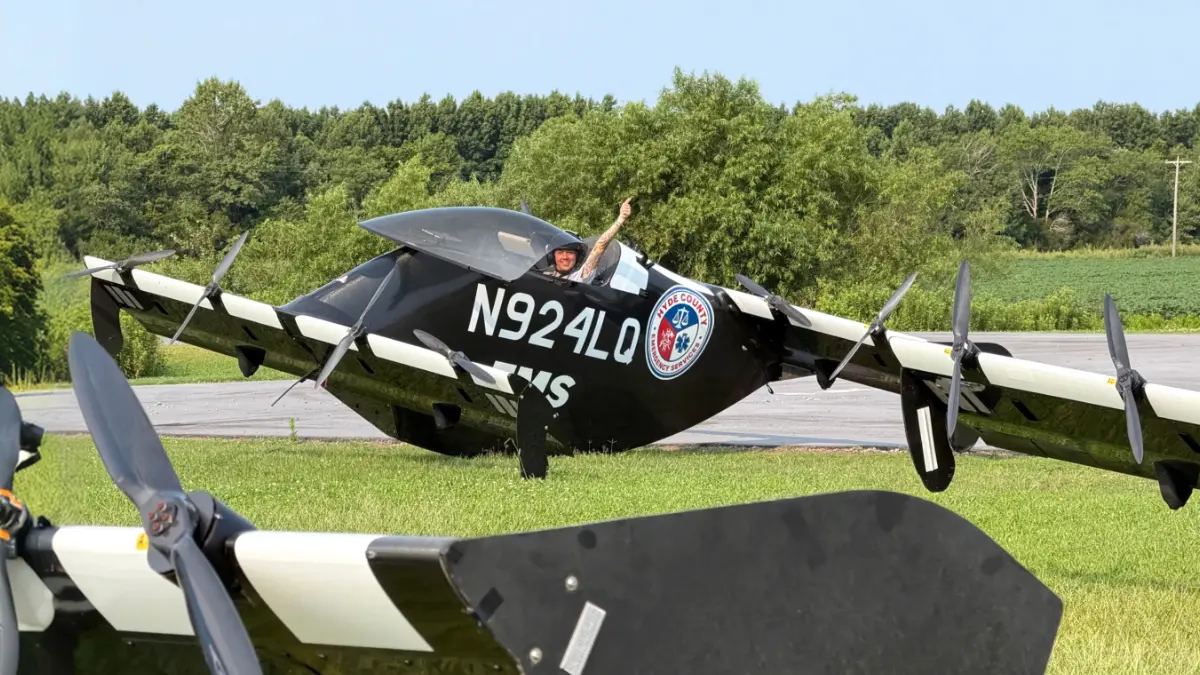
So here is what they did. On two real 911 calls, a paramedic hopped into this small one-person flying vehicle called the Pivotal BlackFly. He flew straight to where the patient was. No roads. No traffic. No detours around swamps. Just straight there through the air.
On one of those calls, he landed next to the patient a full 20 minutes before the ambulance pulled up. And he did not just stand there waiting. He started treating the patient right away — serious medical stuff like keeping their heart going and making sure they could breathe. The kind of treatment that normally only begins when the ambulance crew shows up.
But this time the patient got that help 20 minutes early. That is massive.
Wait – What Did He Fly?
The thing he flew is called a Pivotal BlackFly. Let me break it down really simply:
- It is basically a one-person flying machine
- It goes straight up and straight down — no runway needed
- It runs on batteries like your phone, just way bigger ones
- It can land in a parking lot, a field, a backyard — anywhere with some open space
- The paramedic flies it himself — it is not a drone or remote controlled thing
The easiest way to picture it? It is like a flying motorcycle. One person hops in, takes off, flies where they need to go, lands, and gets to work. No dealing with traffic, no winding roads, no bridges. You just go straight there through the sky.
If you live in a city and call 911, help usually shows up in under 10 minutes. That is fine. But if you live out in the countryside? On an island? Way out in the middle of nowhere? You might be waiting half an hour or more.
And here is the thing doctors always say – they call it the “golden hour.” Basically, if someone has a really bad injury or their heart stops, you have about one hour to get them proper medical help. After that, their chances of making it drop really fast.
Now imagine you are on Ocracoke Island. You are having a heart attack. The nearest ambulance is 40+ minutes away by road. Without this flying paramedic, you are just lying there waiting and hoping. With the flying paramedic, a trained medic lands next to you in 15 minutes and starts saving your life right there.
Three groups worked together on this whole project:
Before they did this for real, these guys practiced like crazy. The team did over 300 practice flights. Three hundred! They wanted to make sure the paramedic was totally confident flying the thing in all kinds of weather and situations.
Three groups worked together on this whole project:
- Hyde County EMS – the local emergency team that picks up 911 calls
- Code Blue Resources – they figure out how emergency systems should work
- Pivotal – the company that built the flying machine
Together they wrote up the first-ever plan in America for using these flying vehicles in medical emergencies. Then they got official permission from the government to actually do it. Nobody had done this before. They built the entire playbook from scratch.

This Is Not About Skipping Traffic – It Is About Saving Lives
Most of the time when you hear about electric flying vehicles, it is about air taxis. Companies like Joby and Archer building fancy aircraft so businesspeople can skip traffic on the way to the airport. Cool, sure. But this is different.
This is about getting a medic to a dying person faster. That hits different.
And it opens up so many other uses that nobody talks about enough:
- Flying a doctor to a car crash on a remote highway
- Rushing blood or medicine to a hospital that ran out
- Getting to people trapped by floods when roads are underwater
- Reaching island communities when boats are too slow
- Delivering emergency supplies after hurricanes or earthquakes
Hyde County just showed the world that this stuff actually works. It is not science fiction. It is not “coming soon.” It happened. On a real call. With a real patient.
Why Other Regions Are Paying Attention?
America is full of places with the same problem Hyde County had. Think about Alaska where some villages can only be reached by plane. Or Montana where the nearest hospital is an hour drive. Or the islands off the coast of Maine. Or rural Texas where ranches are miles from the nearest road.
All of these places have people who could die because help takes too long to arrive by road. A flying paramedic solves that problem.
The good news? If one small county in North Carolina figured it out, anyone can. The aircraft exists right now. You can buy it. The training plan exists. The government approval process has been done once already so others can follow the same steps.
Some states are already looking into this. The White House program for air mobility includes medical use cases. So do not be surprised if you start hearing about flying paramedics in other states pretty soon.
Here’s my opinion (Amit’s opinion)
Everyone keeps talking about air taxis flying rich people from the airport to downtown. And yeah that is coming too. But the most powerful use of these electric flying machines might be the simplest one: getting help to people who need it, faster.
A guy flew to a 911 patient. Got there 20 minutes before the ambulance. Started saving a life right there on the spot. That is not future talk. That happened. August 11, 2026. Hyde County, North Carolina.
And honestly? This might be the best news the entire air taxi industry has ever produced. Not because it is flashy. But because it is real and it matters.