

Welcome back to Air Taxi Central! Amit Tiwari here, and today we need to talk about a huge event that just took place across the ocean in the United Kingdom. For the past few years, people have looked at flying taxis and thought they were nothing more than cool computer graphics or science fiction movies like The Jetsons.
Critics kept saying that these electric aircraft would never leave the drawing board and that regular people would never get to fly in them. But today, that conversation has permanently changed.
Vertical Aerospace has officially opened a massive 60,000-square-foot manufacturing and assembly center at Cotswold Airport in Kemble, England. This is not a tiny workshop, a shared garage, or an experimental laboratory. It is a full-blown aircraft factory, and it proves that electric air taxis are finally getting ready for real, heavy-duty commercial mass production.
To really appreciate how big this news is, you have to picture the sheer physical size of this brand-new building. A 60,000-square-foot facility is roughly the size of a full professional football stadium under one roof. Inside this giant hangar, Vertical Aerospace is setting up heavy industrial assembly lines, robotic testing stations, clean rooms, and specialized battery safety labs.
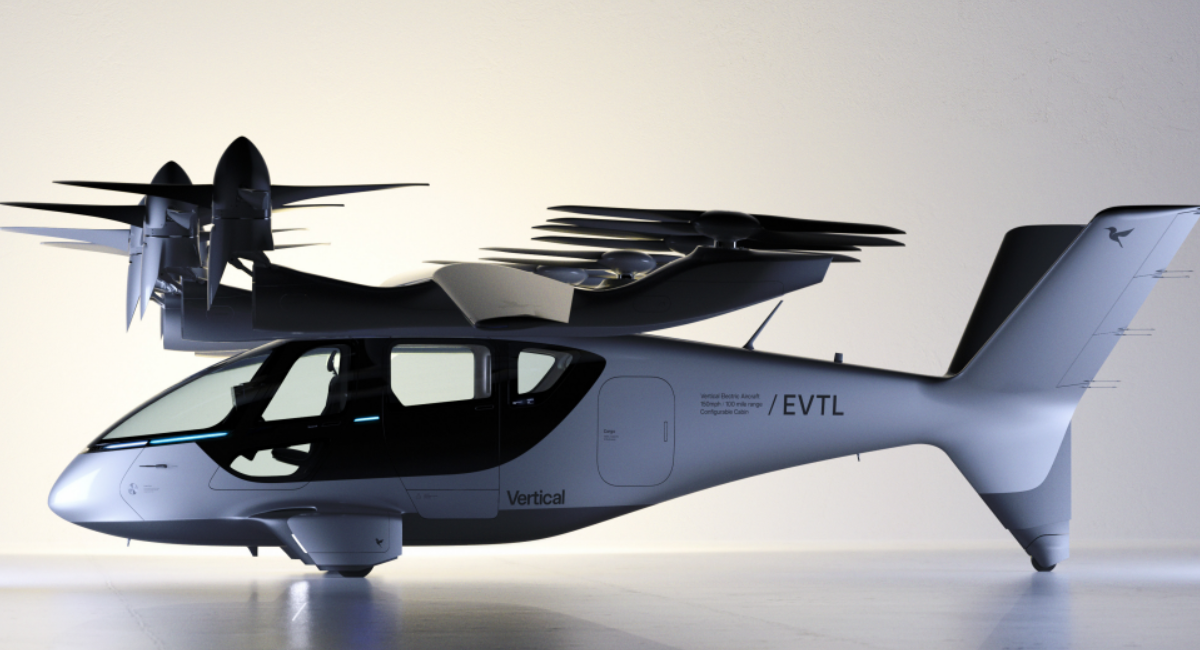
The entire facility is built for one specific mission: to build the production version of their flagship air taxi, which is officially called the Valo. Up until now, the company has flown individual prototype aircraft to test out basic ideas and collect flight data. But the Valo aircraft being built inside this new Kemble factory is the exact machine that will carry paying passengers once government aviation regulators give it the green light.
You might wonder why building an assembly factory is such a big deal when the aircraft has not even finished its official certification yet. In the world of commercial aviation, building a proper factory is actually a mandatory requirement before government agencies will grant safety approval.
Aviation authorities like the UK Civil Aviation Authority and the American Federal Aviation Administration have very strict rules. They do not just inspect the finished plane; they inspect the building where the plane is put together. They want to see that an aerospace company can build dozens or hundreds of identical aircraft with zero manufacturing mistakes.
If you build an airplane by hand in a small garage, every single plane turns out slightly different, which creates massive safety risks. By building this modern assembly line, Vertical Aerospace is proving to safety inspectors that every Valo rolling out the door will meet the exact same world-class safety standards.

Choosing Cotswold Airport in Kemble was also a brilliant strategic choice by the company leadership. The region around Kemble and nearby Bristol has a world-famous history in aerospace engineering. Decades ago, iconic passenger aircraft like the supersonic Concorde were designed and developed in this exact part of England.
Because of that proud heritage, the surrounding towns are full of highly trained aircraft mechanics, structural engineers, and university research labs. By setting up shop at Cotswold Airport, Vertical Aerospace can hire experienced technicians who already understand how to work with complex aircraft frames and advanced high-voltage electrical systems. Instead of having to spend years training people from scratch, they have an experienced, ready-to-work aerospace workforce right in their backyard.
Having an active airport runway right outside the factory hangar doors is another massive advantage that will save the company months of wasted time. At many electric aircraft startups, engineers build a machine in a normal industrial park, pack it into the back of a flatbed truck, drive it across the country to an open airfield, assemble it again, and then finally run a flight test.
That slow, painful process wastes precious time and millions of dollars. At the Kemble facility, the assembly line connects directly to the airfield tarmac. When engineers finish building a Valo aircraft, test pilots can immediately roll it out onto the runway, run full electrical checks, and lift off into quiet rural airspace for hovering and flight tests. This smooth setup allows the company to discover and fix design issues much faster than their competitors.
The Valo aircraft itself represents a massive leap forward from the company’s older prototypes. While earlier versions were built simply to prove that an electric vertical takeoff and landing system could work, the Valo is built to be a reliable workhorse for commercial airlines.
It features an advanced carbon-fiber frame, a completely redesigned proprietary battery system, and quiet propellers that push the boundaries of electric propulsion. It does not use jet fuel or messy engine oils. Instead, it relies on distributed electric propulsion, which means it uses multiple electric motors and quiet propellers spread across its wings. T
his design makes the aircraft much quieter than any traditional helicopter you have ever heard. When it flies over a neighborhood, people on the ground will hear a quiet hum instead of a roaring, rattling engine.
Another reason this factory opening is creating so much buzz is because major global airlines are actively waiting for these planes to arrive. Vertical Aerospace has already collected pre-orders and reservations from giant companies like Virgin Atlantic, American Airlines, and Avolon.
These massive airlines are not looking to buy experimental toys; they want reliable electric aircraft that can pick up travelers in suburban towns and fly them straight to major international hubs without getting stuck in morning highway traffic. By opening this 60,000-square-foot factory, Vertical Aerospace is sending a clear message to these global airline partners that their orders will actually be built and delivered on schedule.
Right now, the clock is ticking toward the company’s ultimate target of full commercial certification by 2027. Over the next two years, the workers inside this Kemble facility will be under immense pressure. They will have to build multiple Valo test planes that can survive freezing rain, heavy wind gusts, emergency power drops, and thousands of takeoffs and landings. Every single wire, screw, and battery cell will be checked and double-checked by independent safety inspectors from the UK Civil Aviation Authority.
If Vertical Aerospace can pass all these tests and hit their 2027 target, they will become one of the first companies in European history to fly regular commuters in an electric vertical aircraft.
Building an aircraft factory also brings a huge economic boost to the local area. Kemble and the surrounding towns will see new engineering jobs, technical apprenticeships, and local business growth.
As the air taxi industry expands, regions that invest early in manufacturing infrastructure will become the central hubs of the green aviation economy. Vertical Aerospace is showing other startups that success in urban air mobility requires real physical manufacturing power, not just software and pitch decks.
My Final Thoughts: In my opinion, this factory opening is the moment Vertical Aerospace officially separated itself from the dreamers and joined the serious players in the aviation industry. Anyone can create a flashy 3D animation on a computer screen, but spending millions of dollars to build a 60,000-square-foot factory means you are completely committed to the long game.
The Valo assembly center at Cotswold Airport gives me a ton of confidence that we will actually see these clean, quiet air taxis flying commercial routes before the end of the decade. What do you think about the UK leading the way in European air taxi manufacturing? Share your thoughts with me in the comments below!