


Connect with us

News & Updates

The world’s first commercial Air Taxi vertiport is now open in Dubai

Published

on

World's First Air Taxi Station

According to the latest information, Dubai is finally moving into the future. The city just opened the Dubai International Vertiport (DXV) right next to its main airport. It’s the first of its kind in the world, and it means air taxis are finally becoming a reality.

Think of a “vertiport” like a mini-airport, but without the long runways. Since these taxis take off and land straight up and down (like a drone), they can fit into crowded city spots where a plane never could.

7 things you need to know about Dubai’s Air Taxis

  • The Setup: The new station is a big four-story building with two landing pads, plenty of charging stations for the electric planes/air taxis, and a comfortable waiting area for passengers.
  • A Massive Crowd: Dubai expects this single station to handle about 170,000 passengers every year.
  • The Ride: Each taxi fits one pilot and four passengers. These aren’t slow, either—they can hit speeds of 200 mph.
  • Eco-Friendly: These are “all-electric” vehicles. That means zero emissions during the flight, making them way better for the environment than sitting in a gas-guzzling car.
  • Bye-Bye Traffic: This is the best part. A trip from the airport to Palm Jumeirah usually takes 45 minutes in a car. In an air taxi? Just 10 minutes.
  • Booking is Easy: You won’t need a special app. You’ll likely be able to book a seat right through the Uber app. The price is expected to be similar to an Uber Black ride.
  • The Network: This isn’t just one station. Dubai plans to link the Airport to Downtown, the Marina, and Palm Jumeirah using tech from Joby Aviation and Skyports.
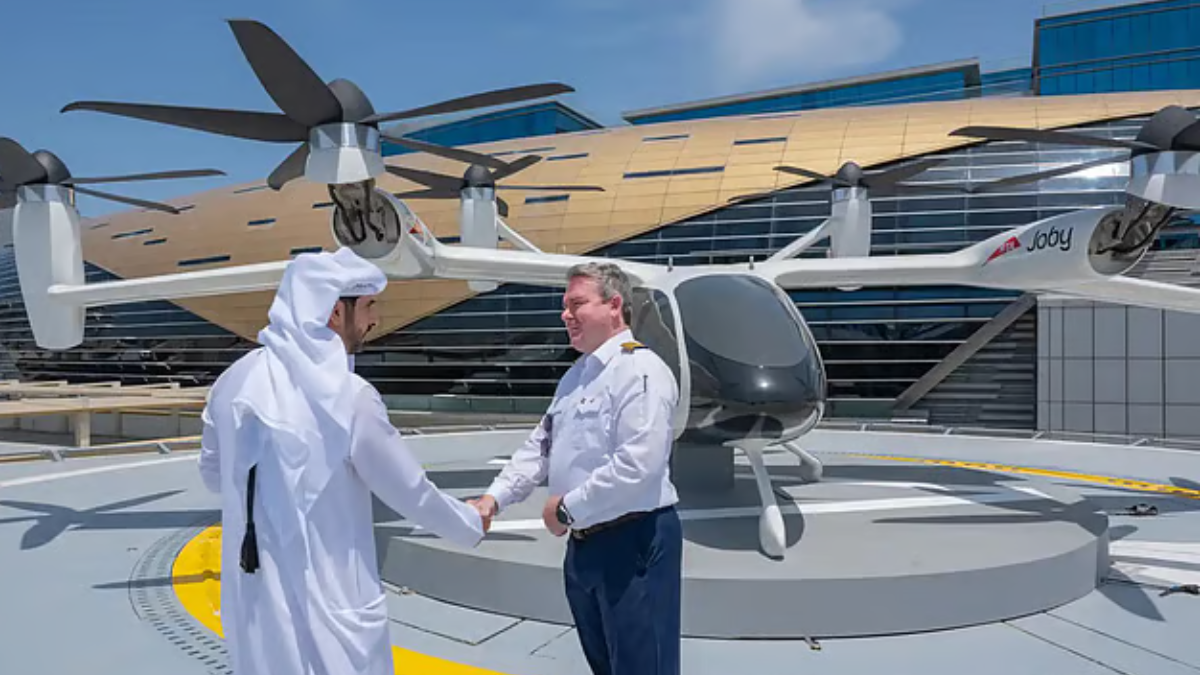
World's First Air Taxi Station

X / @HamdanMohammed

Amit’s Opinion

As you know we have been hearing about “flying cars” for decades, but Dubai is actually building the infrastructure to make it happen.

By integrating this with Uber and keeping the prices near “luxury car” levels rather than “private jet” levels, this feels less like a gimmick and more like a real shift in how we’ll get around big cities. Expect to see the first commercial flights later this year.

Guides

US Cities Ranked by eVTOL Readiness: Top 15

US cities ranked by eVTOL readiness. Top 15 cities for flying taxis with scores and launch timelines. Los Angeles #1, New York #2, San Francisco #3. Complete readiness analysis.

Published

on

US Cities Ranked by eVTOL Readiness

While Dubai is leading the way globally, the United States isn’t far behind in the race for the sky. A US flying taxi launch is now a matter of a question “when” as major cities across the country prepare for a total transportation makeover. However, not every American city is moving at the same speed.

Some big cities like New York and Los Angeles are already moving fast. They are building landing pads and fixing their laws right now. But in other places, it might be a long time before you see a flying taxi in the sky. To see which cities are winning the race, we have ranked the top 15 US cities. We looked at who has the best buildings, which local governments are helping out, and—most importantly—which cities have the worst traffic that needs a solution

How We Ranked These Cities

Before showing you the rankings, let’s look at the five key factors that decide if a city is truly ready for the future of flight:

  • Infrastructure Readiness: Does the city have space for vertiports? Can the local power grid handle fast-charging electric planes?
  • Regulatory Environment: Is the local government working with the FAA? Can they pass new landing laws quickly?
  • Market Demand: Is there a clear need for faster travel to airports or business hubs?
  • Population & Wealth: Larger, wealthier cities have the customer base needed to pay for premium $200+ rides.
  • Traffic Pain: The worse the traffic, the more people will want to fly over it.

3 Things to Keep in Mind

1. Our Professional Analysis: While companies like Joby and Archer have picked their first partners, this list is our prediction based on real-world infrastructure data.

2. Rankings Can Change: If a city gets new funding or a faster permit, they could jump to the top of the list overnight.

3. The Real Timeline: Most US cities won’t see full commercial service until 2027 or 2028. Dubai will still be the world’s first “test case” in late 2026.

The Top 15 US Cities For Flying Taxis

How We Ranked These Cities

  • Infrastructure: Space for landing pads and enough power for fast-charging.
  • Government Support: Local leaders pushing for new flight laws.
  • Market Demand: High traffic areas with people willing to pay for speed.
  • Wealth & Population: Enough customers to keep the taxis flying.

Number 1: Los Angeles, California

Readiness Score: 95/100

Los Angeles is the absolute best city for flying taxis. It is spread out, meaning driving takes forever. A flying taxi can turn a two-hour drive into a 20-minute flight. With perfect weather and plenty of wealthy travelers, LA is the top target for companies like Joby and Archer.

Top Route: Airport (LAX) to Downtown | Expected: 2027-2028

US Cities Ranked by eVTOL Readiness

Number 2: New York City, New York

Readiness Score: 85/100

NYC has the most people and the most money. Traffic to JFK airport is a nightmare, so demand is huge. The challenge is the crowded space—it’s hard to find places to land between skyscrapers, but the money here is too big for companies to ignore.

Top Route: JFK Airport to Manhattan | Expected: 2027-2028

Number 3: San Francisco Bay Area, California

Readiness Score: 80/100

The tech capital of the world is perfect for innovation. Since water separates the Bay Area, flying is much faster than using bridges. Tech workers with high incomes will likely be the first regular users here.

Top Route: SFO Airport to Downtown | Expected: 2028-2029

Number 4: Dallas-Fort Worth, Texas

Readiness Score: 78/100

Dallas has tons of flat land and very business-friendly laws. It’s a booming area where people drive long distances. Building landing pads here is much easier and cheaper than in New York.

Top Route: DFW Airport to Downtown Dallas

Number 5: Chicago, Illinois

Readiness Score: 76/100

Chicago is a major business hub. While it has the infrastructure, the “Windy City” faces weather challenges. Snow and high winds in the winter will make flying harder than in California.

Number 6: Miami, Florida

Readiness Score: 75/100

Miami is a tourist dream with perfect flying weather. Wealthy visitors will love the experience of skipping traffic to get to the beach. The Florida government is very supportive of this tech.

Number 7: Atlanta, Georgia

Readiness Score: 74/100

Atlanta has the world’s busiest airport. People landing there need a fast way into the city, making it a perfect market. It’s a spread-out city with plenty of room to grow.

Number 8: Boston, Massachusetts

Readiness Score: 72/100

Boston is a wealthy city with many business travelers. It’s a bit cramped like NYC, but the demand for fast travel to the airport will drive the service forward.

Number 9: Seattle, Washington

Readiness Score: 70/100

Home to Amazon and Microsoft, Seattle has the right customers. The main issue is the constant rain and clouds, which can ground flights more often than in other cities.

Number 10: Denver, Colorado

Readiness Score: 68/100

Denver is growing fast. The “thin air” at high altitudes is a technical challenge for the aircraft, but the long drive to the airport makes it a great spot for air taxis.

Number 11: Phoenix, Arizona

Readiness Score: 67/100

Phoenix is flat, sunny, and sprawling. It’s perfect for flying, though engineers have to watch how the extreme summer heat affects the aircraft batteries.

Number 12: Orlando, Florida

Readiness Score: 65/100

Orlando is all about Disney and theme parks. Millions of families would pay for a fast flight to their hotels. It’s a huge market, but mostly for tourists.

Number 13: Las Vegas, Nevada

Readiness Score: 63/100

Vegas loves new gadgets. Tourists will use these to hop between the airport and the casinos. The airspace is very busy, so it will take time to organize.

Number 14: Washington DC

Readiness Score: 62/100

DC has plenty of wealthy business people, but security is the biggest hurdle. Flying near the White House or Capitol means very strict rules and longer wait times for approval.

Number 15: Austin, Texas

Readiness Score: 61/100

Austin is a tech-friendly, fast-growing city. While it is still building up its infrastructure, it is one of the most exciting future markets for air travel in the South.

My assessment: Austin will get flying taxis. Growing city. Tech-friendly. But still developing infrastructure. Later than established cities.

Summary Table: Top 15 US Cities

Rank City Hub Readiness Score Main Partners Expected Launch
01 Los Angeles, CA 95/100 Joby, Archer 2027-2028
02 New York City, NY 85/100 Joby, Beta, Archer 2027-2028
03 San Francisco, CA 80/100 Wisk, Joby, Archer 2028-2029
04 Dallas-Fort Worth, TX 78/100 Archer, Wisk, Beta 2028-2030
05 Chicago, IL 76/100 United Airlines, Archer 2028-2030
06 Miami, FL 75/100 Lilium, Archer 2028-2030
07 Atlanta, GA 74/100 Delta, Joby 2029-2031
08 Boston, MA 72/100 Beta, Joby 2029-2031
09 Seattle, WA 70/100 Joby, Beta 2029-2031
10 Denver, CO 68/100 United, Archer 2030-2032
11 Phoenix, AZ 67/100 Skyports, Joby 2030-2032
12 Orlando, FL 65/100 Lilium, Ferrovial 2030-2032
13 Las Vegas, NV 63/100 Joby, Archer 2031-2033
14 Washington DC 62/100 Joby, Archer 2032-2035
15 Austin, TX 61/100 Wisk, Archer 2031-2033

Source: Data compiled from 2026 infrastructure reports and municipal eVTOL partnership agreements.

What Makes a City “Ready” for Flying Taxis?

Let me explain what we looked at for each city:

Infrastructure (30 points):

  • Space for vertiports (vertical landing pads)
  • Modern power grid (charging aircraft)
  • Good air traffic control systems
  • Modern airport infrastructure

Regulations (25 points):

Market Demand (25 points):

  • Population size
  • Long distance transportation needs
  • Wealth of residents (can afford $200-400)
  • Tourism (visitors willing to pay)

Population & Wealth (15 points):

  • Number of potential customers
  • Income levels
  • Business activity
  • Corporate headquarters

Geography & Weather (5 points):

  • Space for vertiports
  • Weather conditions
  • Terrain challenges
  • Airspace complexity

Cities scoring 70+ are ready for 2029-2030 launches.

Cities scoring 80+ are ready for 2027-2028 launches.

When Will Your City Get Flying Taxis?

Late 2026: Dubai launches (not US)

2027-2028 (First US wave): Los Angeles, New York City

2028-2029 (Second wave): San Francisco, Dallas, Chicago, Miami

2029-2031 (Third wave): Atlanta, Boston, Seattle

2030-2032 (Fourth wave): Denver, Phoenix, Orlando

2031-2033 (Fifth wave): Las Vegas, Austin

2032-2035 (Later waves): Washington DC, smaller cities

2035+: Rural areas, smaller towns

My Honest Opinion

Los Angeles will be FIRST US city. Most ready. Joby or Archer will launch here in 2027-2028.

New York follows closely. Big demand but harder infrastructure.

San Francisco, Dallas, Chicago, Miami follow in 2028-2030. By 2035, most major US cities will have flying taxis. By 2040, flying taxis are normal in 50+ US cities.

Flying Taxis in the US: Frequently Asked Questions

Question: Will my city get flying taxis soon?

Answer: If you live in a major hub like Los Angeles, New York, or Miami, you could see them by 2027 or 2028. For other large cities (over 1 million people), the goal is 2030 to 2032. Smaller cities will likely have to wait until 2035 or later when the technology becomes cheaper and more common.

Question: Why isn’t my city ranking higher on the “Readiness” list?

Answer: Usually, it’s one of three things: weather, money, or space. Cities with very cold winters (lots of ice) or very crowded skies are harder to start in. Also, companies launch first where there are enough people willing to pay premium prices to justify the cost of building the landing pads.

Question: Is it going to be as loud as a helicopter?

Answer: Not at all. These are “eVTOLs” (electric planes), and they are designed to be much quieter. While a helicopter has one giant, noisy engine, these use many small electric motors. From the ground, a flying taxi sounds more like a soft “hum” or a swarm of bees rather than a thumping helicopter

Question: How do I actually get on one?

Answer: It will feel just like calling an Uber or Lyft. You will open an app, book a seat, and walk to a nearby “vertiport” (a landing pad on top of a parking garage or building). You won’t need to go to a giant airport for every flight.

Question: Can I buy property near future vertiports to make money?

Answer: Yes, but it’s a bit of a gamble right now. Exact locations are still being kept secret for business reasons. However, looking at major transit hubs—like train stations or luxury malls—is a good hint. Properties within a 10-minute walk of a future vertiport will likely see a “Connectivity Premium,” meaning their value could jump significantly.

Question: Will flying taxis take away jobs from Uber drivers or pilots?

Answer: Actually, they will create more jobs. We will need thousands of new commercial pilots specifically trained for these aircraft. We also need mechanics, ground crews, and people to manage the “vertiport” stations. While it might take some high-end trips away from car services, it mostly creates a whole new category of work.

Question: Can I invest in this technology right now?

Answer: You can’t usually “buy a taxi,” but you can invest in the companies building them. Companies like Joby Aviation (JOBY) and Archer Aviation (ACHR) are publicly traded on the stock market. When they expand to new cities and start making a profit, their shareholders benefit.

Question: What about my privacy if these are flying over my house?

Answer: This is a big topic for 2026. Regulators have set “flight corridors,” which are like invisible highways in the sky. Taxis won’t just zig-zag over random backyards; they will follow specific paths—usually over existing big roads or industrial areas—to keep noise and privacy issues as low as possible.

Question: Can I fly a flying taxi in bad weather?

Answer: For now, the rules are “Safety First.” If there is heavy rain, thick fog, or high winds, flights will be grounded, just like at a normal airport. As the tech gets better, they will be able to fly in tougher conditions, but expect some “weather delays” in the early years.

Questions About US Flying Taxis?

Email us: contact@airtaxicentral.com or amit@airtaxicentral.com

Follow us:

  • Twitter: @AirTaxiCentral
  • Instagram: @airtaxicentral
  • YouTube: @AirTaxiCentral
Continue Reading

News & Updates

Joby Aviation Partners With Air Space Intelligence For Air Taxi Integration

Breaking news: Joby Aviation partners with Air Space Intelligence for airspace integration. Learn what this partnership means for safe eVTOL operations, timeline, and urban air mobility coordination.

Published

on

Joby and Air Space Intelligence Partner

We talk a lot about how cool flying taxis (eVTOLs) look, but we rarely talk about the “traffic jams” in the sky. If thousands of these vehicles start buzzing over cities like New York or Los Angeles, how do we keep them from crashing into news helicopters, drones, or each other?

Joby Aviation Partners with Air Space Intelligence: Why This Matters for the Future of Flying Taxis

As per the latest information, that’s the massive puzzle Joby Aviation is trying to solve. In a major move, Joby recently announced a partnership with Air Space Intelligence (ASI).

While it might not sound as like a new battery or a sleek wing design, this deal is arguably more important for actually getting these planes off the ground by 2026.

Who is Air Space Intelligence?

Think of Air Space Intelligence as the specialists of “controlled chaos.” They aren’t building the planes; they are building the software brains that manage them.

The main technology focuses on:

  • Urban Airspace Management: Figuring out how to pack more aircraft into tight city skies.
  • Automated Safety: Systems that talk to each other so humans don’t have to make every single split-second decision.
  • Coordination: Making sure a drone, a Boeing 737, and a Joby air taxi all know where the others are in real-time.

“America has long set the global standard for aviation, and modernizing our airspace is key to maintaining that leadership,” said Greg Bowles, Chief Policy Officer, Joby Aviation. “By combining Joby’s operational capabilities with ASI’s advanced AI-driven Flyways platform, we’re helping build the intelligent infrastructure needed to integrate electric air taxis seamlessly into the NAS — one of America’s most important national assets.”

“Scaling advanced air mobility requires more than new aircraft — it requires a new operating system for the airspace,” said Bernard Asare, President, Civil Aviation, Air Space Intelligence. “Our Flyways AI platform gives operators and controllers the predictive awareness to coordinate high-density operations proactively, not reactively. This partnership brings that same capability to eVTOL operations from day one.”

The “Sky Highway” Problem

Right now, the sky is organized like a multi-story building:

  • Top Floor (10,000+ ft): Big commercial airplanes.
  • Middle Floor (1,000–3,000 ft): Helicopters.
  • Ground Floor (Under 400 ft): Small delivery drones.

The problem? Joby’s air taxis live in the middle floor—the same place as helicopters. They also need to move through the “ground floor” every time they take off or land at a vertiport. Without a high-tech coordination system, it’s simply too dangerous to operate at scale.

What the Partnership Actually Does

Joby is an aircraft manufacturer. The company make the “cars.” Air Space Intelligence makes the “GPS and Traffic Lights.” By working together, they are tackling four main goals:

1. Talking to the FAA

The Federal Aviation Administration (FAA) won’t let Joby fly unless they can prove they can communicate with existing Air Traffic Control. ASI provides the digital bridge to make that happen.

2. Creating Safety Playbooks

They are writing the rules for how an air taxi should behave when it transitions from vertical takeoff to forward flight near other aircraft.

3. Real-Time Tracking

ASI’s software uses predictive modeling. It doesn’t just see where a plane is; it predicts where it will be in 30 seconds to prevent “near-misses.”

4. Preparing for Autonomy

While Joby planes will have pilots at launch, the goal is to go autonomous by 2035. ASI’s tech creates the digital foundation for a pilotless future.

Why This is a Smart Move for Joby

It’s tempting for tech companies to try and build everything themselves. But airspace management is incredibly complex and heavily regulated. By partnering with ASI, Joby is staying focused: “We’ll focus on building the best aircraft; we’ll let the experts handle the digital traffic control.”

The Reality Check: What This Means for You

Don’t expect this partnership to suddenly make flying taxis appear tomorrow. Here is the honest opinion:

  • Will it speed up the launch? Probably not. The FAA still moves at its own pace.
  • Is Joby the only one doing this? No. Competitors like Archer and Lilium will eventually need similar partnerships. Joby is just getting ahead of the curve.
  • Is it safe? That’s the goal. This partnership is entirely about moving from “experimental” flights to “commercial” flights where safety must be 100%.

What Comes Next

After this partnership, what’s next?

Timeline:

2026: Technology development continues
2026: FAA reviews procedures
2026-2027: FAA approves (or modifies) procedures
2027+: Real operations begin with air space coordination

Frequently Asked Questions: Joby Aviation & Air Space Intelligence

1. Does this partnership mean flying taxis will launch sooner? Not necessarily. While this partnership is a massive step forward, it is designed to enable a safe launch rather than accelerate the current timeline. The primary focus is meeting strict safety standards and regulatory requirements, not rushing the 2026-2027 goal.

2. Will Air Space Intelligence be in charge of all air traffic? No. Air Space Intelligence provides the software and technology to manage flight paths, but the FAA (Federal Aviation Administration) remains the ultimate authority over the skies. Local cities will also still have a say in where and when these vehicles can operate.

3. Does this partnership solve every challenge for flying taxis? While it solves the “traffic jam” problem in the sky, it is just one piece of the puzzle. Other hurdles—like reducing noise, building “vertiports” (landing pads), securing insurance, and gaining public trust—still need to be addressed before flying taxis become a daily reality.

4. Can Joby fly without the FAA’s involvement now? Absolutely not. Every procedure and technology developed by Joby and Air Space Intelligence must be reviewed, tested, and approved by the FAA. This partnership is essentially building the technical case to prove to the government that the system is safe.

5. Do other flying taxi companies need similar technology? Yes. Airspace integration isn’t just a “Joby problem”—it’s an industry-wide requirement. Every company building eVTOLs (like Archer or Lilium) will eventually need to implement similar coordination technology to operate safely in crowded city skies.

6. What is the main goal of using Air Space Intelligence software? The goal is “controlled coordination.” By using automated tracking and predictive modeling, the system ensures that flying taxis can safely share the sky with helicopters, drones, and traditional airplanes without the risk of human error or collisions.

The Key Move

Joby’s partnership with Air Space Intelligence is smart move. Shows Joby understands real problem: safe airspace integration.

This partnership:

  • Validates Joby’s approach
  • Shows serious commitment
  • Demonstrates regulatory awareness
  • Supports 2026-2027 timeline

For investors: This is good news. Shows Joby is thinking comprehensively.

For passengers: This is good news. Shows safety is priority.

For the industry: This is good news. Shows eVTOL companies are solving real problems.

Learn More About Joby

Read our complete Joby coverage:

Also read:

Questions About Joby And Air Space Integration?

Email us: contact@airtaxicentral.com or amit@airtaxicentral.com

Conclusion

If you’re watching Joby as an investor or a future passenger, this is the news you want to see. It shows the company isn’t just dreaming about flying—they are doing the boring, difficult, and essential work of making sure those flights are legal and safe.

Continue Reading

News & Updates

Vertical Aerospace Just Saved Itself With $850 Million Funding Deal

Vertical Aerospace just secured $850 million in funding to survive its cash crisis. The company can now focus on what matters: certifying the Valo and becoming a real competitor.

Published

on

Vertical Aerospace Air Taxi

Vertical Aerospace just got the lifeline it desperately needed. The British flying taxi company announced Monday that it secured a nonbinding commitment for up to $850 million in financing.

The funding is specifically designed to help Vertical get its Valo aircraft certified and ready for commercial operations through 2026 and beyond. This is huge news because Vertical was in trouble.

Just weeks ago, the company issued a warning about cash flow concerns. Investors worried Vertical might not have enough money to survive. Now, with this financing package secured, Vertical can breathe again.

How Much Money Is This Really?

Let’s break down what $850 million actually means for Vertical:

Yorkville Advisors Global is providing the bulk: up to $250 million in convertible equity, plus a $500 million credit line over three years. That’s $750 million right there. Mudrick Capital, Vertical’s existing investor, is adding another $50 million in convertible notes. Mudrick also extended the repayment deadline on old debt from December 2028 to December 2030.

But there’s more. Vertical just raised an additional $50 million by selling common equity shares. When you add that to the $93 million Vertical already had in cash (as of the end of 2025) plus expected tax relief and government grants, Vertical now has approximately $160 million available immediately for 2026.

That’s the reality check: Vertical has real money to work with right now.

Vertical Aerospace Air Taxi

Vertical Aerospace Air Taxi (Image Credit: vertical-aerospace.com)

Here’s What Vertical Plans to Do With It

Vertical estimates its Valo aircraft will need approximately $700 million to certify. That’s a lot. But now the company has the funding to get it done.

For 2026 specifically, Vertical is planning to spend about $195 million. Where’s that money going? Flight testing, certification work, and manufacturing setup. In other words, Vertical is going all-in on actually building the aircraft.

The company burned through $112 million in 2025, which matches what it expected. The operating loss was $127 million. So Vertical isn’t hidden losses—the company was transparent about the burn rate all along.

CEO Stuart Simpson said this in a statement: “We have assembled a comprehensive, flexible financing package designed to execute our strategic plan and materially strengthened our ability to build and certify Valo.”

Translation: Vertical has the money. Now Vertical can focus on the engineering instead of worrying about bankruptcy.

Vertical Isn’t Dead Anymore

Two months ago, Vertical looked like it might fail. The company had cash concerns. Investors were nervous. The question wasn’t “Will Vertical succeed?” It was “Can Vertical even survive?”

This $850 million commitment changes that conversation completely. Vertical went from “survival question” to “viable competitor” in one announcement.

But here’s what matters: Vertical still has to execute. Money doesn’t guarantee success. Vertical still has to:

  • Pass FAA certification (hardest part)
  • Actually build the aircraft (manufacturing is hard)
  • Deal with legal battles (Archer sued for patent infringement)
  • Compete against better-funded companies (Joby, Archer, Lilium)

Money buys time. It doesn’t buy victory.

The Competition Just Got Fiercer

This financing announcement matters because the eVTOL space is getting crowded.

Joby Aviation is the leader. Archer Aviation has United Airlines backing. Lilium is targeting Europe. EHang is already flying passengers in China. And now Vertical just proved it’s not dying.

That’s six major companies all racing toward commercial operations. The market is getting real. The competition is intensifying. The race is on.

What Vertical’s financing really says: The company is staying in the race.

What Happens Next

Vertical and its financing partners expect to finalize the deal by April 19. Once that happens, the money starts flowing.

Then comes the hard part: certification. The FAA is notoriously slow. Vertical will need to prove its aircraft is safe. That means thousands of test flights. Hundreds of engineering documents. Years of regulatory back-and-forth.

But Vertical no longer has to worry about running out of money while doing it.

The Bottom Line

Vertical Aerospace just went from “struggling startup” to “funded competitor” overnight. The company has $850 million committed (pending finalization). The company has a clear path to certification. The company can focus on engineering instead of raising emergency capital.

Is Vertical guaranteed to succeed? No. The company still has to pass FAA certification, outcompete other companies, and actually deliver a working product.

But Vertical is no longer in survival mode. Vertical is in execution mode. That changes everything.

Update: This article reflects information available on April 1, 2026. Vertical Aerospace Funding terms are nonbinding pending April 19 finalization.

Written by Amit Tiwari, Air Taxi Central. Follow for more eVTOL news and analysis

Continue Reading
Advertisement

Trending