


Connect with us

News & Updates

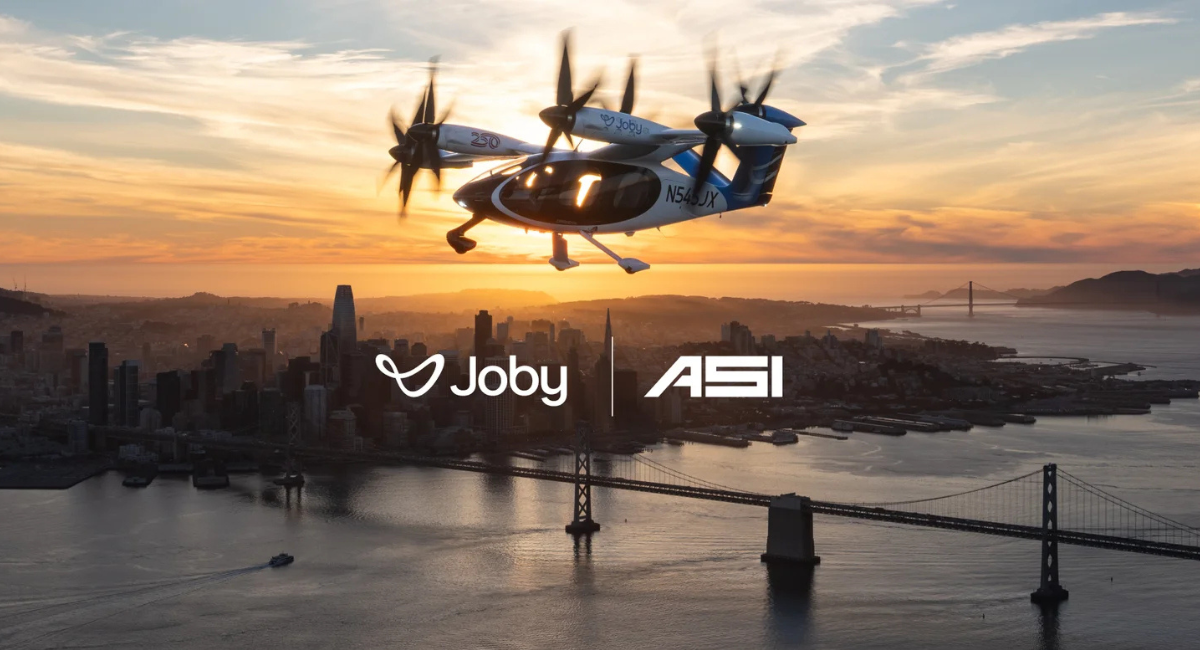
Joby Aviation Partners With Air Space Intelligence For Air Taxi Integration

Breaking news: Joby Aviation partners with Air Space Intelligence for airspace integration. Learn what this partnership means for safe eVTOL operations, timeline, and urban air mobility coordination.

Published

on

Joby and Air Space Intelligence Partner

We talk a lot about how cool flying taxis (eVTOLs) look, but we rarely talk about the “traffic jams” in the sky. If thousands of these vehicles start buzzing over cities like New York or Los Angeles, how do we keep them from crashing into news helicopters, drones, or each other?

Joby Aviation Partners with Air Space Intelligence: Why This Matters for the Future of Flying Taxis

As per the latest information, that’s the massive puzzle Joby Aviation is trying to solve. In a major move, Joby recently announced a partnership with Air Space Intelligence (ASI).

While it might not sound as like a new battery or a sleek wing design, this deal is arguably more important for actually getting these planes off the ground by 2026.

Who is Air Space Intelligence?

Think of Air Space Intelligence as the specialists of “controlled chaos.” They aren’t building the planes; they are building the software brains that manage them.

The main technology focuses on:

  • Urban Airspace Management: Figuring out how to pack more aircraft into tight city skies.
  • Automated Safety: Systems that talk to each other so humans don’t have to make every single split-second decision.
  • Coordination: Making sure a drone, a Boeing 737, and a Joby air taxi all know where the others are in real-time.

“America has long set the global standard for aviation, and modernizing our airspace is key to maintaining that leadership,” said Greg Bowles, Chief Policy Officer, Joby Aviation. “By combining Joby’s operational capabilities with ASI’s advanced AI-driven Flyways platform, we’re helping build the intelligent infrastructure needed to integrate electric air taxis seamlessly into the NAS — one of America’s most important national assets.”

“Scaling advanced air mobility requires more than new aircraft — it requires a new operating system for the airspace,” said Bernard Asare, President, Civil Aviation, Air Space Intelligence. “Our Flyways AI platform gives operators and controllers the predictive awareness to coordinate high-density operations proactively, not reactively. This partnership brings that same capability to eVTOL operations from day one.”

The “Sky Highway” Problem

Right now, the sky is organized like a multi-story building:

  • Top Floor (10,000+ ft): Big commercial airplanes.
  • Middle Floor (1,000–3,000 ft): Helicopters.
  • Ground Floor (Under 400 ft): Small delivery drones.

The problem? Joby’s air taxis live in the middle floor—the same place as helicopters. They also need to move through the “ground floor” every time they take off or land at a vertiport. Without a high-tech coordination system, it’s simply too dangerous to operate at scale.

What the Partnership Actually Does

Joby is an aircraft manufacturer. The company make the “cars.” Air Space Intelligence makes the “GPS and Traffic Lights.” By working together, they are tackling four main goals:

1. Talking to the FAA

The Federal Aviation Administration (FAA) won’t let Joby fly unless they can prove they can communicate with existing Air Traffic Control. ASI provides the digital bridge to make that happen.

2. Creating Safety Playbooks

They are writing the rules for how an air taxi should behave when it transitions from vertical takeoff to forward flight near other aircraft.

3. Real-Time Tracking

ASI’s software uses predictive modeling. It doesn’t just see where a plane is; it predicts where it will be in 30 seconds to prevent “near-misses.”

4. Preparing for Autonomy

While Joby planes will have pilots at launch, the goal is to go autonomous by 2035. ASI’s tech creates the digital foundation for a pilotless future.

Why This is a Smart Move for Joby

It’s tempting for tech companies to try and build everything themselves. But airspace management is incredibly complex and heavily regulated. By partnering with ASI, Joby is staying focused: “We’ll focus on building the best aircraft; we’ll let the experts handle the digital traffic control.”

The Reality Check: What This Means for You

Don’t expect this partnership to suddenly make flying taxis appear tomorrow. Here is the honest opinion:

  • Will it speed up the launch? Probably not. The FAA still moves at its own pace.
  • Is Joby the only one doing this? No. Competitors like Archer and Lilium will eventually need similar partnerships. Joby is just getting ahead of the curve.
  • Is it safe? That’s the goal. This partnership is entirely about moving from “experimental” flights to “commercial” flights where safety must be 100%.

What Comes Next

After this partnership, what’s next?

Timeline:

2026: Technology development continues
2026: FAA reviews procedures
2026-2027: FAA approves (or modifies) procedures
2027+: Real operations begin with air space coordination

Frequently Asked Questions: Joby Aviation & Air Space Intelligence

1. Does this partnership mean flying taxis will launch sooner? Not necessarily. While this partnership is a massive step forward, it is designed to enable a safe launch rather than accelerate the current timeline. The primary focus is meeting strict safety standards and regulatory requirements, not rushing the 2026-2027 goal.

2. Will Air Space Intelligence be in charge of all air traffic? No. Air Space Intelligence provides the software and technology to manage flight paths, but the FAA (Federal Aviation Administration) remains the ultimate authority over the skies. Local cities will also still have a say in where and when these vehicles can operate.

3. Does this partnership solve every challenge for flying taxis? While it solves the “traffic jam” problem in the sky, it is just one piece of the puzzle. Other hurdles—like reducing noise, building “vertiports” (landing pads), securing insurance, and gaining public trust—still need to be addressed before flying taxis become a daily reality.

4. Can Joby fly without the FAA’s involvement now? Absolutely not. Every procedure and technology developed by Joby and Air Space Intelligence must be reviewed, tested, and approved by the FAA. This partnership is essentially building the technical case to prove to the government that the system is safe.

5. Do other flying taxi companies need similar technology? Yes. Airspace integration isn’t just a “Joby problem”—it’s an industry-wide requirement. Every company building eVTOLs (like Archer or Lilium) will eventually need to implement similar coordination technology to operate safely in crowded city skies.

6. What is the main goal of using Air Space Intelligence software? The goal is “controlled coordination.” By using automated tracking and predictive modeling, the system ensures that flying taxis can safely share the sky with helicopters, drones, and traditional airplanes without the risk of human error or collisions.

The Key Move

Joby’s partnership with Air Space Intelligence is smart move. Shows Joby understands real problem: safe airspace integration.

This partnership:

  • Validates Joby’s approach
  • Shows serious commitment
  • Demonstrates regulatory awareness
  • Supports 2026-2027 timeline

For investors: This is good news. Shows Joby is thinking comprehensively.

For passengers: This is good news. Shows safety is priority.

For the industry: This is good news. Shows eVTOL companies are solving real problems.

Learn More About Joby

Read our complete Joby coverage:

Also read:

Questions About Joby And Air Space Integration?

Email us: contact@airtaxicentral.com or amit@airtaxicentral.com

Conclusion

If you’re watching Joby as an investor or a future passenger, this is the news you want to see. It shows the company isn’t just dreaming about flying—they are doing the boring, difficult, and essential work of making sure those flights are legal and safe.

Market & Investment

Flying Taxi Market Worth $9.53 Billion by 2030: The Future of Urban Mobility

Traffic is moving to the skies. Thanks to big investments, smart flight software, and the push for green travel, electric flying taxis are quickly becoming a reality. Discover why this new market is booming and how it will soon change the way we commute through our cities.

Published

on

Flying Taxi Market Worth $9.53 Billion by 2030

Urban transportation is shifting from crowded city streets to the skies. Cities around the world face growing traffic problems and need cleaner travel options.

Because of this, electric vertical takeoff and landing (eVTOL) aircraft are moving closer to reality. According to the latest reports the global flying taxi market will reach a value of $9.53 billion by the year 2030. This growth represents a massive 21.1% compound annual growth rate (CAGR) over the next few years.

Why Flying Taxis Are Growing So Fast

There are a few main reasons why this new market is growing so quickly. First, big companies are spending a lot of money to build these electric aircraft. Second, new computer programs are making flights much safer. These smart systems can fly the aircraft on their own, so companies will not need to find and hire as many highly trained pilots.

People also want cleaner ways to travel. Because these air taxis run on electricity, they do not produce dirty exhaust smoke, which helps keep city air clean. To make this all work, companies are building special landing pads where these taxis can take off and land safely. At the same time, governments are writing clear safety rules to make sure these flying taxis are completely safe for everyday passengers to use.

Flying Taxi Market Worth $9.53 Billion by 2030

Flying Taxi Market Worth $9.53 Billion by 2030

Major Industry Players Leading the Race

The flying taxi industry features a mix of aerospace giants and modern technology firms. Major businesses working in this space include Hyundai Motor Company, The Boeing Company, Airbus SE, and Zhejiang Geely Holding Group. Other names helping to push this technology forward include Textron Inc., Vertical Aerospace, Archer Aviation, Joby Aviation, Wisk Aero, Volocopter, and Ehang Holding Limited.

Instead of working completely alone, these industry leaders are joining forces with software experts. For example, the Indian aviation startup ePlane signed a partnership with Tata Consultancy Services. The ePlane Company wants to use the computing, data analytics, and digital tools from Tata Consultancy Services to optimize battery life and improve passenger routes across major cities.

Key Trends: From Commuter Shuttles to Firefighting Vehicles

As the market grows, companies are finding creative ways to use electric aircraft. While most people think of flying taxis as simple passenger shuttles, these vehicles are also being designed for emergency rescue missions.

Hyundai Motor Company has been a major highlight in this sector through its advanced air mobility division, Supernal. At major trade shows, Supernal showcased its impressive S-A2 electric flying taxi prototype. The Supernal S-A2 is an eight-rotor vehicle designed to cruise quietly at 120 miles per hour.

It targets short city trips to help people skip heavy ground traffic completely. Other international startups are taking similar designs and building high-payload versions meant to carry heavy equipment to fight fires in hard-to-reach areas.

How the Flying Taxi Industry is Segmented

The global industry is split into distinct categories depending on the needs of different cities:

  • By Seating Capacity: Single-seat aircraft for personal travel, double-seat vehicles for short commutes, and multi-seat designs for public air shuttle services.
  • By Aircraft Design: Multicopters and quadcopters that use multiple rotors to lift off vertically without needing a long runway.
  • By Power Source: Pure electric battery systems, parallel hybrid engines, and turboelectric propulsion.
  • By Travel Distance: Intracity flights to move across a single metropolitan area, and intercity flights to connect neighboring cities.

With massive financial backing and constant improvements in battery technology, flying taxis are no longer a concept from science fiction. The next few years will determine how quickly these electric aircraft become a regular part of daily city transit.

Continue Reading

Company Analysis

Wisk Aero Gen 6: Why This Pilotless Air Taxi Will Beat Joby and Archer

While most flying taxi companies are putting a human pilot in the driver’s seat, Wisk Aero is doing something totally different: their air taxi has no pilot at all. Wisk is playing a smart, patient long game, and they just hit a massive milestone by flying two of their 6th-generation self-flying aircraft at the exact same time. This article breaks down how the new aircraft works, the layers of safety technology keeping it in the air, and why its cheaper running costs could help Wisk beat out rivals like Joby and Archer by 2030.

Published

on

Wisk Aero Gen 6

Most air taxi companies are building aircraft with a pilot inside. Wisk Aero is doing something completely different. Wisk is building a flying taxi that has no pilot at all — not in the cockpit, not remotely controlling it in real time. The aircraft flies on its own, with a human operator on the ground keeping an eye on things.

This is the Wisk Aero Generation 6, also called the Gen 6. And in May 2026, Wisk reached a milestone that very few eVTOL companies have hit: two fully autonomous aircraft flying at the same time in an active flight test program.

Here is everything you need to know about the Gen 6, what makes it different, and why this aircraft could change the way cities think about transportation.

Table of Contents

  1. What Is the Wisk Aero Gen 6?
  2. Two Aircraft, One Goal: Inside Wisk’s Dual-Flight Test Program
  3. Gen 6 Specs: What This Aircraft Can Actually Do
  4. No Pilot Inside — How Does That Actually Work?
  5. Where Does FAA Certification Stand Right Now?
  6. Texas Is the First Market — Here Is the Plan
  7. Wisk Gen 6 vs. Joby, Archer, and Others
  8. When Can You Actually Ride One?
  9. Final Thoughts

What Is the Wisk Aero Gen 6?

Wisk Aero is a company based in Mountain View, California. Wisk is fully owned by Boeing, one of the largest aircraft manufacturers in the world. Wisk has been working on autonomous flying taxis for over a decade.

The Gen 6 is the sixth aircraft Wisk has ever built — and the first one being put forward for FAA type certification. That means this is not a prototype or a test concept. This is the real product that Wisk wants to certify and put into commercial passenger service.

Before the Gen 6 was even built, Wisk had already completed more than 1,750 test flights across its previous five generations of aircraft. All of that data went into designing the Gen 6. No other eVTOL company in the world has flown six generations of the same aircraft type.

Quick Fact: The first Gen 6 aircraft made its maiden hover flight on December 16, 2025, at Wisk’s test facility in Hollister, California. The aircraft followed a pre-programmed flight plan — no human was flying it.

Two Aircraft, One Goal: Inside Wisk’s Dual-Flight Test Program

On May 4, 2026, Wisk tested its second Gen 6 aircraft for the first time. The flight took place at Wisk’s flight test facility in Hollister, California. The aircraft, registered as N607WA, completed vertical takeoff, hover, and what engineers call “chirp” maneuvers. These are controlled movements that help measure how the aircraft’s structure handles different loads and how the flight controls respond.

This happened just four and a half months after the first Gen 6 flew in December 2025. Most eVTOL companies take much longer to build and fly a second aircraft.

Wisk CEO Sebastien Vigneron said: “Seeing the second Gen 6 aircraft take to the skies is a proud moment for Wisk. This pace of execution is exactly what is required to meet the rigorous safety standards of commercial aviation. Having multiple aircraft in flight testing allows us to move faster, learn quicker, and stay on the leading edge of autonomous aviation. Every flight provides crucial data that matures our aircraft and autonomous system, bringing us one step closer to delivering a certified, autonomous air taxi service.”

Wisk Aero Gen 6

Wisk Aero Gen 6 (Image Credit: wisk.aero)

This increase in flight test capacity directly supports Wisk’s path to commercialization, along with the U.S. Department of Transportation’s selection of Wisk’s partner, the Texas Department of Transportation (TxDOT), for the Electric Vertical Takeoff and Landing (eVTOL) and Advanced Air Mobility (AAM) Integration Pilot Program (eIPP). Wisk will use its autonomous systems and aircraft to drive the program’s operational execution, conducting real-world flight operations in the U.S. National Airspace.

Why does having two aircraft matter so much? Because FAA certification is driven by data. The more flights Wisk completes, the more data Wisk collects. The more data Wisk collects, the faster Wisk can prove to the FAA that the aircraft is safe. With two aircraft flying at the same time, Wisk can now run parallel test campaigns — effectively doubling the speed at which Wisk builds its certification case.

Gen 6 Specs: What This Aircraft Can Actually Do

The Gen 6 is not just impressive because it flies itself. The technical specs are genuinely competitive with every other air taxi being developed right now.

Spec Detail
Passengers 4 passengers + luggage
Cruise Speed 120 knots (138 mph / 222 km/h)
Range 90 miles (145 km)
Service Altitude 2,500 to 4,000 feet
Wingspan 50 feet (15 metres)
Propellers 12 total — 6 lift rotors, 6 convertible lift/cruise rotors
Battery 120 kWh
Charging Time 15-minute fast DC charge
Pilot None onboard — fully autonomous
Transition to Forward Flight Approximately 30 seconds

The wing spans 50 feet and sits in a high position on the aircraft. This gives the aircraft more stability and also improves the view for passengers inside. The cabin is designed to feel like a premium car interior — comfortable seats, good window visibility, Wi-Fi, and charging ports.

The 15-minute fast charge is a standout feature. Most electric aircraft take much longer to recharge. If Wisk can maintain this in commercial operations, the Gen 6 can complete multiple short trips per day without long gaps between flights. That is important for making the economics of an air taxi service actually work.

No Pilot Inside — How Does That Actually Work?

This is the part that makes Wisk Aero different from every other major air taxi company in the United States right now. Companies like Joby Aviation, Archer Aviation, and Beta Technologies are all building aircraft where a human pilot sits in the cockpit. Wisk is building an aircraft where no one sits in the cockpit — because there is no cockpit.

So how does the Gen 6 fly safely?

The aircraft uses a combination of advanced computers, sensors, radar, and software to navigate its route. The Gen 6 follows pre-programmed flight paths and can detect and avoid other aircraft on its own. A ground-based operator called a Multi-Vehicle Supervisor monitors the flight and can take control if needed. One operator on the ground can supervise multiple aircraft at the same time.

The safety systems are built in layers. The Gen 6 has triple-redundant autonomous flight systems, 12 independent electric motors, and a whole-airframe parachute for emergency situations. If any single system fails, a backup takes over immediately.

Wisk Vice President of Certification Cindy Comer explained the reasoning behind this approach: “We know that eventually, to scale, this industry needs to have autonomy. We could build an aircraft and put pilots in it, and then later go autonomous. But that would mean certifying twice.” Wisk chose to certify autonomy from the very beginning.

Where does the official safety approval stand?

Getting the Federal Aviation Administration (FAA) to clear these air taxis for paying passengers is the hardest part of the whole business. It takes a massive amount of time, paperwork, and money. But the company is actually much further along than most people think.

Right now, they are in the deep testing phase. Instead of just showing the government plans on paper, Wisk is using real flight data to prove that their 6th-generation aircraft is completely safe to fly in any kind of weather or situation. This is a big deal because it is the first time in U.S. history that an aircraft with no pilot onboard is trying to get certified for passengers. Because this has never been done, there is no official rulebook yet.

Wisk is actually helping the FAA and NASA write the safety rules for the future. To do this, they are flying two test aircraft to push the boundaries—taking them faster, higher, and through tougher maneuvers. Their biggest focus right now is perfecting the trickiest part of the flight: smoothly changing from hovering like a helicopter to flying fast like an airplane.

Texas Is the First Market — Here Is the Plan

In March 2026, the U.S. Department of Transportation selected the Texas Department of Transportation (TxDOT) for the FAA’s eVTOL Integration Pilot Program, known as the eIPP. Wisk Aero was named as TxDOT’s primary private-sector eVTOL partner.

The eIPP is a White House-backed program that allows eVTOL aircraft to begin real-world operations in live U.S. airspace — even before full FAA type certification is complete. This means Wisk can start collecting real operational data while the certification process is still ongoing.

Houston is Wisk’s primary launch market. Los Angeles and Miami are also planned for later expansion.

The Texas program will run in phases. In the first phase, Wisk will operate conventional piloted aircraft on eVTOL routes. This lets Wisk test the route infrastructure, airspace integration, and its SkyGrid airspace management platform — all before the Gen 6 starts flying passengers. In the advanced phase, operations will scale to the Gen 6 aircraft itself, giving the FAA high-frequency data to support final certification.

Wisk’s subsidiary SkyGrid provides the Strata airspace management platform. This software helps manage the flow of autonomous aircraft in shared airspace — a critical part of making autonomous air taxis safe in busy city skies.

Wisk Gen 6 vs. Joby, Archer, and Others

It is fair to ask: how does the Gen 6 compare to the competition?

Company Aircraft Pilot Passengers Speed Target Launch
Wisk Aero Gen 6 No pilot (autonomous) 4 138 mph 2030
Joby Aviation S4 1 pilot 4 200 mph 2026
Archer Aviation Midnight 1 pilot 4 150 mph 2026
Beta Technologies ALIA 1 pilot 5 170 mph 2026–2027

Joby, Archer, and Beta Technologies are all targeting commercial service much sooner — in 2026 or 2027. Wisk is targeting 2030. But the trade-off is significant. Joby, Archer, and Beta still need a human pilot for every single flight. Wisk does not.

A piloted air taxi has one major limitation: you always need a trained, certified pilot. That costs money and limits how fast a company can scale its service. An autonomous air taxi removes that constraint entirely. One ground operator can oversee multiple aircraft at once. Over time, this makes autonomous air taxis far cheaper to operate than piloted ones.

Wisk’s bet is that being the first to certify autonomous flight will give the company a long-term advantage that no piloted air taxi company can easily match or copy.

When Can You Actually Ride One?

Wisk has set a commercial service target of 2030. That is four years from now. The timeline makes sense when you understand how much testing is still ahead.

The current flight test program is working through the transition corridor — the phase where the aircraft moves from hovering to flying like a fixed-wing plane at full cruise speed. This is technically demanding and requires a large amount of data before the FAA is satisfied.

After flight envelope testing is complete, Wisk still needs to complete certification compliance testing, manufacturing certification, and air carrier certification. Each step requires a separate FAA approval.

The eIPP Texas program runs in parallel. If real-world operations in Texas go well, it could build the FAA’s confidence in the Gen 6 and shorten the overall path to full certification. Houston will likely be the first city where paying passengers can board a Gen 6, with Los Angeles and Miami to follow.

Wisk has not confirmed ticket pricing yet, but the long-term goal is to make air taxi rides competitive with rideshare prices as the fleet scales up and operational costs come down.

Amit’s Opinion

While a 2030 launch target might make Wisk look like a laggard compared to Joby or Archer’s 2026 timelines, playing the long game is actually Wisk’s greatest strength.

By skipping the intermediate “piloted” phase, they are absorbing massive regulatory friction upfront so they don’t have to redesign and re-certify an entirely new system later.

The recent addition of a second Gen 6 test vehicle shows they have the capital and discipline to brute-force the data collection the FAA demands.

In the end, the commercial winner won’t be the company that flies passengers first—it will be the company that scales first. Without the burden of pilot wages and pilot shortages, Wisk’s unit economics are going to be incredibly tough for competitors to match when 2030 rolls around.

Final Thoughts

Wisk Aero is not the fastest company in the air taxi race. Joby and Archer are already doing public demonstration flights in New York City and targeting service launches this year. Wisk will not have a commercial product until 2030.

But Wisk is playing a completely different game.

Every other major eVTOL company in the United States is building a next-generation helicopter with a quieter engine and a pilot in the seat. Wisk is building something that has never existed before: a fully autonomous passenger aircraft certified to commercial aviation safety standards.

The Gen 6 is not just a new type of vehicle. It is potentially a new category of aviation altogether.

The fact that two Gen 6 aircraft are now flying simultaneously — just a few months after the first one left the ground — shows that Wisk is executing at a serious and disciplined pace. Boeing’s backing gives Wisk the financial strength to see this through a certification process that could take several more years.

If Wisk succeeds, the air taxi industry looks very different. The cost of operating an air taxi service drops dramatically when you remove the pilot from the equation. That changes the economics of the entire industry — not just for Wisk, but for every company that follows.

That is why the Gen 6 matters. Not because it will fly passengers next month. But because it is the aircraft that could prove autonomous air travel is possible — and in doing so, change everything that comes after it.

Continue Reading

News & Updates

Air Taxis Start Flying in 2026: NYC, Florida, and Texas Lead the Way

Published

on

Air Taxis Start Flying in 2026

Imagine skipping the morning rush hour by hopping over the traffic in a small electric plane. This isn’t a scene from a movie anymore—it’s actually happening. As of May 2026, several companies are working hard to make these flights a regular part of our day. If you live in New York, Florida, or Texas, your daily commute is about to look very different.

Making Science Fiction Real

For a long time, “flying cars” seemed like something that would never actually exist. But companies like Archer are changing that.

Think about how we view self-driving cars today. Just a few years ago, seeing a car drive itself felt strange or even scary. Now, people barely look twice when a Waymo cruises by. These tech companies want the same thing to happen with electric planes. The company is trying to bring eVTOL as a normal part of life.

The New Way to Commute

The goal is huge: companies want 500,000 people in major cities to see these planes flying every single day. Instead of being a rare sight, these quiet, electric aircraft will soon be just another way to get from point A to point B.

The wait is over—the future of travel is officially here.

Where You Will See the First Flights

The company has been working closely with the government to pick the best spots for these early flights. Archer has already sent in paperwork for about a dozen cities. Southern California, Texas, and Florida are at the top of the list. These are places where traffic is famously bad, making them the perfect test ground for a new way to travel.

The U.S. Department of Transportation is finishing up its final list of who gets to participate in this initial rollout. Once those finalists are officially named, the company will start working directly with local city leaders. They need to figure out the small details, like exactly which routes to fly and how to keep things quiet for people living nearby. If everything stays on schedule, we could see public flights starting before the end of this year.

You can’t have electric planes without a place to park and charge them. A company called Joby Aviation is proving this can work in busy places like Manhattan. After finishing successful test flights in New York City, they began the hard work of setting up the equipment needed to keep these planes running.

Right now, the company is installing charging stations at two heliports in Manhattan. This is a big step because it moves the project from “testing” to “working.” It is one thing to fly a plane once for a show, but it is much more important to have a permanent spot where it can plug in every day.

The city is also helping. Local authorities are looking for partners to build a “vertiport” at LaGuardia Airport. This will be a special area for these planes to land and take off. It will help travelers get from the airport to downtown without sitting in hours of tunnel traffic.

Planes That Fly Themselves

While the first air taxis will have a human pilot, that might not be the case forever. Wisk Aero, which is owned by Boeing, is trying something different. They recently finished a successful test flight in California with a plane that flies itself.

Wisk Aero

Wisk Aero (Image Credit: wisk.aero)

Wisk is playing the long game. While other companies are using pilots to get started now, Wisk expects to have self-flying taxis ready for the public by 2030. They are already working with officials in Texas to make sure the technology is safe.

Managing the Growth

Starting a new way to travel is difficult and expensive. Supernal (part of Hyundai) recently hired a new technology leader to help them move from making plans to actually building aircraft.

It hasn’t been easy for everyone, though. There were rumors that Supernal might quit after cutting some of its staff earlier this year. However, the company recently told people to “stay tuned” for more news, proving they are still in the race.

Why This Matters to You

You might wonder why this matters if you don’t plan on flying to work. These companies believe that air taxis help everyone. By moving some commuters into the sky, there will be fewer cars on the highway.

Also, these Air Taxi’s/Flying Taxis are 100% electric. They don’t create the same pollution as buses or traditional helicopters. They are also designed to be very quiet. Once they are a few hundred feet in the air, you probably won’t even hear them over the normal noise of the city.

What Comes Next?

As we move through 2026, keep an eye on the news. The government will soon release a final list of cities that will lead this change. Once those cities are picked, construction on landing pads will speed up in places like Orlando, Dallas, and Los Angeles.

The goal is to make this feel safe and normal. This shouldn’t be a luxury for only the rich; it is meant to be a real choice for anyone tired of wasting time in traffic jams. The technology is ready, the chargers are being installed, and the “science fiction” future is finally landing just a few blocks away.

As we watch these electric planes fill the skies of New York, Florida, and Texas in 2026, the biggest question on everyone’s mind is: “Can I actually afford this?” For a long time, people assumed flying to work would be a luxury reserved for the ultra-rich. However, the companies building this technology have a different plan. They want to make air taxis as affordable as a premium Uber or Lyft ride.

Comparing the Cost to a Car Ride

Right now, in May 2026, the industry is aiming for a price point of about $3.00 to $5.00 per mile. To put that in perspective, a typical ride-share in a busy city like New York can often cost between $2.00 and $4.00 per mile depending on traffic and demand.

While the air taxi might be slightly more expensive at first, you are paying for the one thing money usually can’t buy: time. A trip from JFK Airport to downtown Manhattan that usually takes over an hour in a car can be done in about seven minutes in the air. For many travelers, paying a few extra dollars to save an hour of their day is an easy choice.

Air Taxi Price Estimates by State

Because every city is different, the costs will vary depending on where you are:

  • New York City: Short “hops” are the focus here. A flight from a Manhattan heliport to a nearby airport like Newark or JFK is expected to cost between $100 and $200 per seat. This is designed to compete with the high-end car services that people already use.
  • Florida: In Florida, the focus is on connecting cities like Miami, Fort Lauderdale, and West Palm Beach. Because these distances are a bit longer, companies are looking at “commuter passes.” The goal is to bring the price down so that a professional could use the service a few times a week without breaking the bank.
  • Texas: Texas is all about big distances. Connections between Dallas, Austin, and San Antonio are in the works. In the beginning, these regional flights will likely cost more, but as companies like Wisk move toward self-flying planes with no pilot, the price is expected to drop significantly.

Why Prices Will Get Lower

The main reason these flights are expensive right now is the cost of the pilot and the new technology. However, as more people use the service, the “price per seat” will go down.

Companies like Archer and Joby are building planes that can carry four or more passengers. If every seat is full, the cost is split, making it much cheaper for everyone. Additionally, as charging stations (the “gas stations of the sky”) become more common, the cost to run the planes will decrease.

Archer Aviation Midnight

Archer Aviation Midnight (Image Credit: archer.com)

The long-term goal is simple: by 2030, these companies want a flight across town to cost no more than a standard taxi ride. We aren’t quite there yet, but for the first time in history, the sky is becoming a real option for the everyday commuter.

Continue Reading
Advertisement

Trending