


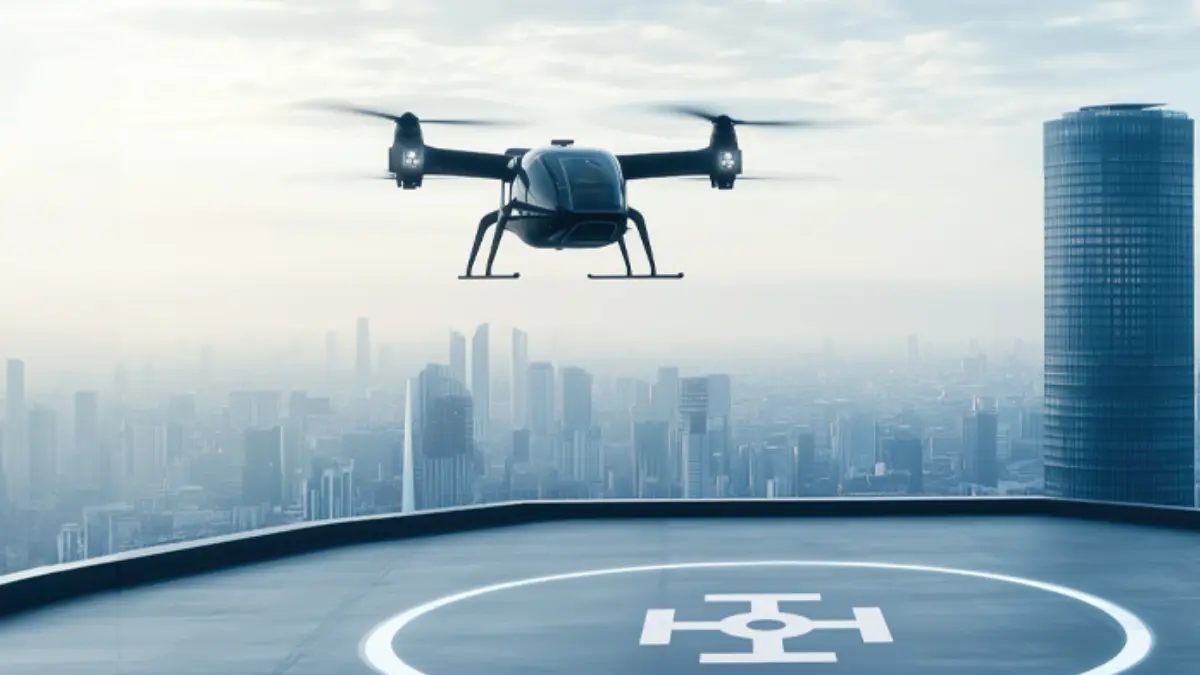
Welcome back to Air Taxi Central! Amit here, and today is October 2, 2026. If you have been following the aviation news over the past few weeks, you already know that September was an absolute whirlwind for the flying taxi industry in the United States.
However, my inbox has been flooded with messages from readers who are excited but genuinely confused about the massive government program behind all the headlines. People keep asking me what the FAA eIPP actually is, why North Texas was chosen as the primary testing ground, and what all these demo flights mean for everyday commuters.
Today, we are answering every single one of those questions in this complete curiosity guide so you can understand exactly how these electric air taxis will fit into your life.
To understand why everyone in aviation is talking about Texas right now, we first need to look at what the letters eIPP actually stand for. The eVTOL Integration Pilot Program is a special initiative run jointly by the United States Department of Transportation and the Federal Aviation Administration.
For several years, electric air taxi companies have been building prototypes and flying them around private, isolated fields in places like the California desert. While those test flights were important for proving that battery-powered aircraft could hover and fly forward, you cannot write federal aviation laws based only on flights in the middle of nowhere.
The government desperately needed real data collected in a bustling metropolitan environment where aircraft deal with real weather patterns, tall buildings, and busy civilian airspace. The eIPP exists to create that exact bridge between experimental flights and safe, everyday commercial transportation.
You might wonder why federal regulators chose North Texas instead of crowded cities like New York or Los Angeles for these high-profile demonstration flights. Texas actually became the sixth official location approved under the national program, but it quickly became the most important.
The operations have been centered around Perot Field Fort Worth Alliance Airport, right in the heart of the booming Dallas-Fort Worth metroplex. Anyone who has ever tried driving across North Texas during morning or evening rush hour knows the highways are practically gridlocked on a daily basis.
The massive suburban spread makes it an ideal testing ground for regional air mobility because the demand for faster point-to-point travel is off the charts. On top of that, local city leaders and the Texas Department of Transportation have welcomed aviation companies with open arms, cutting through regulatory delays to get charging infrastructure approved quickly.
One of the main stars of this Texas pilot project is Joby Aviation, which has emerged as an undisputed leader in passenger air taxis. Joby brought its five-seat S4 electric vertical takeoff and landing aircraft to North Texas to show how an electric ridesharing service would work in real time.
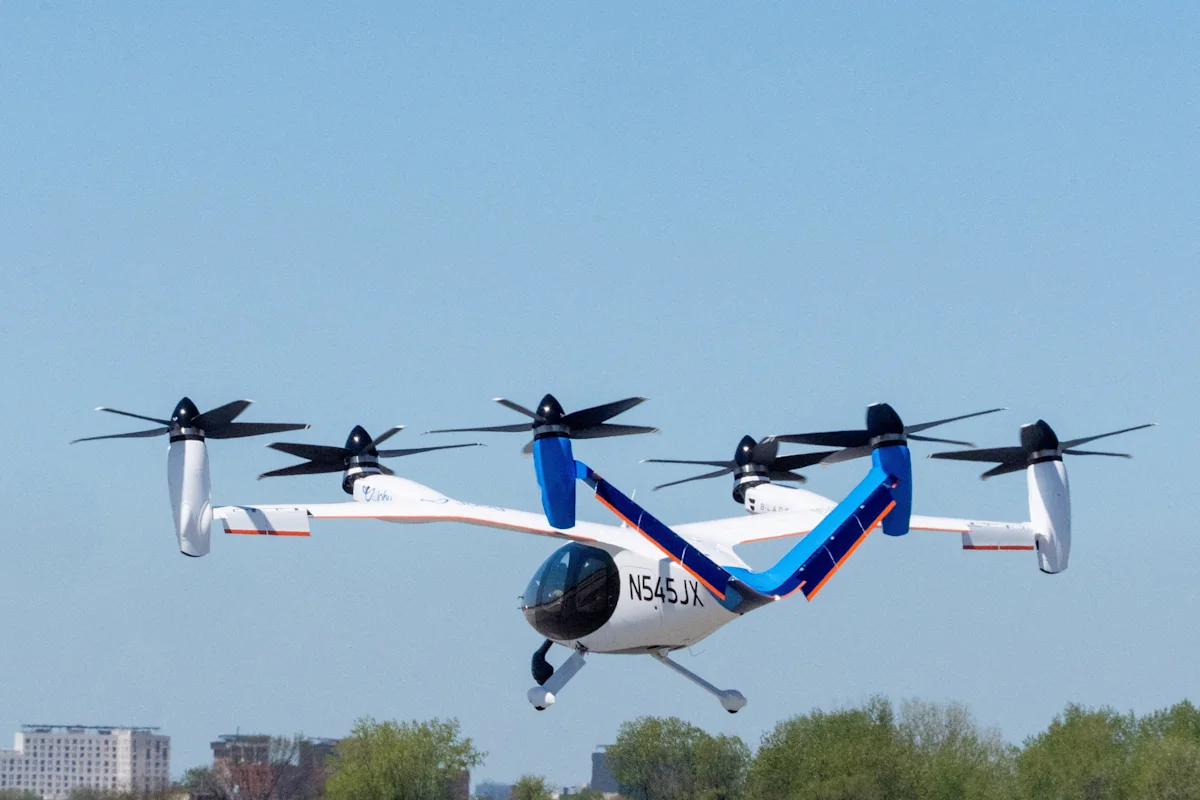
Because Joby has a long-standing partnership with Uber, their goal is to make hailing a flight across town as effortless as opening an app and calling a standard car. During these September eIPP demonstrations, Joby was not just evaluating how the plane flew.
Their ground crews were actively testing how quickly they could hook up high-voltage battery chargers, how fast travelers could move through security and board the cabin, and how quietly the aircraft could hover over residential neighborhoods without disturbing anyone below.
Easily the most nerve-wracking and impressive part of the entire Texas demonstration was when Joby flew its electric aircraft straight into Dallas Fort Worth International Airport. DFW is one of the busiest airport hubs in the entire world, handling thousands of giant commercial passenger jets every single day.
Taking a small, lightweight electric aircraft and inserting it into the exact same arrival and departure streams as massive Boeing and Airbus airliners requires incredible coordination. Federal air traffic controllers had to practice tracking the electric aircraft on standard radar systems while communicating with pilots in real time. Successfully proving that electric air taxis can safely land at a major global airport without causing delays shows that future passengers will easily be able to skip highway gridlock and fly directly to their airport terminal.
What makes the situation in Texas even more exciting is that Joby Aviation is not packing up their bags and leaving now that the initial September demonstration flights have wrapped up. The company has officially signed a lease on a massive 45,000-square-foot facility right at Perot Field in Fort Worth.
This massive hangar and office complex is going to serve as their permanent regional headquarters for training pilots, servicing aircraft, and organizing ground support operations. Setting up a permanent physical presence in North Texas gives Joby an enormous head start. When the Federal Aviation Administration finally issues the final commercial passenger air taxi certifications, Joby will already have the buildings, staff, and vertiport arrangements ready to launch paid passenger routes immediately.
Joby is not the only aerospace giant making waves in the Lone Star State. BETA Technologies also brought its sleek, all-electric ALIA aircraft to North Texas to test a completely different side of the advanced air mobility equation. While Joby is laser-focused on moving daily commuters and business executives, BETA is aiming heavily at cargo logistics, express medical delivery, and defense operations.
Flying valuable medical samples, emergency organ shipments, or high-priority replacement parts does not require passenger amenities like luxury leather seats or fancy airport lounges. Because carrying cargo carries less immediate safety risk than flying crowds of passengers, many aviation analysts believe that electric cargo flights will actually receive commercial clearance before passenger air taxis do. Having both Joby and BETA in the eIPP tests gives regulators a complete picture of the entire market.
These flight demonstrations around Fort Worth and Dallas are merely the opening chapter of a much larger statewide travel transformation. State officials and private developers are already looking at using the flight data gathered from the eIPP to design a connected regional air corridor linking Dallas, Austin, San Antonio, and Houston.
Driving between these four major Texas cities currently takes hours on crowded interstates like Interstate 35. A dependable network of quiet, zero-emission electric air taxis could slash those travel times down to under an hour, linking the state’s largest business hubs together in a way that has never been possible before. It represents a dramatic shift in how people will choose where to live, work, and commute.
My Final Thoughts: As we enter October 2026, it is impossible not to feel amazed by how fast this technology has moved from theoretical blueprints into real city skies. In my opinion, the FAA eIPP in Texas has been the single most critical bridge connecting the dream of flying cars to actual everyday reality. Proving that electric aircraft can integrate with massive international airports like DFW without causing chaos is the exact evidence regulators needed to see. The future of quiet, clean air travel is arriving much sooner than most people expect. Would you be willing to hop in an electric air taxi to skip traffic on your next trip to the airport? Let me know your thoughts in the comments below!

