

The Dubai flying taxi service is officially getting ready to launch, and this world-first commercial flight project is much closer than you think. While other major cities like New York or London are still talking about the idea or running small tests, Dubai has already signed the deals and started building the actual stations where these aircraft will land.
This isn’t just a science project or a fancy show for a tech convention; it is a real business designed to carry everyday passengers across the city. By moving transportation into the sky, Dubai is proving that it can solve traffic problems in a way that no other city has managed to do yet.
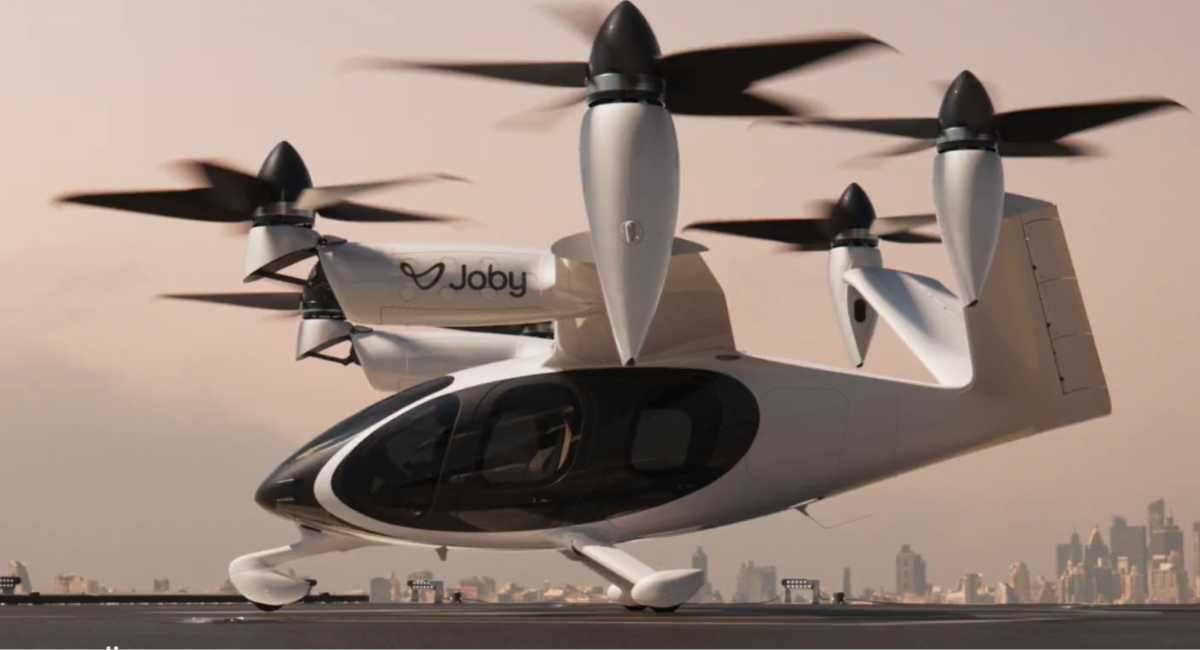
The plan is to have these flying taxis in the air by the year 2026, which is only a short time away. The city is working closely with a company called Joby Aviation to launch electric planes that can take off and land straight up and down like a helicopter.
These vehicles are designed to be very quiet and safe, making them perfect for flying over busy neighborhoods without bothering the people below. Because the government of Dubai is fully supporting the project and providing the money and rules needed to make it happen, they are moving much faster than the rest of the world.
In just a couple of years, you could be booking a flight across the city just as easily as you call a car on your phone today.
Dubai is acting as the big test for the entire world to see if flying taxis actually work for normal people. If the service is successful there, it will show other countries that sky travel is safe, fast, and worth the investment.
The city is building four special “vertiports” near the airport and popular downtown areas to make sure the taxis are easy to find and use. When these flying taxis start moving people over the desert and the skyscrapers, it will mark the beginning of a new era in history.
Dubai isn’t just joining the future of travel; it is building it first so that every other city can eventually follow their lead.
Why Dubai First? (Not New York or LA?)
People ask this question all the time: why would flying taxis launch in Dubai before American cities?
The answer: Dubai is better prepared than anywhere else on Earth.
Dubai has:
- Government support – The government wants flying taxis. They’re funding it. They’re fast-tracking permits.
- Money – Dubai has more money than it knows what to do with. They can build infrastructure fast.
- Space – Dubai is spread out. Long distances between areas. Flying taxis make sense here.
- Tourism – 15+ million tourists visit Dubai every year. They’ll pay $200+ per ride. That’s revenue.
- No red tape – UAE regulations move fast. No 3-year environmental reviews. Decisions happen quickly.
- Perfect weather – Dubai has clear weather most of the year. Perfect for flying vehicles.
- Existing vision – Dubai already positioned itself as a future city. Flying taxis fit the image.
Note: The above information is based on announcements from companies and Dubai government. Plans can change. Launch dates can shift. But as of April 2026, Dubai is the most likely first city.
The Dubai Flying Taxi Plan (Official)
Dubai officially announced plans for flying taxis.
Launch date: Late 2026 or early 2027
Who’s involved:
- Joby Aviation – Primary partner (most likely)
- EHang Holdings – Chinese company already flying (also possible)
- Archer Aviation – Might participate
- Other companies – Possibly

Key route:
Dubai Airport to Downtown Dubai
Distance: ~25 km
Current taxi time: 45-60 minutes (bad traffic)
Flying taxi time: 15-20 minutes
Cost estimate:
$200-400 per seat (more expensive than Uber, cheaper than helicopter)
Number of flights:
Starting: 10-20 flights per day
Growing to: 50-100+ flights per day by 2027-2028
The Infrastructure (Already Ready!)
Here’s why Dubai can launch so fast:
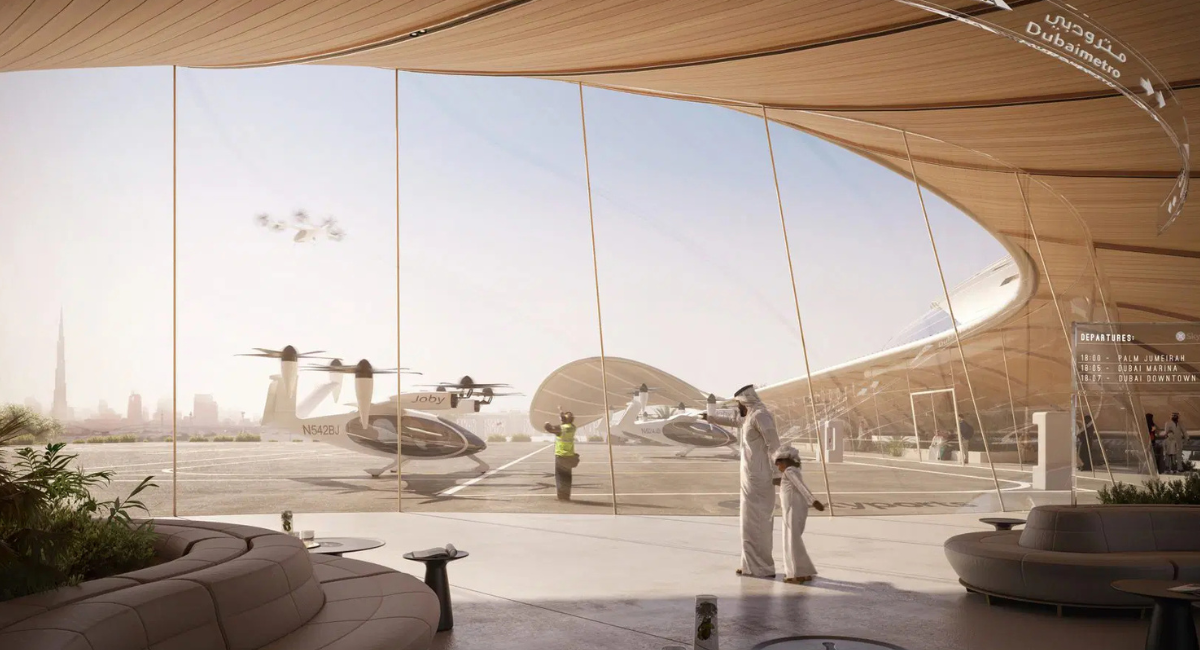
Vertiports (Landing pads):
Dubai is already building dedicated vertiports.
Main vertiports planned:
- Dubai Airport (international starting point)
- Downtown Dubai (main hub)
- Palm Jumeirah (luxury destination)
- Marina Bay (tourist area)
- Business Bay (corporate area)
Each vertiport is a dedicated landing pad + waiting area + charging station. Most are ALREADY BUILT or under construction. This is why Dubai is fast. Other cities are still arguing about WHERE to build them.
Power/Charging:
Dubai has modern electricity infrastructure. Flying taxis need charging between flights. Dubai’s power grid is already very advanced. So finally no infrastructure problem here.
Air Traffic Control:
Dubai’s airspace is already heavily managed. They control helicopter traffic, tourist flights, airport operations. By adding flying taxis to existing air traffic management is relatively easy.
Which Company Will Actually Operate?
No doubt! Joby Aviation
Why?
- Joby has $3.2 billion funding (enough to operate anywhere)
- Joby is partners with major international firms
- Joby has been in talks with Dubai for over a year
- Joby wants to expand beyond USA
- Dubai launch would make Joby “first” globally
Second possibility: EHang Holdings
Why?
- EHang is Chinese (Middle East friendly)
- EHang already has flying passengers in China
- EHang has less FAA restrictions (not US company)
- EHang could launch faster than Joby
- Already flying some routes
Possible: Archer Aviation
Why?
- Archer is also major player
- Could partner with Joby
- Has good international reach
Unlikely: Lilium
Why?
- More complex jet-powered design
- More development time needed
- Less funding than Joby/Archer
- Probably won’t be ready until 2028+
My prediction: Joby will operate in Dubai.
But EHang is strong second choice.
The Countdown: Dubai’s Flying Taxi Launch Timeline
Phase 1: The Final Countdown (Now – April 2026)
We are currently in the home stretch. As of April 2026, the physical world is catching up to the vision. Construction on the main vertiport at Dubai International Airport (DXB) is nearly finished, with the structure about 80% complete.
The government has already cleared the major legal hurdles, and the tech teams at Joby Aviation are performing final “check-outs” on the aircraft that will soon become a common sight in the Dubai skyline.
Phase 2: The Summer of Testing (June – July 2026)
Things are about to get loud—or rather, impressively quiet. This summer, you’ll start seeing the first official test flights across the city. This isn’t just for show; it’s a rigorous “proving phase” where regulators watch every take-off and landing to ensure 100% safety.
During these months, the first wave of specialized pilots and ground crews will begin their high-intensity training programs at the newly completed vertiports in Dubai Marina and The Palm.
Phase 3: The Final Polish (September – October 2026)
By autumn, the “paperwork” side of things will be set in stone. The General Civil Aviation Authority is expected to issue the final commercial licenses during this window.
This is the “dress rehearsal” stage, featuring full safety demonstrations and staff drills to make sure the passenger experience—from booking on an app to boarding the craft—is as smooth as catching a standard taxi.
Phase 4: Liftoff (November – December 2026)
The moment the world has been waiting for arrives at the end of the year. Commercial service officially begins, likely starting with the flagship route between DXB Airport and Downtown Dubai. Expect a “soft launch” approach: a limited number of flights (around 10 to 20 per day) to ensure perfection.
Being an early adopter won’t be cheap—initial tickets are expected to be in the $200 to $400 range (roughly 730 to 1,470 AED), aimed at business travelers and tourists looking for the ultimate “Dubai experience.”
Phase 5: Scaling Up (2027 and Beyond)
Once the system proves it works, the “premium” label starts to fade as it becomes a part of daily life. In 2027, more routes will open up, connecting Dubai to Abu Dhabi in just 20 minutes.
As the number of flights jumps to 100+ per day, the “Uber-effect” kicks in. Prices are expected to drop toward the $150 mark, eventually aiming to be no more expensive than a luxury car service on the ground.
Where Will the First Flying Taxis Go?
The very first route you’ll be able to fly is almost certainly going to be the trip from Dubai International Airport to Downtown Dubai. Even though it’s only about 25 kilometers, anyone who has lived in or visited Dubai knows that traffic on that road can be a nightmare.
By taking to the sky, you can skip about 45 minutes of sitting in a car. This route is the top priority because it’s a straight shot without many obstacles, and it’s exactly what busy travelers and tourists are willing to pay extra for. Plus, it’s a great way for the city to show off its new tech to the thousands of people landing at the airport every single day.
While the airport run is the main goal, there are a few other short trips being planned that will save people an incredible amount of time.
For example, driving from Downtown to Palm Jumeirah can take 40 minutes during rush hour, but a flying taxi can do it in just 5 minutes.
Other quick hops, like going from the airport to the Dubai Marina or between Downtown and Business Bay, would turn 30-minute traffic jams into 3-minute flights. Even though these other options are exciting, the city is focusing all its energy on the Airport-to-Downtown route first to make sure the launch is a total success.
How Much Will it Cost in Dubai?
Joby’s estimated pricing:
- Short route (5-10 km): $200-250
- Medium route (15-25 km): $250-400
- Long route (30+ km): $400-500
Airport to Downtown (25 km):
- Estimated price: $300-400
Comparison:
- Uber from airport: $30-50 (takes 60 minutes)
- Taxi from airport: $50-80 (takes 60 minutes)
- Private helicopter: $500-800 (takes 15 minutes)
- Flying taxi: $300-400 (takes 15 minutes)
So flying taxi is cheaper than helicopter but more than Uber.
Why This Matters for the World
Dubai launching first is HUGE for the entire industry.
If Dubai succeeds:
- Proves it’s safe – Real commercial service, zero accidents = credibility
- Proves demand exists – Real people pay for it = market is real
- Shows profitability – How much companies make = financial model
- Attracts competitors – Other cities demand flying taxis
- Accelerates timeline – Everyone else speeds up
- Drives down costs – Success attracts investment, lowers prices
If Dubai fails:
- Delays everything – Bad publicity hurts industry
- Spooks investors – Money dries up
- Delays other cities – Caution spreads
- Validates skeptics – Critics say “I told you so”
Dubai’s success is CRITICAL for the entire flying taxi industry.
The Companies Watching Closely
Everyone is watching Dubai:
- Joby Aviation – Wants to succeed
- Archer Aviation – Learning lessons for their launch
- Lilium – Studying Dubai’s approach
- Vertical Aerospace – Tracking every detail
- Volocopter – Planning Europe launch
- EHang – Competing to expand
- Other startups – Dreaming of their own launch
- Governments everywhere – Seeing what works
- Airlines – Considering partnerships
Dubai’s success = everyone copies Dubai.
Infrastructure Details (What’s Being Built)
Downtown Vertiport:
Location: Downtown Dubai (near Burj Khalifa)
Size: 10,000 sq meters
Capacity: 200+ flights per day
Features:
- Multiple landing pads (safe, no congestion)
- Waiting lounge (comfortable, modern)
- Fast charging (20-30 min between flights)
- Staff training facilities
- Emergency systems (safety first)
Airport Vertiport:
Location: Dubai International Airport
Size: 15,000 sq meters
Capacity: 300+ flights per day
Features:
- Connection to airport terminals (easy access)
- Customs/immigration facility (international flights)
- Charging stations (lots of power)
- Multi-level design (efficient use of space)
The Business Model (How Money Works)
Revenue per flight:
Assuming:
- 5 passengers per flight
- $300 average price per passenger
- 100 flights per day
Daily revenue: $150,000
Monthly revenue: $4.5 million
Annual revenue: $54.75 million
Operating costs per flight (estimated):
$500-700 per flight (pilot, electricity, maintenance, staff)
Profit per flight:
$300 price – $600 cost = -$300 loss per flight initially
Wait… they lose money?
Yes. At first. That’s normal.
Why?
Because:
- Aircraft costs are amortized (spread across years)
- Vertiport costs are amortized
- Launch phase always loses money
- Takes years to break even
By 2027-2028, costs will drop (battery cheaper, more flights, efficiency gains).
Competitive Advantage for Dubai
Dubai gets these benefits:
First-mover advantage:
- Learn what works
- Train staff best practices
- Build reputation
- Attract investment
- Set global standards
Tourism boost:
- 15 million tourists come to Dubai
- Many will pay $300+ for flying taxi experience
- Media coverage (free advertising)
- Becomes “must-do” tourist activity
Tech leadership:
- Dubai positions itself as innovation hub
- Attracts tech companies
- Builds reputation for future-forward thinking
Data collection:
- Real flying taxi data
- Safety records
- Cost data
- Customer preferences
- Routes data
All this data is gold for improving flying taxi business.
Dubai Flying Taxi: Frequently Asked Questions (FAQ)
Is the Dubai flying taxi safe to fly?
Yes, these aircraft are very safe. Before they carry any passengers, they must pass hundreds of hours of testing. They use multiple motors, so if one fails, the others keep the taxi flying. While no new technology is 100% perfect, flying in the sky is statistically much safer than driving a car on a busy highway.
How much will a flying taxi ticket cost in Dubai?
At the start, prices will be premium, ranging between $300 and $400 (AED 1,100 to AED 1,470). While this is more expensive than a normal Uber, it is much cheaper than hiring a private helicopter, which can cost over $600. As the service grows in 2027, prices are expected to drop.
How do I book a flying taxi in Dubai?
You cannot book a flight right now. Official bookings are expected to open in late 2026 (around September) once the government gives the final green light. There will likely be a dedicated app, similar to Uber or Careem, where you can reserve your seat.
What happens to flying taxis during bad weather or rain?
Just like regular airplanes at the airport, flying taxis will not fly if the weather is dangerous. If there is a rare heavy rainstorm or a thick sandstorm in Dubai, the service will be paused until the sky is clear and safe again.
Will flying taxis create new jobs in Dubai?
Yes! This new industry will create thousands of jobs. Even though the planes are high-tech, the city will need human pilots, expert mechanics to fix the batteries, ground staff to manage the vertiports, and customer service teams to help passengers.
When will other cities get flying taxis?
The world is watching Dubai. If the launch in 2026 is successful, experts believe cities like Los Angeles, New York, and London will follow quickly in 2027 or 2028. Dubai is the “test case” that will prove this works for everyone else.
My Honest Opinion: Dubai is the Spark for a Global Revolution
I truly believe Dubai will hit its goal of launching by late 2026, with Joby Aviation leading the charge. This isn’t just another cool project for the city; it is the “spark” that will start a fire across the entire world.
When people see regular passengers flying over the Burj Khalifa to get to the airport, the conversation will change from “is this possible?” to “why don’t we have this yet?” If Dubai succeeds—and all signs point to “yes”—the global impact will be massive and immediate.
Within just two years of Dubai’s first flight, we will see a domino effect. Major cities like Los Angeles, New York, London, and Tokyo will feel the pressure to launch their own services to stay competitive.
By 2028, flying taxis won’t just be a “Dubai thing”; they will be a “global city” thing. Governments that are currently slow to make rules will suddenly find a way to speed up because they won’t want to be left behind in the old way of traveling.
Looking five years into the future, the world will look completely different. We can expect over 50 cities to have active flying taxi routes.
As more companies join the market, the technology will get cheaper, and ticket prices will likely drop to between $100 and $200.
At that point, it becomes a normal way to travel—not just for the rich, but for anyone who is in a hurry. Dubai is starting a billion-dollar industry this year, and it’s going to change how humans move around the planet forever.
Questions About Dubai Flying Taxis?
Email us: contact@airtaxicentral.com or amit@airtaxicentral.com