

Archer Aviation is not waiting around. While other companies are still testing prototypes, Archer Aviation is preparing to launch commercial flights in major U.S. cities next year.
The company has a clear advantage most competitors don’t: United Airlines already said it will use Archer’s aircraft.
That’s huge. United Airlines isn’t just investing money—United Airlines is committing to actual customers. When you have an airline saying “we want your flying taxis,” you’re not talking about someday. The company is talking about next year.
Here’s what you need to know about Archer Aviation and why the flying taxi company is positioned to win the U.S. market.
Quick Facts: Archer Aviation
- Company Name: Archer Aviation, Inc.
- Headquarters: Palo Alto, California
- Founded: 2018
- Co-Founders: Brett Adcock & Adam Goldstein
- Stock: NYSE: ACHR
- Current Status: Public (SPAC merger 2021)
- Aircraft: Midnight (4-6 passengers)
- First Commercial Flight: 2027 (Los Angeles & New York)
- Current Funding: $550+ million
- Major Investors: United Airlines ($60M), Fidelity, Stellantis (Chrysler)
- Timeline to Market: 2027
The Story: How Archer Aviation Started
Archer Aviation was founded in 2018. That’s later than Joby Aviation (founded 2009), but Archer Aviation moved incredibly fast.
The turning point came when United Airlines invested $60 million. That wasn’t just money—United Airlines made a commitment. The airline said Archer Aviation’s aircraft would be part of United Airlines’ future network. That’s a customer commitment, not just an investor bet.
Then Stellantis got involved. Stellantis is the company that owns Chrysler, Jeep, Ram, Fiat, Peugeot, and dozens of other brands. Stellantis isn’t just investing. Stellantis is helping Archer Aviation build actual manufacturing capacity. When you need to produce thousands of aircraft, you need manufacturing expertise. Stellantis has that in spades.
Suddenly, Archer Aviation wasn’t just another startup. Archer Aviation became the flying taxi company that had a real airline customer and a real manufacturing partner.
When I first analyzed Archer Aviation, I was skeptical. The company seemed late to the market compared to Joby. But then I dug deeper into the United Airlines partnership.
That’s when I realized Archer’s advantage: a guaranteed customer. Most eVTOL companies are hoping for customers. Archer already has one committed. That changes everything.
Why Archer Aviation Is Different
Archer Aviation has something most eVTOL companies don’t: actual demand from a major airline.
Most companies hope someday an airline will want their aircraft. United Airlines is already on board. United Airlines is planning integration. United Airlines is preparing vertiports at major airports. This is the difference between theory and execution.
The United Airlines Advantage
United Airlines invested in Archer Aviation for one reason: Archer Aviation fits United Airlines’ business model. United Airlines wants to offer air taxi service to its passengers. When someone lands at LAX on a United flight, United Airlines wants them to take an Archer aircraft into downtown LA. When they’re ready to return, another Archer aircraft takes them back to the airport.
This is seamless integration. Archer Aviation becomes part of the United Airlines network. United Airlines gets a new revenue stream. Archer Aviation gets guaranteed demand.
No other eVTOL company has this relationship locked in.
The Stellantis Manufacturing Partnership
Stellantis owns massive manufacturing plants. Stellantis knows how to build vehicles at scale. When Archer Aviation needs to go from 100 aircraft per year to 1,000 aircraft per year, Stellantis can help with that conversion.
This matters because manufacturing is the hardest part of the hardware business. Anyone can build a prototype. Very few companies can build 10,000 copies without failing.
Archer Aviation has Stellantis backing the manufacturing side.
The Midnight Aircraft
Archer Aviation’s aircraft is called Midnight. Here’s what makes Midnight unique.
The Specifications
- Passengers: 4 (plus 1 pilot)
- Range: ~28 miles
- Speed: ~100 mph cruising
- Takeoff: Vertical (no runway needed)
- Landing: Vertical (no runway needed)
- Battery: Proprietary design
- Noise: ~80 dB (quiet, comparable to normal traffic)
- Seats: Premium comfort design
Why Midnight Matters
Archer Aviation designed Midnight to be comfortable. This isn’t just “it flies.” Archer Aviation thought about passenger experience. The seats are better. The windows are bigger. The interior feels like a premium experience, not cramped.
That’s important because if someone is paying $10-15 for an air taxi ride, they want it to be better than sitting in traffic. Archer Aviation’s Midnight aircraft is designed with that in mind.

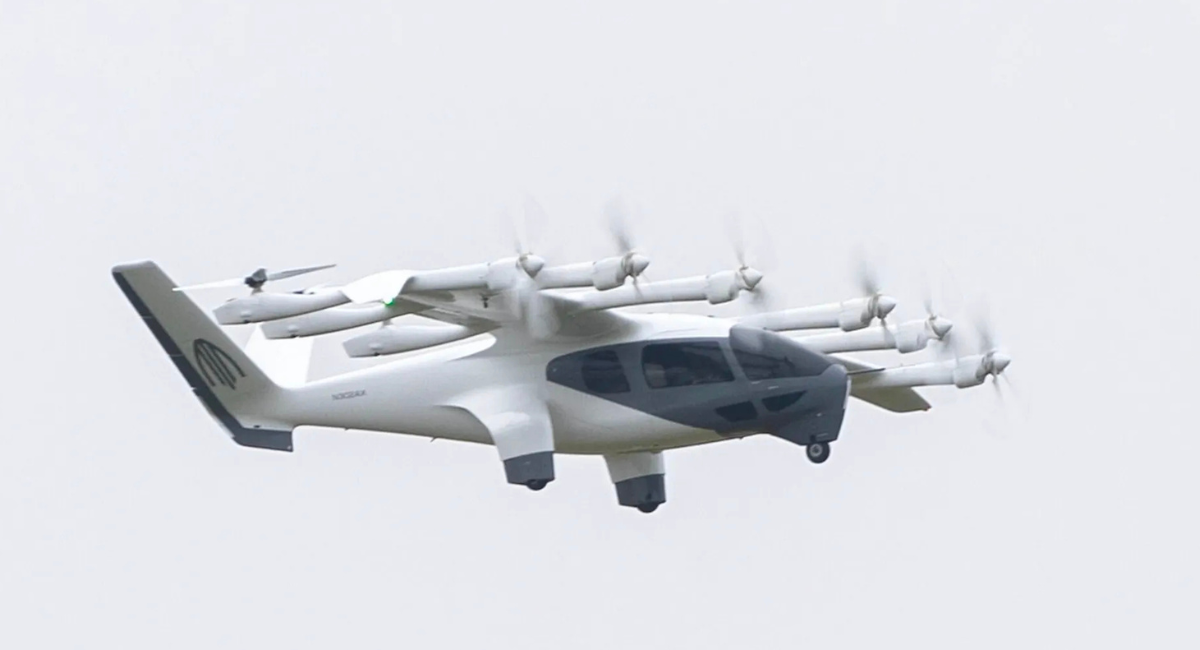
Midnight vs. Joby’s S4
Joby’s S4 has longer range (35 miles vs. 28 miles). Joby’s S4 is faster (120 mph vs. 100 mph). But Midnight has a nicer interior and was designed specifically for the U.S. market where Archer Aviation operates.
These are different design choices. Joby prioritized range and speed. Archer Aviation prioritized passenger comfort and U.S. market fit.
The Timeline: When Will Archer Aviation Fly?
2026:
- Continued FAA testing
- Manufacturing setup in Hawthorne
- No commercial flights yet
2027:
- Los Angeles commercial launch (likely Q1-Q2)
- New York commercial launch (likely Q3-Q4)
- First paid passenger flights
- Multiple vertiports open
2028-2029:
- Chicago, San Francisco, other cities
- Production scaling up
- United Airlines integration deepening
- Thousands of daily flights
2030+:
- National network emerging
- Hundreds of aircraft operating
- Regular integration with United Airlines flights
- Market expansion
Archer Aviation is about 12 months behind Joby. That’s not a huge gap in a race that’s just starting.
The Funding: Who’s Backing Archer Aviation?
Total Raised: $550+ Million
Major Investors:
- United Airlines – $60 million (strategic partner AND customer)
- Fidelity – Major venture capital backing
- Stellantis – Manufacturing partnership and investment
- Global Founders Capital – Early investor
- Emerson Climate – Strategic investor
The investor list is strong. Fidelity is serious venture money. Stellantis is serious manufacturing. United Airlines is a serious customer.
Here’s the honest comparison: Joby raised $976 million. Archer Aviation raised $550 million. That’s a significant difference. More money means more time to experiment and refine. Archer Aviation has less runway, which means Archer Aviation needs to execute faster.
This is actually not bad. It creates pressure to focus and deliver.
Stock Performance: NYSE: ACHR
Archer Aviation went public via SPAC merger in 2021 at $10/share.
What Investors Watch:
- FAA approval progress
- Flight test results
- Manufacturing setup at Hawthorne
- United Airlines partnership deepening
- Los Angeles and New York launch timelines
- Production ramp-up schedule
Archer Aviation’s stock has been volatile. Stock price goes up on good news (FAA approvals, test flights). Stock price goes down on market conditions or timeline concerns.
Timeline announcements = Stock price impact for these companies.
The Competition: How Archer Aviation Compares
Archer vs. Joby:
- Joby has more funding ($976M vs. $550M)
- Archer has United Airlines customer (major advantage)
- Joby is further ahead on timeline (2026 vs. 2027)
- Archer is U.S.-focused (easier regulatory path)
- Joby has Toyota (better at manufacturing)
- Archer has better interior design (passenger experience)
Overall: Joby is slightly ahead, but Archer has significant advantages.
Archer vs. Lilium:
- Archer has more funding ($550M vs. $350M) ✓ Archer
- Lilium has longer range (jet-powered) ✓ Lilium
- Archer is closer to launch (2027 vs. 2027-28) ✓ Archer
- Archer has better U.S. partnerships ✓ Archer
Overall: Archer is positioned better.
Archer vs. Others:</strong>
- Archer has more funding than most competitors
- Archer has better partnerships
- Archer has clearer timeline
- Archer likely wins the U.S. market share
The United Airlines Advantage (Why This Matters)
This deserves its own section because the United Airlines relationship is Archer Aviation’s biggest competitive advantage.
United Airlines didn’t just invest money. United Airlines made a strategic commitment. United Airlines sees air taxis as part of United Airlines’ future business.
What This Means
When Archer Aviation launches in Los Angeles in 2027, United Airlines won’t be wondering “should we use this?” United Airlines is already planning for it. United Airlines is planning vertiports near LAX. United Airlines is planning passenger integration.
Other airlines are watching. They’ll have to decide: do the same thing or let United Airlines win this market?
This creates a network effect. United Airlines gets a head start with air taxi integration. Archer Aviation gets guaranteed demand from the largest airline customer they could possibly have.
Manufacturing: The Stellantis Partnership
Stellantis is massive. Stellantis owns manufacturing plants across the United States and Europe.
When Archer Aviation needs to scale from prototypes to production aircraft, Stellantis can help. Stellantis knows how to build quality vehicles at scale. Stellantis knows supply chains. Stellantis knows quality control.
This is exactly what Archer Aviation needs.
Joby has Toyota for similar reasons. Both companies are smart: partner with someone who knows how to manufacture at scale.
Investment Opportunity & Risks
Why Consider Archer Aviation?
- United Airlines customer (real demand)
- U.S. market focus (largest market)
- Stellantis manufacturing backing
- 2027 timeline (very soon)
- Multiple cities planned
Risks to Consider:
- Execution risk (timelines slip frequently)
- Regulatory risk (FAA could be stricter)
- Adoption risk (will passengers actually use?)
- Competition (Joby might win)
- Less funding than Joby ($550M vs. $976M)
- Stock volatility (depends entirely on news)
Realistic Assessment
Archer Aviation is a solid company with real advantages. United Airlines customer commitment is huge. Manufacturing partnership with Stellantis is solid. U.S. market focus is smart.
But Archer Aviation is slightly riskier than Joby because of less funding and slightly later timeline.
Both could succeed. In a $94 billion market, there’s room for multiple winners.
Conclusion
Archer Aviation is the most likely Joby competitor to actually succeed.
United Airlines didn’t invest in Archer Aviation for fun. United Airlines did it because Archer Aviation makes sense for United Airlines’ business. When a major airline commits like that, it means the company is credible.
By 2030, Archer Aviation could be operating in 5-10 major U.S. cities, flying 5,000+ daily flights, and generating $200M+ in annual revenue.
That’s a $1B+ company. That’s real success.
The difference between Archer and other competitors is simple: Archer has a customer. Most competitors are hoping someday an airline wants their aircraft. Archer Aviation already has that commitment.
—
My Opinion: Amit’s Analysis
For Archer specifically, I believe the company has been underestimated by investors. United Airlines’ commitment is the real story. When an airline of United’s size says “we’re integrating this into our network,” that’s not investor hype. That’s business reality. I’d be watching Archer more closely than some analysts suggest.
Quick Links & Contact
Official Website: archer.com
Stock Ticker: NYSE: ACHR
Latest News: archer.com/news
Social Media:
- Twitter: @ArcherAviation
- LinkedIn: Archer Aviation
- Instagram: @archerstartup
Investor Contact: investor@archer.com
Press Contact: media@archer.com
Last updated: March 30, 2026 All financial data from Crunchbase, SEC filings, and official press releases Stock information current as of publication date.