

Lilium is doing something completely different. While Joby and Archer are building electric helicopters (vertical takeoff with rotors), Lilium decided to build a jet.
Not a traditional jet. A distributed electric jet with 30+ small engines working together. It’s a fundamentally different engineering approach. And it gives Lilium unique advantages that competitors don’t have: longer range, higher speed, and a clear path to dominate Europe while others fight over the U.S. market.
Quick Facts: Lilium
Company Name: Lilium N.V.
Headquarters: Munich, Germany
Founded: 2015
Founder/CEO: Daniel Wiegand & Yves Yilmaz
Stock: NASDAQ: LILM
Current Status: Public (SPAC merger 2021)
Aircraft: Lilium Jet (4-6 passengers)
First Commercial Flight: 2027-2028 (Munich/Rome)
Current Funding: $350+ million
Major Investors: Baillie Gifford, Skytaxi (Saudi Arabia), Japan Airlines
Timeline to Market: 2027-2028
The Unique Approach: Why Jet-Powered?
Lilium is different. While Joby and Archer are building electric helicopters (vertical take-off with rotors), Lilium is building a jet.
Specifically, a distributed electric jet. Not one big engine. Multiple small jet engines that work together.
Why? Let me explain.
Battery vs Jet Approach:
Most eVTOLs use big batteries that power electric motors + rotors. Think: electric helicopters.
Lilium said “what if we use multiple small electric jets instead?”
It’s a completely different engineering approach. More like a small airplane that can hover.
Why this matters:
- Range: Lilium can fly 150+ miles (vs Joby 35 miles)
- Speed: Up to 150+ mph (vs Joby 120 mph)
- Payload: Can carry more weight
- Performance: Better in bad weather
- Passenger experience: Feels more like an airplane, less like a helicopter
The Aircraft: Lilium Jet Explained
Specifications:
- Passengers: 4-6 (internal variant)
- Range: 150+ miles
- Speed: 150+ mph (faster than others)
- Take-off: Vertical (no runway)
- Landing: Vertical (no runway)
- Engines: Distributed electric jets (multiple)
- Noise: Different (jet-like sound vs rotor whine)
- Payload: Heavier capacity than Joby/Archer

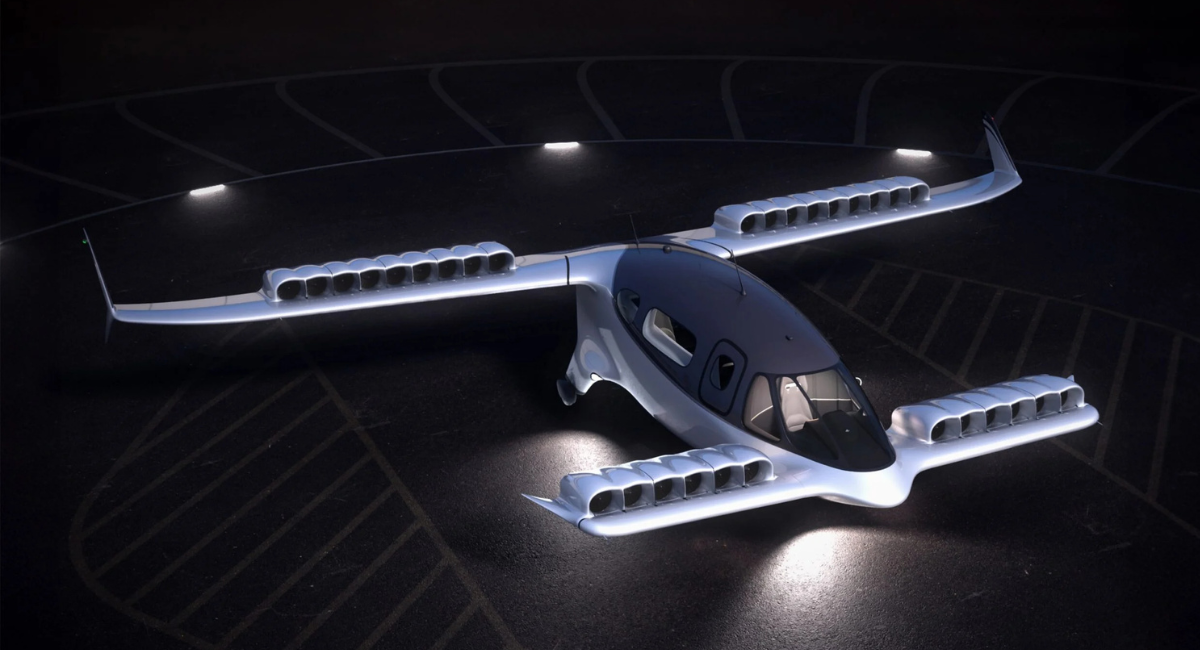
How it works:
Lilium has 30+ small electric jet engines distributed across the wings. On takeoff, the wings tilt to vertical and all engines point down. Aircraft rises.
Once airborne, wings tilt to horizontal, aircraft flies like a small jet. Extremely smooth.
Landing is the reverse. Tilt wings to vertical. All engines point down. Descend vertically.
It’s a hybrid between helicopter (vertical flight) and jet (horizontal flight).
Why this is cool:
The hybrid approach means:
- Smooth flight (jet-like, not helicopter)
- Long range (can fly 150 miles)
- Fast (150+ mph)
- Can land anywhere (vertical capable)
Why this is complicated:
- More engines = more moving parts
- More complex certification
- More potential for failure points
- Needs more advanced flight control systems
- More expensive to develop
The European Strategy: Why Munich & Rome?
Lilium is European. The company is currently focused on European cities first.
Why Europe?
- Regulatory advantage – EASA (European regulator) is being more flexible than FAA
- Distance markets – Europe has many cities 100-200 miles apart
- Lilium’s range advantage – Their 150-mile range is perfect for Europe
- Air service gaps – Flying between Paris-London, Munich-Rome makes sense
- Infrastructure – European cities more amenable to new tech
First Routes (planned):
- Munich ↔ Stuttgart (100 miles)
- Munich ↔ Ingolstadt (50 miles, BMW city)
- Rome ↔ Milan (250 miles, stretched version)
- London ↔ Paris (200 miles, potential)
- Frankfurt ↔ Cologne (150 miles)
These are regional routes, not city air taxi service. That’s different from Joby/Archer.
Lilium is going for “inter-city air service” rather than “urban air taxi.”
The Timeline: When Will Lilium Fly?
2026:
- Continued certification with EASA
- Aircraft testing
- Vertiport planning in Europe
2027:
- Munich commercial launch (likely)
- First revenue flights between regional cities
- EASA final certification
2028:
- Rome service expansion
- Other European cities
- Scaled operations
2030+:
- Network across Europe
- Multiple routes
- Scaled aircraft (larger versions)
- Potential expansion to Asia/Americas
Key difference: Lilium’s timeline is LATER than Joby (2026) and Archer (2027).
Lilium is planning 2027-2028. That’s 1-2 years behind.
Funding & Investors: German Tech Backing
Total Raised: $350+ Million
Major Investors:
- Baillie Gifford – UK investment firm (major stake)
- Skytaxi/Saudi PIF – Saudi Arabia sovereign fund
- Japan Airlines (JAL) – Japanese airline partnership
- Honeywell – Aerospace parts supplier + investor
- Porsche SE – Porsche’s holding company
- Blackstone – Major investor
Key partnerships:
- Honeywell: Aerospace systems supplier
- Porsche: German manufacturing expertise
- JAL: Asian growth potential
The investor list is strong, but less “household name” than Joby’s Toyota or Archer’s United.
Baillie Gifford is respected. Porsche is prestigious. But it’s not the same level of strategic backing as Joby/Archer.
Funding comparison:
- Joby: $976M
- Archer: $550M
- Lilium: $350M
Lilium has significantly less funding. That’s a risk factor.
Stock Performance: NASDAQ: LILM
Lilium went public via SPAC in 2021 at $10/share.
Current Price:
Varies (check Yahoo Finance)
Market Cap: $1-2 billion range
Volume: Lower than Joby/Archer
Stock Considerations:
Lilium’s stock has been more volatile and down more than competitors. Why?
- Lower funding than Joby/Archer
- Later timeline to revenue
- European regulatory uncertainty
- Less strategic backing (no major airline customer commitment)
- Technology still proving itself
If Lilium achieves 2027 timeline, stock could recover dramatically.
If delayed to 2028-2029, stock stays under pressure.
The Competition: Lilium vs Others
vs Joby:
- Joby: More funding ($976M vs $350M)
- Lilium: Longer range (150 miles vs 35 miles)
- Joby: Closer to commercial (2026 vs 2027-2028)
- Lilium: European advantage (EASA vs FAA)
- Joby: Better strategic backing (Toyota)
- Lilium: Unique jet technology
Winner for US market: Joby
Winner for European market: Lilium
vs Archer:
- Archer: More funding
- Lilium: Longer range
- Archer: United Airlines customer
- Lilium: European advantage
- Archer: Closer timeline
- Lilium: Unique technology
Winner: Archer (by most metrics)
vs Volocopter (Europe competitor):
- Lilium: More funding
- Lilium: Longer range
- Lilium: Better partners (Honeywell, Porsche, JAL)
- Lilium: Likely to win European market share
Why Europe First? Strategic Wisdom
Lilium chose Europe for smart reasons.
European advantages:
- EASA Flexibility – European regulators more flexible than FAA
- Distance Markets – Cities are 100-200 miles apart (perfect for Lilium’s range)
- Air Service Gaps – Train is slow, flying makes sense
- Regulatory Environment – Favorable policies for innovation
- Germany Advantage – Home country = home court
vs US approach:
Joby and Archer are going for US first (biggest market). But US also has:
- Stricter FAA certification
- Dense competition (multiple companies)
- Shorter distances (ideal for Joby/Archer’s smaller range)
Lilium’s strategy: Dominate Europe first, then go global.
It’s a smart move given their capabilities (long range, European partners).
The Jet Engine Advantage & Disadvantage
Advantages of jet approach:
- Long range (150+ miles)
- High speed (150+ mph)
- Smooth ride (less turbulent than helicopter)
- Heavy payload (can carry more)
- Professional experience (feels like airplane)
Disadvantages of jet approach:
- More complex engineering
- Longer certification (more moving parts to certify)
- Noisier (jet sound vs. quiet rotor)
- More expensive (more engines = higher cost)
- Maintenance (more engines = more maintenance)
Honest assessment: Jet approach is innovative but higher risk.
If it works, Lilium’s range advantage is huge.
If certification takes too long, Joby/Archer launch while Lilium is still testing.
Japan Airlines Partnership: Asia Gateway
Lilium has Japan Airlines as an investor. This is significant.
JAL is:
- One of Asia’s largest airlines
- Influential in Asia Pacific region
- Looking at air mobility solutions
- Gateway to Asian market
What does this mean?
By 2030, Lilium could potentially:
- Launch in Tokyo region
- Connect regional Japanese cities
- Expand to other Asian cities
- Partner with Asian airports
This gives Lilium Asia growth potential that Joby/Archer don’t have (at least not yet).
Recent News & Milestones
2024-2025:
- EASA certification testing ongoing
- German government support
- Honeywell partnership deepening
- Vertiport planning in Munich
2025-2026:
- Certification progress continues
- First commercial aircraft building
- Munich infrastructure development
- Partner announcements
2026-2027:
- EASA certification expected
- Munich commercial launch
- Revenue flights begin
- European network expansion
Investment Opportunity & Risks
Why consider Lilium?
- European focus – Different market than Joby/Archer
- Long range – 150+ miles vs. 35 miles (others)
- Fast speed – 150+ mph enables longer routes
- Porsche backing – German manufacturing expertise
- JAL partnership – Asia growth potential
- Unique technology – Differentiated from competitors
Risks:
- Lower funding – $350M is tight for hardware startup
- Later timeline – 2027-2028 vs. 2026-2027 (others)
- Jet complexity – More complex = longer certification
- Regional strategy – Slower market than city air taxi
- Stock volatility – Underperformed Joby/Archer stocks
- Execution risk – Unproven jet technology at scale
- EASA certification – Regulatory uncertainty in Europe
Realistic Assessment:
Lilium is riskier than Joby/Archer because:
- Less funding
- Later timeline
- More complex technology
- Smaller strategic backing
But:
- Jet technology could be breakthrough
- Europe market less competitive
- Japan Airlines partnership significant
- Could still be successful and profitable
Conclusion on Lilium
Here’s my honest opinion. Lilium is the most innovative but riskiest of the three. Their jet approach is cool, but it’s also unproven.
Joby and Archer are building helicopters (proven technology). Lilium is building jets (new approach).
New approaches are exciting but risky. That said, if Lilium pulls it off, it could dominate Europe and potentially Asia.
By 2030, I think Lilium could be operating in 5-10 European cities, flying 3,000+ daily flights, generating $150M+ revenue. But that’s more speculative than Joby/Archer.
For conservative investors: Joby or Archer
For high-risk/high-reward: Lilium
Both could work out. Lilium is just riskier.
Quick Links & Contact
Official Website: lilium.com
Stock Ticker: NASDAQ: LILM
Latest News: lilium.com/news
Social Media:
- Twitter: @LiliumAircraft
- LinkedIn: Lilium
- Instagram: @liliumaircraft
Investor Contact: investor-relations@lilium.com
Press Contact: press@lilium.com
Read Next
Want to compare all three companies?
Check out our guides:
- Joby Aviation (US market leader)
- Archer Aviation (United Airlines backed)
Subscribe to Air Taxi Central for weekly updates on Lilium’s EASA certification progress, European expansion plans, and technology milestones.
Last updated: April 1st, 2026
All financial data from reliable sources.