New York City is about to solve one of its biggest headaches: traffic that never stops. Flying taxis are going to be and its not an imagination anymore. Air Taxis are real, tested, and officially arriving. Within just a couple of years, you won’t just be looking at the skyline; you’ll be flying through it.
Companies like Joby Aviation and Archer Aviation aren’t just talking. They’ve already flown over Manhattan, worked with the city government, and secured spots at some of the world’s busiest airports. This is the new reality of New York travel.
When Will Flying Taxis Actually Arrive in NYC?
If you feel like you’ve been hearing “it’s coming soon” for years, you’re not alone. But 2026 has changed everything. In April 2026, the company Joby Aviation completed the first-ever point-to-point test flights in New York City. The company flew their electric aircraft from JFK Airport directly to the Downtown Manhattan Heliport. It wasn’t a computer simulation—it was a real aircraft landing on a New York pier.
The Real Timeline
- Late 2026: This is the big target. The company expects to start limited commercial flights after finishing the final stages of FAA certification.
- 2027: The company Archer Aviation plans to launch its primary “shuttle” service between Newark Liberty International Airport and Downtown Manhattan.
- 2028-2030: This is when things go “mainstream.” Expect to see multiple routes and more than just a few flights a day. By 2030, grabbing a flying taxi to the airport will be as normal as calling an Uber.
Why New York Needs This Now
New York has a massive traffic problem. In 2025 alone, the average NYC driver lost over 100 hours sitting in traffic. That is time you never get back.
The JFK Nightmare: Getting from JFK to Manhattan by car usually takes 60 to 90 minutes. If there’s a crash on the Van Wyck? Good luck—you’re looking at two hours. A flying taxi does that same trip in about 7 minutes.
The Demand is Built-In: Over 130 million people pass through JFK, LaGuardia, and Newark every year. Even if only a small group of business travelers and tourists use this service, the companies will have more customers than they can handle.
The First Routes: Where You’ll Actually Fly
The goal isn’t to fly you from your house to the grocery store. It’s to fix the most painful commutes in the city.
| Route | Car Time | Flying Taxi Time | Likely Launch |
|---|---|---|---|
| JFK to Downtown Manhattan | 60-90 mins | 7-10 mins | Late 2026 |
| Newark to Downtown Manhattan | 50-70 mins | 10 mins | 2027 |
| LaGuardia to Midtown | 30-45 mins | 5-7 mins | 2027 |
| Manhattan to Westchester | 60+ mins | 15 mins | 2028+ |
Why these routes first?
The company Joby is partnering with Delta Air Lines, and the company Archer is teamed up with United Airlines. Because these airlines have “hubs” at JFK and Newark, they want to give their premium passengers a seamless way to get from the plane to the office without touching the Brooklyn-Queens Expressway.

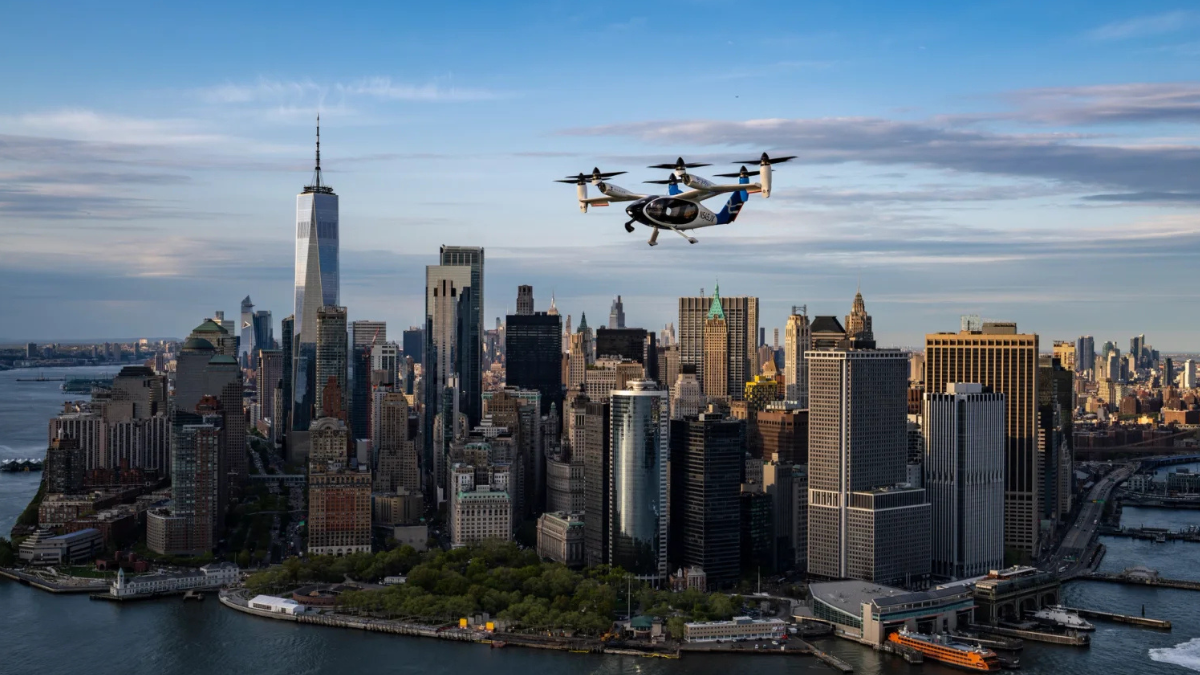
travel across the city, including flights to JFK. (Photo: Joby Aviation)
Cost: Is This Only for the 1%?
Let’s be honest: at launch, it won’t be cheap. However, it is designed to become more affordable as time goes on.
- Early Price: Expect to pay between $150 and $250 per seat for a trip to JFK.
- The Comparison: A private helicopter ride currently costs about $200-$300. An Uber Black can easily hit $150 during surge pricing.
- The Long-term Goal: The company aims to eventually bring the price down to the level of an UberX. As the technology scales and more people fly, the cost of the batteries and maintenance will drop.
Infrastructure: Where Do They Land?
You can’t just land a flying taxi in the middle of Times Square. These aircraft need Vertiports.
The “Downtown Skyport”: In 2025, a company called Skyports Infrastructure took over the Downtown Manhattan Heliport. They are currently overhauling it, adding high-speed electric chargers. By late 2026, it will be the primary “hub” for these flights.
Airport Vertiports: The Port Authority of New York and New Jersey is already part of a federal pilot program. They are working to make sure JFK and Newark have dedicated spaces where these taxis can land and take off without interfering with traditional jet traffic.
Investment Guide: How to Play the Market
If you want to do more than just ride in one, you might be looking at the stocks. This industry is high-risk but offers significant upside.
1. Joby Aviation (JOBY)
The company is currently the leader. They have the most test flights, the most money in the bank (over $3 billion in funding), and a massive partnership with Toyota to help them build the aircraft. They recently acquired Blade Air Mobility’s passenger business, giving them an instant list of wealthy New York customers.
2. Archer Aviation (ACHR)
The company Archer has a major deal with United Airlines. United has already “pre-ordered” $1 billion worth of their aircraft. If you believe in the Newark-to-Manhattan route, Archer is the play. They are also working with Stellantis (the company behind Jeep and Ram) to mass-produce their “Midnight” aircraft.
The Technology: Safety and Noise
Many people ask, “Isn’t it just a loud helicopter?” The answer is a firm no. These are eVTOLs (electric Vertical Take-off and Landing).
- Quiet: When a flying taxi is at 1,000 feet, you won’t even hear it over the sound of a normal New York street. The company Joby claims their aircraft is 100 times quieter than a traditional helicopter.
- Safe: If one motor fails, the others keep the aircraft in the air. There is no “single point of failure” like you have with a helicopter’s main rotor.
The Roadblocks
It’s not all clear skies. The company still faces three big hurdles:
- The FAA: The government is very careful. They won’t let these fly until they are as safe as a commercial airliner.
- Weather: New York winters are brutal. Wind, ice, and snow could ground the fleet for days at a time.
- The Grid: Charging dozens of aircraft at once requires a massive amount of electricity. The company and the city need to ensure the local power grid can handle it.
My (Amit’s) Opinion: NYC’s Aerial Future
In my view, we are watching the biggest shift in transportation since the subway opened in 1904. For over a century, we’ve been trapped on the ground, stuck behind a slow-moving trash truck or a stalled subway train. The arrival of flying taxis in New York is inevitable because the city simply cannot survive more traffic. We have run out of room on the streets.
The 2026 test flights proved that the technology is ready and the noise levels are acceptable for a city environment. Now, it’s just a matter of the government and the companies finishing the paperwork. If you can afford the ticket, you’re about to get your time back. And in New York, time is the only thing more expensive than the rent. The future isn’t a decade away—it’s arriving at JFK next year.
Finally: New York flying taxis are coming. Get ready to look up.