


Connect with us

Technology

How Do eVTOL Aircraft Actually Work?

Published

on

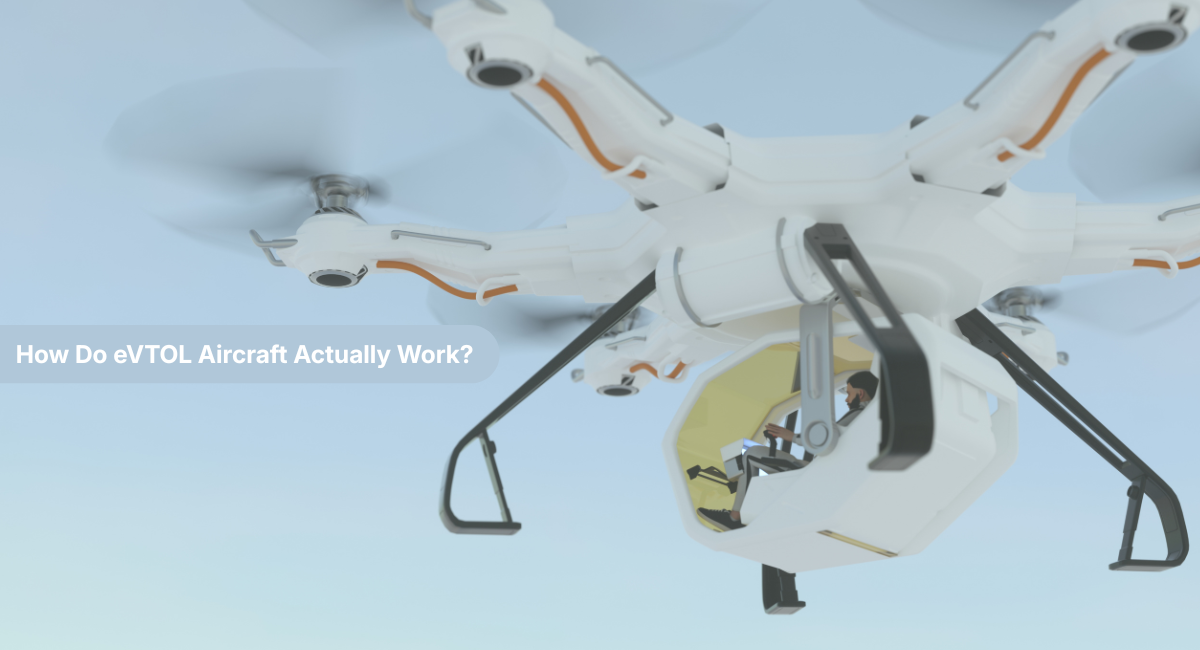
An eVTOL aircraft

Okay so I have been seeing all these headlines about flying taxis. Joby Aviation, Archer, everyone’s talking about it. And honestly, I was confused too.

I started reading about them and everything was super technical. “Distributed electric propulsion,” “rotor dynamics,” all this stuff that made my brain hurt. So I decided to actually understand what’s going on. And once I did? It’s way cooler than I thought.

Let me just explain it the way I understand it. No buzzwords. Just how this stuff actually works.

What Even Is an eVTOL?

eVTOL = electric vertical takeoff and landing.

Basically, it’s a plane that flies straight up instead of needing a runway. Sounds simple, but it’s kind of wild.

Picture this: you’re in downtown Manhattan. You call an air taxi. A small aircraft lands right there. You hop in with like 3 other people. And then 10 minutes later you’re at the airport, 10 miles away. No traffic. No sitting in gridlock. You just flew over everything.

That’s the dream these companies are trying to make real.

Why This Is Different From a Helicopter

I know what you’re thinking. We already have helicopters, right? Why do we need this?

Fair question. But helicopters are… loud. Like, REALLY loud. Neighbors hate them. Cities hate them. And they cost a fortune to operate—like $5,000 per hour.

eVTOLs are basically the opposite. They’re quiet. They run on batteries like a Tesla. And they’ll probably cost a fraction of what helicopters do. So instead of a screaming metal bird, you get something that sounds like a big electric motor. Which, honestly, is way less annoying.

How Does This Thing Actually Fly?

Imagine you’re flying a remote control helicopter. You spin the blades, and it flies up. Right? Same thing here, except these aircraft have like 4, 6, or 8 spinning propellers instead of one or two big blades.

The propellers spin. They push air down. Air pushes back up. You go up. That’s literally it.

The faster they spin, the more lift you get. You want to turn left? You spin the right propellers a little faster. Turn right? Speed up the left ones.

It’s the same physics as a drone. Except instead of costing $500, this thing costs millions and can carry people.

Most designs have the propellers tilting. So when you’re taking off, they point straight down. But as you go faster, they tilt forward to push you forward instead of just up.

The Battery Thing (This Is Actually Important)

Here’s the thing about batteries: they’re everything.

Your phone has a battery. It lasts maybe a day before you need to charge it. eVTOLs work the exact same way, except the battery is massive. We’re talking 1,000-2,000 pounds of battery.

That’s like… half the weight of the entire aircraft. Crazy, right?

But this battery? It gets you about 15 minutes of flight time. Maybe 20 if you’re really careful about how fast you go.

Now, 15 minutes sounds short. But think about it. Most flights in a city are shorter than that anyway. Downtown to the airport is like 15 minutes. Downtown to downtown across the city is maybe 10 minutes.

So you fly for 15 minutes, land, someone swaps out the battery (or it charges quickly), and you’re ready for the next flight. The battery doesn’t need to last 3 hours like a traditional airplane. It just needs to get you across the city.

Okay But What If Something Goes Wrong?

This is what everyone’s worried about. The honest answer? These things have crazy amounts of safety built in.

Most eVTOLs have 4 or 6 or even 8 motors. If one fails, you’ve still got several others keeping you in the air. It’s like a car—if you lose one tire, it’s not great, but you might be okay. Lose one motor out of six? Totally fine.

They also have multiple computers running the aircraft. If one computer fails, another takes over automatically. You probably wouldn’t even notice.

Some designs also have a parachute. If something really bad happens, the whole aircraft floats down on a parachute.
And pilots go through serious training. They practice emergency procedures, dealing with engine failures, bad weather, all that stuff. It’s similar to helicopter pilot training.

So yeah, eVTOLs are actually safer than you probably think.

Which Company’s Version Is Best?

There are different approaches to building these things.

Joby is probably leading the race right now. They’ve already got FAA approval to start flying. Their design has 4 tilting propellers. It’s elegant. Pretty simple.

Archer is also super close. Clean design. They’re probably launching around the same time as Joby.

Lilium is going the more advanced route. They’re using smaller jets distributed all over the wings. It’s more complex but probably more efficient. They might launch a bit later but with better performance.

EHang is the Asian company. They’ve actually been flying cargo. They might beat everyone to having passengers in the air, especially in Asia.
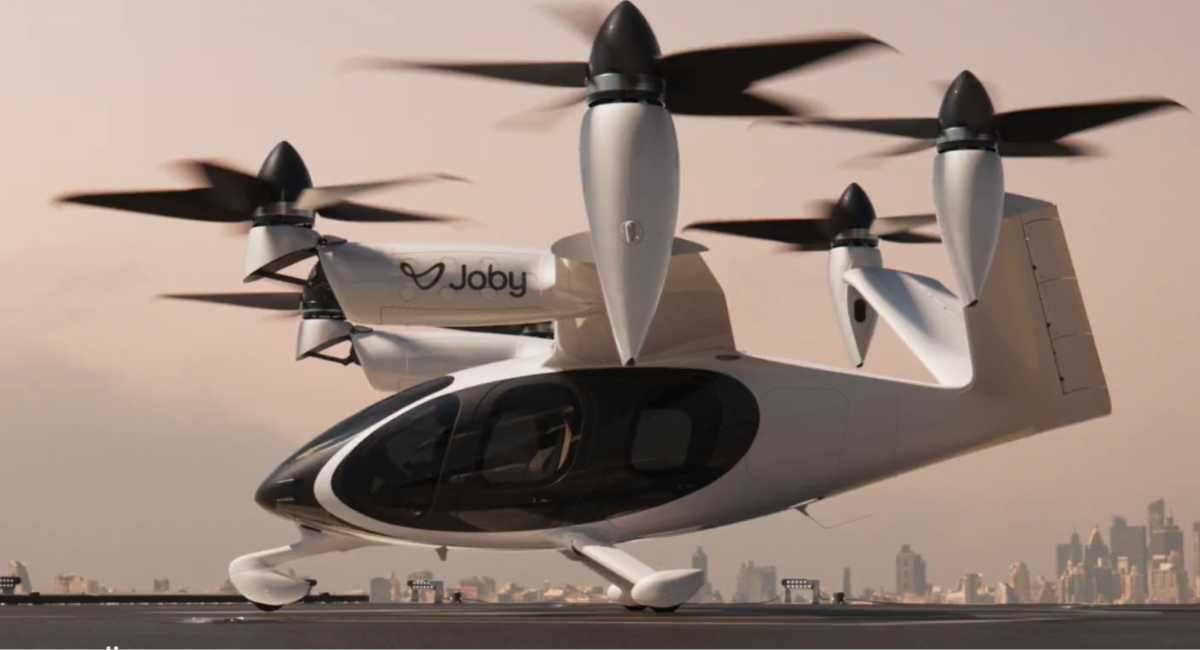
Joby Flying Car

Joby Flying Car (Image Credit: Joby Aviation )

All these companies have billions in funding. This isn’t some garage startup. This is actually happening.

So When Can I Actually Fly in One?

2026. That’s the year it starts getting real.

Dubai’s doing one first. Then probably the US. Then Europe. Then everywhere else.

Dubai Is Actually Winning This Race

Okay, so here’s the thing that surprised me. Everyone talks about Joby and Archer and which company will get certification first. But honestly? The real game-changer might not be the companies at all. It might be the cities.
And Dubai? Dubai is absolutely crushing it.

Why Dubai Is Ahead of Everyone Else

Think about it. Most cities have fragmented systems. Tons of different government agencies. Red tape. Bureaucracy. It takes forever to get anything done.

Dubai is different. The government said “we’re doing this” and it’s happening. No endless committee meetings. No conflicting regulations. Just clear direction from the top. This matters way more than people realize. Duncan Walker, who runs Skyports Infrastructure (they’re building the landing pads), says it best: you can have the best aircraft in the world, but if cities can’t agree on how to operate them, nothing happens.

Dubai agreed. Government, city planners, stakeholders—everyone on the same page. That’s rare.

They’re Building the Infrastructure First (Smart Move)

Here’s what’s wild: while everyone else is waiting for aircraft certification, Dubai is already building the vertiports (those are the landing pads and charging stations for air taxis).

Most cities are like “let’s wait for the planes to get approved, then we’ll build infrastructure.”

Dubai is like “let’s build the infrastructure now, so when planes are ready, we’re ready too.”
Smart, right?

Skyports is creating a network of these vertiport hubs across Dubai. High-capacity, fast turnaround, designed for tons of flights per day.
The cities that wait? They could be stuck in the slow lane when air taxis actually start flying.

The Challenges Are Real Though

Don’t get me wrong. It’s not a guaranteed win. Regulatory stuff is complex. Safety is a huge deal. And it’s expensive. Really expensive.
There’s also skepticism from traditional aviation. Lots of people are like “yeah right, this will never work.”

Plus, Archer and Joby are moving fast in other places too. The competition is real.
And geopolitical stuff? The Middle East has challenges that could affect everything. Nothing’s certain.

But Dubai Could Set the Standard

Here’s what’s interesting: if Dubai pulls this off, it changes everything. Every other city looks at Dubai and thinks “okay, so that’s how you do it.” Infrastructure first. Government alignment. Clear strategy.

Cities that have those things? They’ll be next. Dubai’s not just trying to be first. They’re trying to be the blueprint.

By 2028-2030, you should see air taxi services in major cities. It’ll probably start as super expensive (like $100-150 per person) for some miles. But over time, costs will drop. Eventually it might be cheaper than taking an Uber across town.

It’s wild to think about, but this is actually happening in like a year or so.
Air Taxi

Air Taxi

What’s Actually Holding This Back?

The technology works. Companies are funded. The FAA said “okay, you can do this.” So what’s the problem?

Batteries. They need to get better. Today’s batteries give you 15 minutes. For most city trips, that’s fine. But if you want longer flights, you need better batteries. This will improve.

Weather. Right now you can’t fly in heavy rain or strong wind. These aren’t bad-weather aircraft yet. That will improve too.
Cost. It’s expensive. A seat on a 4-person aircraft costs a lot to operate. Over time, production scales up, costs come down. Economics 101.

Regulations. Governments are still figuring out rules. How many can fly over a city? What altitudes? Who’s liable if something goes wrong? These questions are being answered now.

People being nervous. Some folks will be uncomfortable flying in a small electric aircraft at first. That’s normal. It’ll change once people see it’s safe.

None of these are deal-breakers. They’re just things that need time to solve.

The Real Question: Will You Actually Take One?

I think in 5 years, you probably will.

First it’ll be rich people or business travelers. They’ll pay the premium. But then costs come down. Convenience wins. Suddenly it’s normal.

In 10 years, you might fly in an eVTOL every week. Especially if you live in a big city. It might be as normal as taking an Uber.

That’s kind of crazy when you think about it. But honestly? Flying over traffic sounds pretty amazing to me.

Stay Updated

Here’s the thing: this stuff is moving fast. New announcements, funding, approvals, companies joining the race.

If you actually care about what’s happening with air taxis and eVTOLs, you need to stay in the loop.

That’s what I’m doing with Air Taxi Central. Breaking down the news. Explaining what it means. Tracking the timeline. Covering the companies that are actually going to make this happen.

Because 2026 is coming faster than you think.

Guides

What is Urban Air Mobility? The Future of City Transportation

Published

on

What is Urban Air Mobility

You’ve probably heard the term “urban air mobility” around. But what does it actually mean? So let me break it down. Urban air mobility is an emerging aviation market and an essentially the idea of moving people and cargo through the air using electric aircraft instead of cars and buses on the ground. Basically, the next evolution of transportation.

But it’s bigger than just flying taxis. It’s a completely different way of thinking about how cities move people around.

The Traffic Problem We’re Trying to Solve

Let’s start with the realistic topic. Traffic sucks.

You’re sitting in your car for 45 minutes to go 5 miles. Your Uber costs $20-30. You waste 2 hours a day. It’s maddening.

And it’s not just you. Globally, people spend billions of hours stuck in traffic every year. It costs economies trillions in lost productivity.
Cities are growing. More people = more cars = worse traffic. The roads can’t handle it. Building more roads doesn’t work (they just fill up with more cars).

So people started asking: What if we used a different layer?

Instead of more roads, what if we used the sky?

Enter Urban Air Mobility (UAM)

Urban air mobility is the answer to that question.

The concept is pretty straightforward: use the empty space above cities to move people.

Think about it. There’s a highway in the sky that nobody’s using. Above all those traffic jams, there’s unlimited airspace.

What if we could move people through that airspace instead of sitting in cars? That’s urban air mobility.

What Does UAM Actually Include?

Urban air mobility isn’t just one thing. It’s a whole ecosystem.

Air Taxis (eVTOLs)

This is the big one. Small electric aircraft that carry 4-6 people. They take off vertically. They fly point-to-point. They land vertically.

Think: flying Uber.

You call on your phone. A small aircraft lands near you. You get in with a few other people. You fly across the city. You land near your destination.

Done in 15 minutes instead of 45 minutes in traffic.

Cargo Drones

Autonomous drones delivering packages. Instead of trucks delivering to your house, a drone flies your package there.

Amazon Prime Air is trying to do this. So is everyone else.

Imagine: Your package arrives by drone in 30 minutes instead of 2 days.

Medical Helicopters (Evolved)

Emergency transport. Instead of a helicopter (loud and expensive), a smaller, quieter eVTOL gets you to the hospital faster.

Time matters in emergencies. Urban air mobility saves lives.

Last-Mile Delivery

Getting stuff from a warehouse to your neighborhood. Instead of trucks, use small autonomous aircraft.

Faster. Cheaper. Quieter.

Tourism & Sightseeing

Aerial tours of cities. Instead of a helicopter, smaller eVTOLs.

More accessible. Less expensive. Less noise.

Why Now? Why This Works?

Urban air mobility has been a dream for decades. So why is it happening NOW?

Three things changed.

1. Battery Technology Got Good

For years, batteries weren’t good enough. They were heavy. They didn’t hold enough charge. They were expensive.

That changed. Lithium-ion batteries improved dramatically. Now they’re light, powerful, and affordable.

Modern batteries can power an aircraft for 15-20 minutes with passengers. That’s enough for most city trips.

2. Electric Motors Got Efficient

Electric motors are simple and reliable. No fuel. No combustion. Just electricity. They’re also way more efficient than traditional engines. You get more power for less energy.

3. Companies Got Serious

Joby Aviation. Archer. Lilium. Vertical Aerospace. EHang.

These aren’t startups hoping to eventually work. These are companies with billions in funding. FAA approval. Real timelines.

They’re building actual aircraft. Right now.

How Urban Air Mobility Actually Works

Okay, so how does this system function?

The Aircraft

Small electric eVTOL aircraft. 4-6 passengers. Takes off vertically. Flies 50-100 mph. Lands vertically.

Range: 20-50 miles on a single battery.

Perfect for city-to-city or city-to-airport trips.

The Infrastructure

You need landing pads (vertiports) to take off and land. Think of them like bus stations but for aircraft.

A vertiport has:

  • Landing pads for aircraft
  • Battery charging stations
  • Passenger waiting areas
  • Integration with ground transportation

You’d have vertiports at:

  • Airports (airport to downtown)
  • Downtown hubs (business districts)
  • Hotels
  • Convention centers
  • Transit hubs

The System

  1. You book on an app (like Uber)
  2. Aircraft flies to pickup point
  3. You board with 3-4 other passengers
  4. Flight takes 10-15 minutes
  5. You land at destination
  6. You go about your day

Cost? Probably $50-200 per person initially. Then prices drop as scale increases.

The Network

Multiple aircraft flying simultaneously. You need air traffic management. Coordination. Safety systems.

This is the hardest part. How do you manage dozens or hundreds of aircraft flying through city airspace?

That’s being worked on right now.

The Cities Leading the Way

Some cities are ahead of the pack.

Dubai

Dubai is essentially the testbed for everything. They have government support. They’re building vertiports. They’re moving fast.
First commercial air taxi flights are launching there in 2026.

Los Angeles

So much traffic that they’re desperate for solutions. Multiple companies are operating there. Limited operations starting soon.

New York City

Similar to LA. Billions of people. Insane traffic. Perfect market for urban air mobility.
Joby is planning operations there.

Singapore

Smart government. Tech-forward. Testing urban air mobility infrastructure.

Europe

Multiple cities. Multiple countries. Lots of testing and development happening.

The Benefits (Why This Matters)

Okay, so why should you care?

Time

Stop wasting 2 hours a day in traffic. Fly instead.

For business, time = money. Cutting your commute from 45 minutes to 15 minutes? That’s worth something.

Environment

Electric aircraft. Zero emissions. No pollution.

Traditional transportation generates massive carbon. Electric aircraft? Clean.

Plus: no fuel needed. Just electricity (which can come from renewable sources).

Accessibility

For elderly, disabled, or injured people, flying is easier than driving or taking a bus.

Urban air mobility makes transportation more accessible.

Safety

Fewer cars on roads = fewer car accidents.

eVTOLs are actually designed with redundancy. Multiple engines. Multiple computers. Very safe.

Space

Cities are cramped. Cars take up massive space.

Using airspace instead of ground space = more room for housing, parks, businesses.

Speed

Obvious one. Flying is faster than driving.

Point-to-point in 15 minutes instead of 45 minutes in traffic.

Quality of Life

Less traffic = less pollution = less stress = better quality of life.

The Challenges (It’s Not Simple)

But there are real challenges.

Regulation

Governments are still writing rules. How many aircraft can fly over a city? What altitudes? What routes?
This is being worked out, but it’s complex.

Safety

Aircraft are safe. But public perception matters. People are nervous about flying.

Once people see it working, that’ll change.

Cost

Right now, flying is expensive. $150-300 per person.

Over time, costs will drop. But initially? It’ll be for wealthy people.

Weather

eVTOLs can’t fly in heavy rain, strong wind, or low visibility.

They’re fair-weather aircraft. This limits when they can operate.

Infrastructure

You need vertiports. You need charging stations. You need air traffic management.

Building all that costs money and takes time.

Noise

Electric motors are quiet. But multiple aircraft? Multiple takeoffs/landings?

There’s still noise. You need to manage where they can operate.

The Market (How Big Is This?)

This is the exciting part.

The urban air mobility market is projected to be:

2026: $3.6 billion globally
2030: $10+ billion globally
2040: $100+ billion globally

That’s assuming successful launches and adoption.

Why so big?

Because if this works, it changes how billions of people move around cities. That’s a massive market.

Every major city in the world would have its own urban air mobility system.

The Future of City Transportation - Air Taxi

Image Credit: sergey-koznov-EEQgjsvnaPU-unsplash

The Timeline (When Does It Actually Happen?)

Here’s the realistic timeline:

2026: First commercial operations launch

  • Dubai first
  • Then US (LA, New York)
  • Then Europe

2027-2028: Expansion to more cities

  • More routes
  • More aircraft
  • More vertiports

2029-2030: Mainstream adoption in major cities

  • Still expensive but accessible to more people
  • Regular service in 10+ cities globally

2031-2035: Integration with ground transportation

  • Seamless connections between air taxis and public transit
  • Common for business travelers

2035+: Autonomous aircraft

  • No pilots required
  • Costs drop significantly
  • Available to regular people, not just wealthy

Urban Air Mobility vs. Current Options

How does it compare?

vs. Cars:

  • Faster
  • No traffic
  • Quieter
  • Cleaner
  • But more expensive

vs. Public Transit:

  • Faster
  • Point-to-point
  • More convenient
  • But more expensive
  • Good complement (not replacement)

vs. Helicopters:

  • Quieter
  • Cheaper
  • Cleaner
  • Safer
  • Same speed

vs. Regular Airplanes:

  • Much shorter routes
  • No need for runway
  • Urban-focused
  • For short trips (not long distance)

The Bigger Picture

Urban air mobility is part of a larger transportation revolution.

Electric vehicles. Autonomous vehicles. Public transit improvements. Micro-mobility (scooters, bikes).

Together, they create a smarter, faster, cleaner transportation system.

Urban air mobility is just one piece of the puzzle.

Will This Really Happen?

The honest answer: YES.

Why I’m confident:

  1. Technology works – We’ve proven eVTOL technology works
  2. Money is flowing – Billions in funding from real companies
  3. Governments support it – FAA, EASA, national governments approving it
  4. Demand is real – Cities desperate for traffic solutions
  5. Timeline is real – 2026 launches aren’t hype, they’re happening

This isn’t speculation. This is happening in 2026.

The question isn’t “will it happen?” It’s “how fast will it scale?”

The Wild Part

In 5 years, you might be booking an air taxi like you book an Uber.

In 10 years, it might be normal.

In 20 years, people might look back and think it’s crazy we used to sit in traffic for hours.

That’s the urban air mobility future.

And it’s coming sooner than you think.

What This Means for You

If you live in a major city:

  • Within 5 years, you might have access to air taxi services
  • Within 10 years, it could be common
  • You could save hours every week on commutes

If you invest early:

  • Companies like Joby and Archer could be massive
  • Early investors might see significant returns
  • The technology is proven, scaling is underway

If you work in transportation, logistics, or real estate:

  • This changes everything
  • Vertiports need to be built
  • Cities need to plan for this
  • New jobs will be created

Urban Air Mobility: Current Stats & Market Reality

The Market is Exploding (And I Mean EXPLODING)

Here’s what’s actually happening with urban air mobility money right now. In 2024, the entire UAM market was worth about $4.6 billion. That might sound like a lot, but wait—it’s projected to hit $94 billion by 2035. That’s a 20x increase in just 11 years.

And the growth rate? Over 30% per year. For comparison, that’s faster than the early days of smartphones. This isn’t a slow burn. This is hockey stick growth.

Where’s the Money Going?

North America is currently leading with about 40% of the market. Makes sense—the US and Canada have the regulatory infrastructure and the money to make this work.

But here’s the interesting part: Asia-Pacific is catching up FAST. They’re projected to grow even faster than North America. China, Japan, and Singapore aren’t sitting on the sidelines. They’re building vertiports and testing aircraft.

The Aircraft Numbers

In 2024, globally, there were about 61,000 eVTOL aircraft in development or operation. By 2035? That number is projected to jump to over 875,000.

That’s not a gradual increase. That’s explosive growth. Think about that for a second. From 61K to 875K aircraft in 11 years.

Who’s Funding This?

Toyota invested a huge amount in Joby Aviation (roughly $894 million). That’s a major car company betting on flying taxis. Then you have EHang (already flying cargo), Volocopter, Archer Aviation, and Wisk Aero all raising massive funding rounds.

These aren’t small startups betting with pocket change. These are billion-dollar companies and major investors making serious bets on this future.

What Will People Actually Use This For?

Here’s an interesting stat: when asked what they’d use air taxis for, 71% of people said emergency and medical transport. That’s the most popular use case.

Airport shuttles come in second. Think about it—waiting in traffic for 45 minutes to get to the airport. With air taxis, that becomes a 15-minute flight. Worth paying for.

Other uses: corporate transport, sightseeing, special events. But medical and airports are the big ones.

The Regulatory Situation

The FAA and EASA (European regulators) are actually moving FAST on certification. This isn’t “maybe 10 years from now.” They’re actively developing frameworks right now. In fact, many expect the first commercial operations to start around 2025-2027. That’s 1-3 years away.

Paris and Rome are specifically mentioned as likely early adopter cities. Dubai’s already moving forward.

The Real Challenges (And Why They Matter)

Safety is the #1 concern. People are nervous about flying in small aircraft over cities. Understandable.

Noise is a big one too. Multiple aircraft flying over your city means noise management becomes critical. Though eVTOLs are way quieter than helicopters.

Infrastructure is the OTHER huge challenge. You can’t just fly aircraft everywhere. You need vertiports—landing pads, charging stations, passenger facilities.

Building that infrastructure takes time and money. But it’s happening now.

The Bottom Line on Stats

The numbers are clear:

  • Market growing 30%+ per year
  • $94 billion industry by 2035
  • 875,000+ aircraft globally
  • First commercial flights 2026-2027
  • Regulatory approval actively happening

This isn’t speculation anymore. This is capital allocation at scale. Real companies spending real money on real timelines. The stats don’t lie. The future is coming faster than most people realize.

Conclusion

Urban air mobility isn’t science fiction. It’s not coming in 50 years. It’s coming in 2-5 years.

Joby is launching in Dubai early 2026. Archer is preparing for US operations. Lilium is testing. EHang is already flying cargo.

This is real. It’s funded. It’s approved. It’s happening.

The question is: are you ready? Because the sky is about to get a lot more crowded.

And that’s actually a good thing.

Want daily updates on urban air mobility developments, company news, and the latest on eVTOL aircraft? Subscribe to Air Taxi Central. We cover the technology, the companies, the regulations, and the timeline. Because the future of transportation is happening right now.

Continue Reading

Trending