


Technology
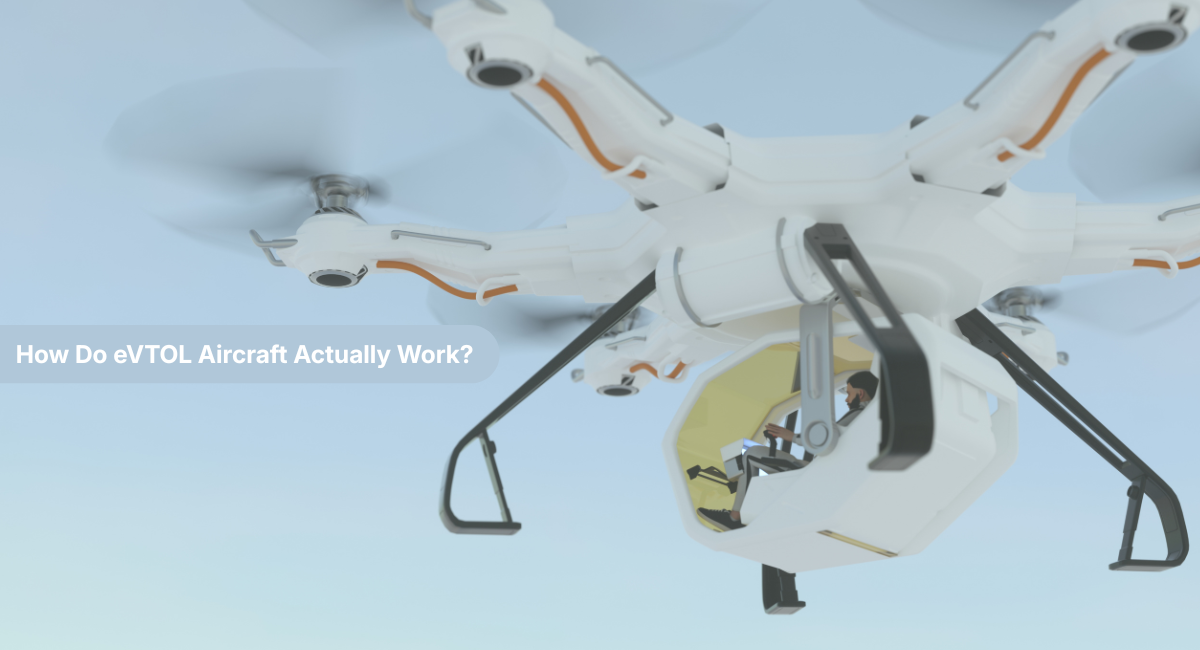
How Do eVTOL Aircraft Actually Work?
Okay so I have been seeing all these headlines about flying taxis. Joby Aviation, Archer, everyone’s talking about it. And honestly, I was confused too.
I started reading about them and everything was super technical. “Distributed electric propulsion,” “rotor dynamics,” all this stuff that made my brain hurt. So I decided to actually understand what’s going on. And once I did? It’s way cooler than I thought.
Let me just explain it the way I understand it. No buzzwords. Just how this stuff actually works.
What Even Is an eVTOL?
eVTOL = electric vertical takeoff and landing.
Basically, it’s a plane that flies straight up instead of needing a runway. Sounds simple, but it’s kind of wild.
Picture this: you’re in downtown Manhattan. You call an air taxi. A small aircraft lands right there. You hop in with like 3 other people. And then 10 minutes later you’re at the airport, 10 miles away. No traffic. No sitting in gridlock. You just flew over everything.
That’s the dream these companies are trying to make real.
Why This Is Different From a Helicopter
I know what you’re thinking. We already have helicopters, right? Why do we need this?
Fair question. But helicopters are… loud. Like, REALLY loud. Neighbors hate them. Cities hate them. And they cost a fortune to operate—like $5,000 per hour.
eVTOLs are basically the opposite. They’re quiet. They run on batteries like a Tesla. And they’ll probably cost a fraction of what helicopters do. So instead of a screaming metal bird, you get something that sounds like a big electric motor. Which, honestly, is way less annoying.
How Does This Thing Actually Fly?
Imagine you’re flying a remote control helicopter. You spin the blades, and it flies up. Right? Same thing here, except these aircraft have like 4, 6, or 8 spinning propellers instead of one or two big blades.
The propellers spin. They push air down. Air pushes back up. You go up. That’s literally it.
The faster they spin, the more lift you get. You want to turn left? You spin the right propellers a little faster. Turn right? Speed up the left ones.
It’s the same physics as a drone. Except instead of costing $500, this thing costs millions and can carry people.
Most designs have the propellers tilting. So when you’re taking off, they point straight down. But as you go faster, they tilt forward to push you forward instead of just up.
The Battery Thing (This Is Actually Important)
Here’s the thing about batteries: they’re everything.
Your phone has a battery. It lasts maybe a day before you need to charge it. eVTOLs work the exact same way, except the battery is massive. We’re talking 1,000-2,000 pounds of battery.
That’s like… half the weight of the entire aircraft. Crazy, right?
But this battery? It gets you about 15 minutes of flight time. Maybe 20 if you’re really careful about how fast you go.
Now, 15 minutes sounds short. But think about it. Most flights in a city are shorter than that anyway. Downtown to the airport is like 15 minutes. Downtown to downtown across the city is maybe 10 minutes.
So you fly for 15 minutes, land, someone swaps out the battery (or it charges quickly), and you’re ready for the next flight. The battery doesn’t need to last 3 hours like a traditional airplane. It just needs to get you across the city.
Okay But What If Something Goes Wrong?
This is what everyone’s worried about. The honest answer? These things have crazy amounts of safety built in.
Most eVTOLs have 4 or 6 or even 8 motors. If one fails, you’ve still got several others keeping you in the air. It’s like a car—if you lose one tire, it’s not great, but you might be okay. Lose one motor out of six? Totally fine.
They also have multiple computers running the aircraft. If one computer fails, another takes over automatically. You probably wouldn’t even notice.
Some designs also have a parachute. If something really bad happens, the whole aircraft floats down on a parachute.
And pilots go through serious training. They practice emergency procedures, dealing with engine failures, bad weather, all that stuff. It’s similar to helicopter pilot training.
So yeah, eVTOLs are actually safer than you probably think.
Which Company’s Version Is Best?
There are different approaches to building these things.
Joby is probably leading the race right now. They’ve already got FAA approval to start flying. Their design has 4 tilting propellers. It’s elegant. Pretty simple.
Archer is also super close. Clean design. They’re probably launching around the same time as Joby.
Lilium is going the more advanced route. They’re using smaller jets distributed all over the wings. It’s more complex but probably more efficient. They might launch a bit later but with better performance.
EHang is the Asian company. They’ve actually been flying cargo. They might beat everyone to having passengers in the air, especially in Asia.
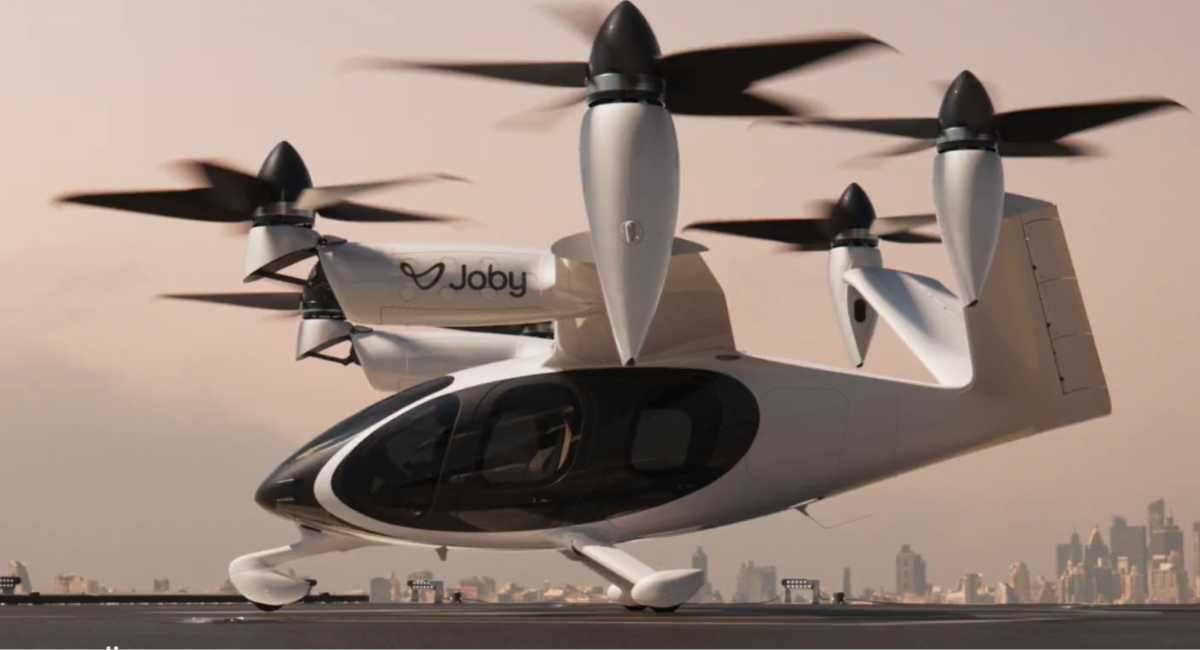
Joby Flying Car (Image Credit: Joby Aviation )
All these companies have billions in funding. This isn’t some garage startup. This is actually happening.
So When Can I Actually Fly in One?
2026. That’s the year it starts getting real.
Dubai’s doing one first. Then probably the US. Then Europe. Then everywhere else.
Dubai Is Actually Winning This Race
Okay, so here’s the thing that surprised me. Everyone talks about Joby and Archer and which company will get certification first. But honestly? The real game-changer might not be the companies at all. It might be the cities.
And Dubai? Dubai is absolutely crushing it.
Why Dubai Is Ahead of Everyone Else
Think about it. Most cities have fragmented systems. Tons of different government agencies. Red tape. Bureaucracy. It takes forever to get anything done.
Dubai is different. The government said “we’re doing this” and it’s happening. No endless committee meetings. No conflicting regulations. Just clear direction from the top. This matters way more than people realize. Duncan Walker, who runs Skyports Infrastructure (they’re building the landing pads), says it best: you can have the best aircraft in the world, but if cities can’t agree on how to operate them, nothing happens.
Dubai agreed. Government, city planners, stakeholders—everyone on the same page. That’s rare.
They’re Building the Infrastructure First (Smart Move)
Here’s what’s wild: while everyone else is waiting for aircraft certification, Dubai is already building the vertiports (those are the landing pads and charging stations for air taxis).
Most cities are like “let’s wait for the planes to get approved, then we’ll build infrastructure.”
Dubai is like “let’s build the infrastructure now, so when planes are ready, we’re ready too.”
Smart, right?
Skyports is creating a network of these vertiport hubs across Dubai. High-capacity, fast turnaround, designed for tons of flights per day.
The cities that wait? They could be stuck in the slow lane when air taxis actually start flying.
The Challenges Are Real Though
Don’t get me wrong. It’s not a guaranteed win. Regulatory stuff is complex. Safety is a huge deal. And it’s expensive. Really expensive.
There’s also skepticism from traditional aviation. Lots of people are like “yeah right, this will never work.”
Plus, Archer and Joby are moving fast in other places too. The competition is real.
And geopolitical stuff? The Middle East has challenges that could affect everything. Nothing’s certain.
But Dubai Could Set the Standard
Here’s what’s interesting: if Dubai pulls this off, it changes everything. Every other city looks at Dubai and thinks “okay, so that’s how you do it.” Infrastructure first. Government alignment. Clear strategy.
Cities that have those things? They’ll be next. Dubai’s not just trying to be first. They’re trying to be the blueprint.
By 2028-2030, you should see air taxi services in major cities. It’ll probably start as super expensive (like $100-150 per person) for some miles. But over time, costs will drop. Eventually it might be cheaper than taking an Uber across town.
It’s wild to think about, but this is actually happening in like a year or so.
Air Taxi
What’s Actually Holding This Back?
The technology works. Companies are funded. The FAA said “okay, you can do this.” So what’s the problem?
Batteries. They need to get better. Today’s batteries give you 15 minutes. For most city trips, that’s fine. But if you want longer flights, you need better batteries. This will improve.
Weather. Right now you can’t fly in heavy rain or strong wind. These aren’t bad-weather aircraft yet. That will improve too.
Cost. It’s expensive. A seat on a 4-person aircraft costs a lot to operate. Over time, production scales up, costs come down. Economics 101.
Regulations. Governments are still figuring out rules. How many can fly over a city? What altitudes? Who’s liable if something goes wrong? These questions are being answered now.
People being nervous. Some folks will be uncomfortable flying in a small electric aircraft at first. That’s normal. It’ll change once people see it’s safe.
None of these are deal-breakers. They’re just things that need time to solve.
The Real Question: Will You Actually Take One?
I think in 5 years, you probably will.
First it’ll be rich people or business travelers. They’ll pay the premium. But then costs come down. Convenience wins. Suddenly it’s normal.
In 10 years, you might fly in an eVTOL every week. Especially if you live in a big city. It might be as normal as taking an Uber.
That’s kind of crazy when you think about it. But honestly? Flying over traffic sounds pretty amazing to me.
Stay Updated
Here’s the thing: this stuff is moving fast. New announcements, funding, approvals, companies joining the race.
If you actually care about what’s happening with air taxis and eVTOLs, you need to stay in the loop.
That’s what I’m doing with Air Taxi Central. Breaking down the news. Explaining what it means. Tracking the timeline. Covering the companies that are actually going to make this happen.
Because 2026 is coming faster than you think.

Guides
eVTOL Air Traffic Management: The Flying Car revolution has a massive traffic problem
How will air traffic control handle thousands of eVTOL? Complete guide to airspace management challenges, technology solutions (UTM, DAA, ADS-B), and timeline for safe eVTOL integration into existing airspace.
We have all seen the official renders of electric vertical take-off and landing (eVTOL) craft whisking commuters over gridlocked highways. It’s a beautiful vision, but there’s a logistical elephant in the room that the industry is largely glossing over: the sky is actually getting pretty crowded.
Right now, our airspace is a neatly organized layer cake. You’ve got commercial jets cruising at 30,000 feet, general aviation and helicopters hanging out in the 1,000 to 3,000-foot range, and hobbyist drones capped at 400 feet. It’s a system built on decades of rules and human controllers keeping things easy.
Adding thousands of flying taxis changes everything. These planes fly low, take off straight up, and there will be a lot of them in a small space. This isn’t just a few extra flights; it is a massive amount of traffic that would be too much for human air traffic controllers to handle. The biggest problem for flying cars isn’t just the batteries or the noise—it’s the computer systems.
We need to figure out how to build a smart, safe system that can manage thousands of vehicles at once without any crashes. Until we solve this traffic puzzle, these futuristic rides won’t be taking off.
The Challenge of Coordinating Flying Taxis, Helicopters, Drones, and Planes in the Same Sky
How do thousands of eVTOL aircraft share airspace with helicopters, drones, and planes without constant near-misses?This is the air traffic management problem. And it’s one of the biggest challenges eVTOL faces.
This guide explains how current air traffic works. Why eVTOL breaks the system. What technology solutions exist. And when we’ll have answers.
How Air Traffic Works Today
To understand the problem, we first need to look at how we manage the sky right now. It is actually a very organized system based on height.
The Basic Setup:
Think of the sky like a tall building with different floors (called “Classes”). Everyone has a floor where they are allowed to be:
- The Top Floors: Big airplanes fly very high up, usually above 18,000 feet.
- The Middle Floors: These are for planes near big or medium-sized airports.
- The Bottom Floors: This is where small airports and private planes operate, usually closer to the ground.
How a Flight Happens:
- The Plan: A pilot tells the “traffic police” (Air Traffic Control) where they want to go.
- The Permission: The controller tells the pilot it is safe to take off.
- The Path: The pilot stays at a specific height and follows a set path.
- The Watching: Controllers watch their screens every second to make sure planes stay far apart.
Why It Works (For Now):
This system works because everyone follows the rules and stays on their own “floor.” Most importantly, there aren’t that many planes in the sky at once. A big airport might handle 50 to 100 planes in an hour. This gives human controllers plenty of time to make safe decisions.
The current system was built for this amount of traffic. It simply wasn’t made to handle thousands of new flying taxis all at once.

eVTOL Air Traffic Management (Image demo)
The Problem: eVTOL Changes Everything
Now flying taxis are getting ready.
eVTOL aircraft operate at:
- 500-3,000 feet (low altitude)
- Vertical takeoff and landing (unpredictable paths)
- High frequency (many flights per hour)
- Dense spacing (multiple aircraft per area)
The math:
If Los Angeles has 10 vertiports. Each vertiport handles 200 flights per day. That’s 2,000 flights per day in LA alone.
Current system: 100 flights per hour maximum per airport.
eVTOL potential: 400-600 flights per hour across the city.
That’s 4-6x current capacity. In much more complicated airspace.
Why this breaks current system:
- Altitude overlap: eVTOL shares altitude with helicopters
- Density: Much more aircraft in same area
- Complexity: Vertical takeoff/landing needs special handling
- Coordination: Thousands of aircraft need real-time coordination
- Automation: Current system is manual. Can’t scale manually.
You can’t have a human air traffic controller managing 500 eVTOL aircraft. They’d lose track in seconds.
Integration Challenges Explained
Let’s understand the specific challenges:
Challenge number 1: Density
Too many aircraft. Not enough airspace.
Current system: Handles maybe 100 aircraft per hour in an area.
eVTOL future: Needs to handle 500+ aircraft per hour.
Solution: Need new system that handles density.
Challenge number 2: Altitude Conflict
eVTOL flies at same altitude as helicopters.
If helicopter is flying at 1,500 feet. eVTOL wants to fly at 1,500 feet. They can’t both be there.
Solution: Need clear separation or sophisticated deconfliction.
Challenge number 3: Unpredictable Paths
Airplanes have predictable routes. They follow airways.
eVTOL takes off vertically from anywhere. Lands vertically anywhere. Less predictable.
Solution: Need system that can handle dynamic paths.
Challenge number 4: Real-Time Coordination
Current system has humans making decisions. This works for 100 aircraft.
500+ aircraft? Humans can’t keep up.
Solution: Need automation. Computers need to coordinate.
Challenge number 5: Safety Redundancy
Current system has backup. If one controller loses track, another catches it. With thousands of eVTOL? Need multiple backup systems.
Solution: Need technology that ensures safety even with failures.
Challenge number 6: Integration with Existing System
eVTOL can’t operate separately. Must integrate with:
- Air traffic control
- Helicopter operations
- Drone regulations
- Airplane routes
Solution: Need system that bridges all aircraft types.
Technology Solutions: What’s Being Developed
Several technology approaches are being developed:
Solution number 1: UTM (Unmanned Traffic Management)
UTM is technology for managing drones.
What it does:
- Tracks all aircraft in real-time
- Detects conflicts automatically
- Suggests route changes
- Manages traffic flow
How it works:
- Every aircraft broadcasts position
- Central system tracks all positions
- Algorithm calculates safe spacing
- System suggests deviations
For eVTOL:
- UTM could expand to include eVTOL
- Drones use UTM now (up to 400 feet)
- eVTOL would use UTM above 400 feet
Status: FAA testing now. Could be ready for initial eVTOL use by 2027-2028.
Solution number 2: TFM (Traffic Flow Management)
Traditional system for airplanes. Being upgraded for eVTOL.
What it does:
- Plans routes for all aircraft
- Assigns departure times
- Assigns altitudes
- Manages flow
For eVTOL:
- Would need to accept thousands of aircraft
- Need new algorithms for density
- Need new protocols for vertical aircraft
Status: FAA developing standards now. Could integrate eVTOL by 2027-2028.
Solution number 3: ADSB Out/In (Automatic Dependent Surveillance Broadcast)
System where every aircraft broadcasts its position.
What it does:
- Aircraft transmits: position, altitude, speed, direction
- All other aircraft receive this data
- System builds picture of all aircraft
- Conflicts detected automatically
For eVTOL:
- All eVTOL would have ADS-B Out
- Would transmit position constantly
- Other aircraft would see them
- Automated separation maintained
Status: Already required for many aircraft. Expanding to eVTOL.
Solution number 4: Detect and Avoid (DAA)
Technology where aircraft avoid each other automatically.
What it does:
- Aircraft detects other aircraft nearby
- Algorithm calculates collision risk
- Aircraft automatically adjusts course
- Avoids collision without human input
For eVTOL:
- Each eVTOL would have DAA system
- Would detect other aircraft
- Would avoid automatically
- Reduces human pilot workload
Status: Being tested now. Could be standard by 2028.
Solution number 5: Integrated Airspace Management System (IAMS)
New system combining all the above.
What it does:
- Integrates UTM (drones)
- Integrates TFM (flow management)
- Integrates ADS-B (position tracking)
- Integrates DAA (automatic avoidance)
- Manages all aircraft types together
For eVTOL:
- Single system for eVTOL coordination
- Works with helicopters, drones, planes
- Fully automated
- Handles thousands of aircraft
Status: Concept stage. FAA researching. Could be ready by 2030-2032.
Solution number 6: Cloud-Based Traffic Management
All aircraft data in cloud. Real-time coordination.
What it does:
- Every aircraft uploads position to cloud
- Cloud system has complete picture
- Algorithms optimize routes
- Sends instructions to aircraft
- Updates continuously
For eVTOL:
- Perfect for high-density operations
- Handles thousands of aircraft
- Can optimize traffic flow city-wide
- Reduces conflicts
Status: Technology exists now. Being adapted for aviation. Could be ready by 2028-2030.
Where We Are with Flying Taxis
The plan to get flying taxis (eVTOLs) into the sky is happening in stages. Here is the timeline for how we will manage the traffic:
2024–2025: Testing the Waters
Right now, we are just testing things. Companies like Joby and Archer are flying their first taxis using the same rules as helicopters. Human controllers watch them on radar, and they follow old-fashioned safety steps. It isn’t fully automated yet, but it is safe.
2026–2027: Adding More Technology
As more flying taxis start to fly, we will stop relying only on humans. We will start using new computer systems to track them. These systems help taxis “see” each other to avoid crashes. Humans are still doing the hard work, but computers are starting to help.
2028–2030: Computers Take the Lead
By this time, most of the coordination will be handled by computers. Smart systems in the “cloud” will talk to the taxis and tell them where to go. Humans will still be there to supervise, but the computers will do most of the heavy lifting.
2030 and Beyond: The Future System
The goal for 2035 is to have a sky where thousands of flying taxis, drones, and airplanes all fly together perfectly. The system will be fully automated, meaning computers will plan the routes and keep everyone safe instantly. This is the big goal we are working toward.
The Role of Different Technologies
Let me explain who does what:
FAA’s Role:
- Sets standards
- Approves procedures
- Certifies systems
- Oversees safety
- Enforces regulations
Technology Companies’ Role:
- Develop UTM systems
- Develop DAA software
- Develop cloud platforms
- Develop communication systems
Aircraft Companies’ Role:
- Install required equipment
- Follow procedures
- Integrate with systems
- Report data
Airports/Vertiports’ Role:
- Coordinate ground operations
- Manage departures/arrivals
- Interface with air traffic control
Pilots’ Role (Human):
- Fly aircraft
- Monitor systems
- Override if needed
- Report issues
Timeline: When Will This Be Ready?
2026-2027: Basic operations
- Human ATC manages eVTOL
- Limited density (10-50 flights per hour)
- Traditional procedures
- Safe but slow
2027-2028: Technology integration begins
- UTM expands to include eVTOL
- ADS-B mandatory for all eVTOL
- DAA systems tested
- Density increases (100-200 flights per hour)
2028-2030: Advanced automation
- Most coordination automated
- DAA standard
- Cloud systems operational
- Density increases significantly (300-500 flights per hour)
2030-2035: Mature system
- Fully automated coordination
- Seamless integration
- High density possible
- Autonomous eVTOL possible
2035+: Future state
- Autonomous eVTOL flying themselves
- AI-optimized routing
- Thousands of aircraft coordinated
- Network effects (more aircraft = better system)
What Could Go Wrong?
Even with a good plan, there are a few things that could slow down the “flying car” future:
Risk 1: The technology is late. If the smart computer systems aren’t ready by 2028, these flying taxis will have to wait on the ground. Right now, things are moving on time, but it could still take longer than expected.
Risk 2: Safety worries. If there are any crashes or close calls early on, people might be too scared to use them. Companies are working hard to make them safe, but there is always a small risk.
Risk 3: Government rules. The government (FAA) has to approve every step. They are moving faster than usual, but government work can be very slow and full of paperwork.
Risk 4: Fighting for space. Helicopter pilots have used the low sky for a long time. They might not want to share their space with thousands of new flying taxis. Both groups need to learn to get along.
Risk 5: Systems that don’t talk. If a taxi from one company cannot “talk” to a taxi from another company, they might get too close to each other. We need one common language for all flying taxis to stay safe.
Amit Opinion: Will The System Be Ready?
Here’s my honest opinion.
Can we handle thousands of eVTOL safely?
Yes. Technology exists today to coordinate thousands of aircraft safely.
Will it be ready by 2026-2027 for initial launch?
Probably not fully. But partial solutions will exist. Initial operations will be limited (10-50 flights per hour). Safe but slow.
Will it be ready by 2030-2035 for full market?
Probably yes. Technology will mature. Automation will increase. System will handle thousands of aircraft.
My prediction:
2026-2027: Safe but limited. Maybe 10-20 flights per hour per city.
2030: Better. Maybe 200-300 flights per hour.
2035: Mature. Thousands of flights possible.
Common Myths About Flying Taxis
There are many wrong ideas about how flying taxis will work. Here are the facts:
Myth #1: “We can’t fly thousands of planes safely.”
The Truth: We actually have the technology to do this right now. The real question is how long it will take to set everything up and start using it.
Myth #2: “Flying taxis will have their own private space.”
The Truth: They won’t have their own “road” in the sky. They will have to share the same space with helicopters. Learning how to share that space safely is the big challenge.
Myth #3: “Humans will guide every flying taxi by hand.”
The Truth: Humans cannot keep track of thousands of taxis at once. We need smart computers to do the work automatically. These systems are being built right now.
Myth #4: “We have to throw away our old system and start over.”
The Truth: We don’t need to build a whole new system from scratch. We are just making our current system better by adding new technology to it.
Myth #5: “The problem is already fixed.”
The Truth: We have some answers, but not all of them. A full system that works perfectly won’t be ready until somewhere between 2028 and 2030.
Conclusion
Air traffic management is one of the biggest challenges for eVTOL. Current system works for low density. eVTOL needs high density coordination. Several technology solutions exist. UTM, TFM, ADS-B, DAA, cloud systems.
Timeline:
2026-2027: Basic operations with limited automation
2028-2030: Advanced automation. Moderate density.
2030-2035: Mature system. High density.
Technology will be ready. But implementation takes time.
This is good news. Means we’re thinking comprehensively about safety.
Learn More About eVTOL Operations
Read our related articles:
- FAA Certification – Why certification matters
- Vertiports – Where eVTOL will operate
- Joby Air Space Intelligence Partnership – Real airspace solutions
- Battery Technology – Technical foundations
Questions About eVTOL Air Traffic Management?
Email us: contact@airtaxicentral.com or amit@airtaxicentral.com
Guides
eVTOL Battery Technology Explained
Complete guide to eVTOL battery technology. Learn how lithium-ion batteries work, energy density requirements, charging challenges, and why batteries are the biggest limit for flying/air taxis.
Here’s the thing about the “flying/air taxi” future we have been promised: it all comes down to the batteries. On the surface, that might not sound like a dealbreaker. After all, batteries already power the Pixel in your pocket and the EV in your driveway.
But eVTOLs (electric vertical take-off and landing aircraft) are a completely different thing.
Think about it this way: your phone battery just needs to get you through a full day of scrolling. An electric car battery needs to push a chassis across 300 miles.
But an eVTOL battery? It has to generate enough raw power to lift a heavy aircraft—plus passengers—straight into the sky, cruise for 50 miles, and still have enough battery to land safely.
That is an incredibly great logic. While we often talk about sleek designs, government regulations, or venture capital funding, those aren’t actually the main event. The biggest challenge standing between us and a sci-fi commute isn’t the software or the wings—it’s the batteries. Period.
How Batteries Power Flying Taxis (And Why They’re The Biggest Challenge)
This guide explains why batteries matter so much. How they work. What limitations exist. And when better batteries might arrive.
Why Batteries Matter So Much For eVTOL
Simple answer: batteries determine everything.
Battery weight determines:
- How many passengers the aircraft can carry
- How far the aircraft can fly
- How fast the aircraft can go
- How much the aircraft costs to operate
If batteries are too heavy: Aircraft can’t lift off.
If batteries are too weak: Aircraft can’t fly far.
If batteries are too expensive: Flying taxis cost $1,000 per ride instead of $100.
So battery technology will bring eVTOL success.
What Is A Battery Anyway?
A battery has three parts:
Positive terminal (cathode): Where electrons come from
Negative terminal (anode): Where electrons go
Chemical stuff in between (electrolyte): Moves electrons
When you connect a battery to something (like a motor), electrons flow. That flow creates electricity. Different chemicals create different electricity. That’s why batteries vary.
Current Battery Technology: Lithium-Ion
Almost all eVTOL companies use lithium-ion (Li-ion) batteries.
Same batteries used in:
- Tesla vehicles
- iPhones
- Laptops
Why lithium-ion?
Because it has good energy density (lots of power per pound).
Energy density: How much power per unit of weight.
For eVTOL, energy density is everything.
Lithium-ion specs:
- Energy density: 150-250 watt-hours per kilogram (Wh/kg)
- Lifespan: 500-2,000 charge cycles
- Cost: $100-150 per kilowatt-hour (kWh)
- Weight: Moderate
Example: A 100 kWh battery weighs roughly 600-800 pounds.
That’s heavy. But it’s the best we have right now.
The Battery Challenge For eVTOL
Here’s the specific challenge: eVTOL needs to fly 30-50 miles. With 4-6 passengers. And land safely.
Let’s do the math:
A typical eVTOL (like Joby) needs:
- 450 kilowatt-hours (kWh) of power per flight
- Maximum battery weight: 2,000 pounds
- That’s the total aircraft weight limit for a 6-passenger aircraft
The Current Lithium-Ion Problem
To make a flying taxi viable with today’s standard battery technology, the requirements are staggering:
- Battery weight needed: 1,500–1,800 pounds
- The Reality: That accounts for 75–90% of the total aircraft weight.
What’s left for everything else?
With the battery taking up the lion’s share of the weight, there is very little “allowance” left for:
- Aircraft structure and motors
- Landing gear and safety systems
- The pilot and passengers
The verdict: It’s simply not enough to be commercially viable.
The eVTOL Solution: High-Density Cells
To get off the ground, companies are turning to specialized lithium-ion batteries with much higher energy density. However, these come with significant trade-offs:
| Feature | Standard EV Battery | eVTOL Battery |
|---|---|---|
| Cost (per kWh) | $100–$150 | $200–$300 |
| Safety Profile | Stable | Higher flammability risk |
| Longevity | Proven cycles | Fewer charge cycles |
While these advanced batteries require complex cooling systems and rigorous testing, they represent the only way the industry can move forward—even if they are only “barely” making it work for now.
Energy Density: The Critical Metric
This is the key number that determines everything.
Current lithium-ion: 200-250 Wh/kg
What eVTOL needs: 300-400 Wh/kg (to make aircraft practical)
Why the gap? Because 250 Wh/kg makes aircraft too heavy to be practical.
With 300 Wh/kg:
- Battery would weigh 1,200 pounds (instead of 1,500-1,800)
- Aircraft becomes practical
- Operating costs come down
- More passengers possible
So the race is: Can we get to 300+ Wh/kg?
Charging: Another Huge Challenge
Batteries need to charge. That takes time.
Current lithium-ion charging:
Fast charging: 30-60 minutes (for 80% charge)
Normal charging: 3-5 hours (for full charge)
eVTOL problem:
If an aircraft needs 5 hours to charge between flights, it can only do 1-2 flights per day.
That’s not profitable.
What eVTOL companies need:
Charge time: 10-15 minutes maximum (for 80% charge)
How to achieve this:
Option 1: Battery swap (have extra batteries, swap them)
Option 2: Faster charging technology
Option 3: Smaller flights (less battery = faster charge)
Current solution: Battery swap
Companies will have backup batteries. When aircraft lands, swap battery. Old battery charges slowly. New battery goes in. Aircraft takes off again.
This works but requires:
- Extra batteries (expensive)
- Specialized equipment
- Trained technicians
- More infrastructure
Temperature: Batteries Hate Heat
Lithium-ion batteries work best at specific temperatures.
Ideal temperature: 60-80 degrees Fahrenheit
eVTOL problem: Aircraft in hot climates heat up. Batteries in cold climates freeze.
What happens:
Hot batteries:
- Degrade faster
- Less efficient
- Shorter lifespan
- Risk of fire
Cold batteries:
- Won’t charge properly
- Lose power output
- Shorter lifespan
eVTOL solution: Thermal management system
This is a cooling and heating system that keeps batteries at right temperature.
Cost: Adds 5-10% to aircraft weight
Complexity: Adds significant complexity
Power use: Uses some of the aircraft’s power
So thermal management is necessary but expensive.
Battery Cost: The Money Problem
Batteries are expensive.
Current lithium-ion cost: $100-150 per kilowatt-hour
eVTOL battery requirement: 450 kWh
Total battery cost: $45,000-67,500 per aircraft
Problem: That’s 20-30% of total aircraft cost!
So if an eVTOL costs $250,000 total, $50,000+ is just the battery.
Goal: Reduce cost to $50 per kWh
At $50/kWh, same 450 kWh battery costs $22,500. That’s much better.
Timeline for cheaper batteries: 5-10 years
So battery costs will come down. But not fast.
Which Companies Are Using What Batteries?
Let me list each company’s battery strategy:
JOBY AVIATION
Battery choice: Custom lithium-ion (high energy density)
Partner: GS Yuasa (Japanese battery maker)
Status: Testing advanced batteries
Timeline: Using current tech for 2026 launch
My opinion: Joby using proven technology. Not revolutionary. But works.

Joby Flying Car (Image Credit: jobyaviation.com)
ARCHER AVIATION
Battery choice: Lithium-ion (similar to Joby)
Partner: Samsung SDI (developing custom cells)
Status: Working on next-generation batteries
Timeline: May upgrade batteries for later aircraft
My opinion: Archer has good partner. Samsung has battery expertise.

Archer Aviation Midnight (Image Credit: archer.com)
LILIUM
Battery choice: High-energy lithium-ion
Partner: Customized from multiple suppliers
Status: Developing thermal management
Timeline: Continuous battery optimization
My opinion: Lilium’s complex design needs better batteries. Pressure on battery innovation.

Lilium Jet (Image Credit: jet.lilium.com)
WISK AERO
Battery choice: Advanced lithium-ion
Partner: Boeing suppliers (confidential)
Status: Autonomous flight requires very efficient batteries
Timeline: Efficiency focus for autonomous operation
My opinion: Autonomous flight means less margin for error. Need excellent batteries.

Wisk Aero (Image Credit: wisk.aero)
Future Battery Technology: What’s Coming?
Scientists are working on better batteries. Here’s what’s coming:
Solid-State Batteries
What they are: Batteries with solid electrolyte (instead of liquid)
Advantages:
- Higher energy density (400+ Wh/kg possible)
- Faster charging
- Longer lifespan
- Safer (less flammable)
Disadvantages:
- Still being developed
- Very expensive
- Manufacturing challenges
- Lifespan still unproven
Timeline: Possible by 2030-2035
Lithium-Metal Batteries
What they are: Batteries using lithium metal instead of graphite
Advantages:
- Much higher energy density (500+ Wh/kg theoretical)
- Lighter weight
- Better performance
Disadvantages:
- Very flammable
- Hard to manufacture
- Short lifespan
- Expensive
Timeline: Possible by 2035+
Lithium-Sulfur Batteries
What they are: Batteries using sulfur cathode
Advantages:
- Higher energy density than lithium-ion
- Cheaper materials
- Lighter weight
Disadvantages:
- Very new technology
- Short lifespan (so far)
- Hard to manufacture
- Not proven
Timeline: Research phase, maybe 2040+
The Battery Reality For eVTOL Launch
Here’s the honest truth:
By 2026-2027: eVTOL will launch using current lithium-ion technology. It’s heavy. It’s expensive. But it works. Top players are using high-nickel Li-ion cells (like Molicel) that hit roughly 270–285 Wh/kg. It’s the “brute force” phase of the industry.
By 2030: Slightly better batteries. Maybe 250-280 Wh/kg. Still lithium-ion. Silicon-anode upgrades to standard Li-ion are expected to push towards the 300-330 Wh/kg range.
By 2035: Solid-state batteries maybe available. Energy density 350+ to 400+ Wh/kg.
By 2040: Real battery revolution possible. Lithium-metal or other tech.
So eVTOL doesn’t need battery revolution to launch. Current batteries work. They’re just not ideal. But better batteries will make eVTOL practical, affordable, and profitable.
What Battery Improvements Would Change Everything
The 400 Wh/kg Milestone: From Prototype to Profit
Reaching a battery energy density of 400+ Wh/kg is the definitive “magic number” for the aviation industry.
At this threshold, the massive weight penalty of current battery technology effectively evaporates, cutting the total aircraft weight nearly in half.
This reclaimed weight allows for more passengers and longer flight distances, transforming the eVTOL from a limited tech demo into a high-frequency workhorse capable of 4 to 5 flights per day.
With charging times dropping to just 10 minutes, the path to a truly profitable, high-utilization operation finally becomes clear.
The economic shift is equally profound. As density improves and scale increases, the cost of a typical battery pack is projected to drop from $50,000 to approximately $22,000.
With operating costs falling toward $50/kWh, the overall price of the aircraft—and by extension, the ticket price for the passenger—will plummet.
This evolution is what will ultimately transition flying taxis from a luxury curiosity into an affordable, practical alternative to ground transportation.
Amit’s Honest Opinion: Will Batteries Be Ready?
Here’s my real point.
For 2026-2027 launch: Yes, batteries are ready. Current lithium-ion is sufficient.
For practical eVTOL market by 2030: Barely. We need some improvement.
For widespread adoption by 2035: Maybe. Depends on battery advances.
My prediction:
By 2030, eVTOL will operate with current-generation batteries. It works. But it’s expensive, limited range, limited flights per day.
By 2035, if solid-state batteries arrive, eVTOL becomes truly practical.
By 2040, eVTOL market is big because batteries are much better.
Common FAQs About eVTOL Batteries
1. Will better batteries eventually allow flying taxis to fly for hours?
The Misconception: “Better batteries will let eVTOLs fly forever.”
The Reality: Even with “perfect” battery technology, physics still wins. Most eVTOLs are designed for short, urban hops. Due to the massive energy required for vertical take-off and landing, expect a maximum range of 50–100 miles for the foreseeable future. They are meant to beat traffic, not replace cross-country jets.
2. Can these aircraft be recharged as quickly as I fuel my car?
The Misconception: “Batteries will be fully charged in seconds.”
The Reality: While “instant” charging sounds great, it’s not physically practical for batteries of this size. Even with high-voltage fast charging, a 10–30 minute turnaround is the realistic minimum. This is why many companies focus on “opportunity charging”—topping off the battery while passengers board and deplane.
3. Will the batteries last for the entire lifespan of the aircraft?
The Misconception: “The batteries never need to be replaced.”
The Reality: Like your smartphone or laptop, eVTOL batteries degrade over time. The high-performance demands of flight mean these batteries will likely need to be replaced after 1,000 to 2,000 charge cycles to ensure they maintain the necessary power for safety and landing reserves.
4. Is there a “miracle” battery coming in time for the 2026 launch?
The Misconception: “Battery technology will undergo a revolution by 2026.”
The Reality: We have to work with what we have. While lab breakthroughs happen often, it typically takes 10–15 years to move a new battery chemistry from the lab to a certified aircraft. The eVTOLs launching in 2026 will rely on high-end versions of the lithium-ion tech we use today.
5. Why not just use wireless charging to save time at the pad?
The Misconception: “eVTOLs will eventually switch to wireless charging.”
The Reality: Wireless charging is notoriously inefficient and generates significant heat—two things you want to avoid in aviation. To move the massive amount of energy required for an aircraft quickly, a physical, high-speed cable connection is the only practical solution. Wireless charging for aircraft simply isn’t on the horizon.
Learn More About eVTOL Technology
Read our related articles:
- Joby Aviation – What batteries are they using?
- Archer Aviation – Samsung battery partnership
- Lilium – Battery challenges with complex design
- Wisk Aero – Autonomous flight efficiency
- Vertiports – Charging infrastructure challenge
Also read:
- FAA Certification – Why batteries affect timeline
- eVTOL Funding 2026 – Who has money for battery R&D
- Investing in eVTOLs – How batteries affect investment
Questions About eVTOL Batteries?
Email us: contact@airtaxicentral.com or amit@airtaxicentral.com
Air Taxi Central | Covering the eVTOL Revolution
airtaxicentral.com | @AirTaxiCentral
Guides
What is Urban Air Mobility? The Future of City Transportation
You’ve probably heard the term “urban air mobility” around. But what does it actually mean? So let me break it down. Urban air mobility is an emerging aviation market and an essentially the idea of moving people and cargo through the air using electric aircraft instead of cars and buses on the ground. Basically, the next evolution of transportation.
But it’s bigger than just flying taxis. It’s a completely different way of thinking about how cities move people around.
The Traffic Problem We’re Trying to Solve
Let’s start with the realistic topic. Traffic sucks.
You’re sitting in your car for 45 minutes to go 5 miles. Your Uber costs $20-30. You waste 2 hours a day. It’s maddening.
And it’s not just you. Globally, people spend billions of hours stuck in traffic every year. It costs economies trillions in lost productivity.
Cities are growing. More people = more cars = worse traffic. The roads can’t handle it. Building more roads doesn’t work (they just fill up with more cars).
So people started asking: What if we used a different layer?
Instead of more roads, what if we used the sky?
Enter Urban Air Mobility (UAM)
Urban air mobility is the answer to that question.
The concept is pretty straightforward: use the empty space above cities to move people.
Think about it. There’s a highway in the sky that nobody’s using. Above all those traffic jams, there’s unlimited airspace.
What if we could move people through that airspace instead of sitting in cars? That’s urban air mobility.
What Does UAM Actually Include?
Urban air mobility isn’t just one thing. It’s a whole ecosystem.
Air Taxis (eVTOLs)
This is the big one. Small electric aircraft that carry 4-6 people. They take off vertically. They fly point-to-point. They land vertically.
Think: flying Uber.
You call on your phone. A small aircraft lands near you. You get in with a few other people. You fly across the city. You land near your destination.
Done in 15 minutes instead of 45 minutes in traffic.
Cargo Drones
Autonomous drones delivering packages. Instead of trucks delivering to your house, a drone flies your package there.
Amazon Prime Air is trying to do this. So is everyone else.
Imagine: Your package arrives by drone in 30 minutes instead of 2 days.
Medical Helicopters (Evolved)
Emergency transport. Instead of a helicopter (loud and expensive), a smaller, quieter eVTOL gets you to the hospital faster.
Time matters in emergencies. Urban air mobility saves lives.
Last-Mile Delivery
Getting stuff from a warehouse to your neighborhood. Instead of trucks, use small autonomous aircraft.
Faster. Cheaper. Quieter.
Tourism & Sightseeing
Aerial tours of cities. Instead of a helicopter, smaller eVTOLs.
More accessible. Less expensive. Less noise.
Why Now? Why This Works?
Urban air mobility has been a dream for decades. So why is it happening NOW?
Three things changed.
1. Battery Technology Got Good
For years, batteries weren’t good enough. They were heavy. They didn’t hold enough charge. They were expensive.
That changed. Lithium-ion batteries improved dramatically. Now they’re light, powerful, and affordable.
Modern batteries can power an aircraft for 15-20 minutes with passengers. That’s enough for most city trips.
2. Electric Motors Got Efficient
Electric motors are simple and reliable. No fuel. No combustion. Just electricity. They’re also way more efficient than traditional engines. You get more power for less energy.
3. Companies Got Serious
Joby Aviation. Archer. Lilium. Vertical Aerospace. EHang.
These aren’t startups hoping to eventually work. These are companies with billions in funding. FAA approval. Real timelines.
They’re building actual aircraft. Right now.
How Urban Air Mobility Actually Works
Okay, so how does this system function?
The Aircraft
Small electric eVTOL aircraft. 4-6 passengers. Takes off vertically. Flies 50-100 mph. Lands vertically.
Range: 20-50 miles on a single battery.
Perfect for city-to-city or city-to-airport trips.
The Infrastructure
You need landing pads (vertiports) to take off and land. Think of them like bus stations but for aircraft.
A vertiport has:
- Landing pads for aircraft
- Battery charging stations
- Passenger waiting areas
- Integration with ground transportation
You’d have vertiports at:
- Airports (airport to downtown)
- Downtown hubs (business districts)
- Hotels
- Convention centers
- Transit hubs
The System
- You book on an app (like Uber)
- Aircraft flies to pickup point
- You board with 3-4 other passengers
- Flight takes 10-15 minutes
- You land at destination
- You go about your day
Cost? Probably $50-200 per person initially. Then prices drop as scale increases.
The Network
Multiple aircraft flying simultaneously. You need air traffic management. Coordination. Safety systems.
This is the hardest part. How do you manage dozens or hundreds of aircraft flying through city airspace?
That’s being worked on right now.
The Cities Leading the Way
Some cities are ahead of the pack.
Dubai
Dubai is essentially the testbed for everything. They have government support. They’re building vertiports. They’re moving fast.
First commercial air taxi flights are launching there in 2026.
Los Angeles
So much traffic that they’re desperate for solutions. Multiple companies are operating there. Limited operations starting soon.
New York City
Similar to LA. Billions of people. Insane traffic. Perfect market for urban air mobility.
Joby is planning operations there.
Singapore
Smart government. Tech-forward. Testing urban air mobility infrastructure.
Europe
Multiple cities. Multiple countries. Lots of testing and development happening.
The Benefits (Why This Matters)
Okay, so why should you care?
Time
Stop wasting 2 hours a day in traffic. Fly instead.
For business, time = money. Cutting your commute from 45 minutes to 15 minutes? That’s worth something.
Environment
Electric aircraft. Zero emissions. No pollution.
Traditional transportation generates massive carbon. Electric aircraft? Clean.
Plus: no fuel needed. Just electricity (which can come from renewable sources).
Accessibility
For elderly, disabled, or injured people, flying is easier than driving or taking a bus.
Urban air mobility makes transportation more accessible.
Safety
Fewer cars on roads = fewer car accidents.
eVTOLs are actually designed with redundancy. Multiple engines. Multiple computers. Very safe.
Space
Cities are cramped. Cars take up massive space.
Using airspace instead of ground space = more room for housing, parks, businesses.
Speed
Obvious one. Flying is faster than driving.
Point-to-point in 15 minutes instead of 45 minutes in traffic.
Quality of Life
Less traffic = less pollution = less stress = better quality of life.
The Challenges (It’s Not Simple)
But there are real challenges.
Regulation
Governments are still writing rules. How many aircraft can fly over a city? What altitudes? What routes?
This is being worked out, but it’s complex.
Safety
Aircraft are safe. But public perception matters. People are nervous about flying.
Once people see it working, that’ll change.
Cost
Right now, flying is expensive. $150-300 per person.
Over time, costs will drop. But initially? It’ll be for wealthy people.
Weather
eVTOLs can’t fly in heavy rain, strong wind, or low visibility.
They’re fair-weather aircraft. This limits when they can operate.
Infrastructure
You need vertiports. You need charging stations. You need air traffic management.
Building all that costs money and takes time.
Noise
Electric motors are quiet. But multiple aircraft? Multiple takeoffs/landings?
There’s still noise. You need to manage where they can operate.
The Market (How Big Is This?)
This is the exciting part.
The urban air mobility market is projected to be:
2026: $3.6 billion globally
2030: $10+ billion globally
2040: $100+ billion globally
That’s assuming successful launches and adoption.
Why so big?
Because if this works, it changes how billions of people move around cities. That’s a massive market.
Every major city in the world would have its own urban air mobility system.

Image Credit: sergey-koznov-EEQgjsvnaPU-unsplash
The Timeline (When Does It Actually Happen?)
Here’s the realistic timeline:
2026: First commercial operations launch
- Dubai first
- Then US (LA, New York)
- Then Europe
2027-2028: Expansion to more cities
- More routes
- More aircraft
- More vertiports
2029-2030: Mainstream adoption in major cities
- Still expensive but accessible to more people
- Regular service in 10+ cities globally
2031-2035: Integration with ground transportation
- Seamless connections between air taxis and public transit
- Common for business travelers
2035+: Autonomous aircraft
- No pilots required
- Costs drop significantly
- Available to regular people, not just wealthy
Urban Air Mobility vs. Current Options
How does it compare?
vs. Cars:
- Faster
- No traffic
- Quieter
- Cleaner
- But more expensive
vs. Public Transit:
- Faster
- Point-to-point
- More convenient
- But more expensive
- Good complement (not replacement)
vs. Helicopters:
- Quieter
- Cheaper
- Cleaner
- Safer
- Same speed
vs. Regular Airplanes:
- Much shorter routes
- No need for runway
- Urban-focused
- For short trips (not long distance)
The Bigger Picture
Urban air mobility is part of a larger transportation revolution.
Electric vehicles. Autonomous vehicles. Public transit improvements. Micro-mobility (scooters, bikes).
Together, they create a smarter, faster, cleaner transportation system.
Urban air mobility is just one piece of the puzzle.
Will This Really Happen?
The honest answer: YES.
Why I’m confident:
- Technology works – We’ve proven eVTOL technology works
- Money is flowing – Billions in funding from real companies
- Governments support it – FAA, EASA, national governments approving it
- Demand is real – Cities desperate for traffic solutions
- Timeline is real – 2026 launches aren’t hype, they’re happening
This isn’t speculation. This is happening in 2026.
The question isn’t “will it happen?” It’s “how fast will it scale?”
The Wild Part
In 5 years, you might be booking an air taxi like you book an Uber.
In 10 years, it might be normal.
In 20 years, people might look back and think it’s crazy we used to sit in traffic for hours.
That’s the urban air mobility future.
And it’s coming sooner than you think.
What This Means for You
If you live in a major city:
- Within 5 years, you might have access to air taxi services
- Within 10 years, it could be common
- You could save hours every week on commutes
If you invest early:
- Companies like Joby and Archer could be massive
- Early investors might see significant returns
- The technology is proven, scaling is underway
If you work in transportation, logistics, or real estate:
- This changes everything
- Vertiports need to be built
- Cities need to plan for this
- New jobs will be created
Urban Air Mobility: Current Stats & Market Reality
The Market is Exploding (And I Mean EXPLODING)
Here’s what’s actually happening with urban air mobility money right now. In 2024, the entire UAM market was worth about $4.6 billion. That might sound like a lot, but wait—it’s projected to hit $94 billion by 2035. That’s a 20x increase in just 11 years.
And the growth rate? Over 30% per year. For comparison, that’s faster than the early days of smartphones. This isn’t a slow burn. This is hockey stick growth.
Where’s the Money Going?
North America is currently leading with about 40% of the market. Makes sense—the US and Canada have the regulatory infrastructure and the money to make this work.
But here’s the interesting part: Asia-Pacific is catching up FAST. They’re projected to grow even faster than North America. China, Japan, and Singapore aren’t sitting on the sidelines. They’re building vertiports and testing aircraft.
The Aircraft Numbers
In 2024, globally, there were about 61,000 eVTOL aircraft in development or operation. By 2035? That number is projected to jump to over 875,000.
That’s not a gradual increase. That’s explosive growth. Think about that for a second. From 61K to 875K aircraft in 11 years.
Who’s Funding This?
Toyota invested a huge amount in Joby Aviation (roughly $894 million). That’s a major car company betting on flying taxis. Then you have EHang (already flying cargo), Volocopter, Archer Aviation, and Wisk Aero all raising massive funding rounds.
These aren’t small startups betting with pocket change. These are billion-dollar companies and major investors making serious bets on this future.
What Will People Actually Use This For?
Here’s an interesting stat: when asked what they’d use air taxis for, 71% of people said emergency and medical transport. That’s the most popular use case.
Airport shuttles come in second. Think about it—waiting in traffic for 45 minutes to get to the airport. With air taxis, that becomes a 15-minute flight. Worth paying for.
Other uses: corporate transport, sightseeing, special events. But medical and airports are the big ones.
The Regulatory Situation
The FAA and EASA (European regulators) are actually moving FAST on certification. This isn’t “maybe 10 years from now.” They’re actively developing frameworks right now. In fact, many expect the first commercial operations to start around 2025-2027. That’s 1-3 years away.
Paris and Rome are specifically mentioned as likely early adopter cities. Dubai’s already moving forward.
The Real Challenges (And Why They Matter)
Safety is the #1 concern. People are nervous about flying in small aircraft over cities. Understandable.
Noise is a big one too. Multiple aircraft flying over your city means noise management becomes critical. Though eVTOLs are way quieter than helicopters.
Infrastructure is the OTHER huge challenge. You can’t just fly aircraft everywhere. You need vertiports—landing pads, charging stations, passenger facilities.
Building that infrastructure takes time and money. But it’s happening now.
The Bottom Line on Stats
The numbers are clear:
- Market growing 30%+ per year
- $94 billion industry by 2035
- 875,000+ aircraft globally
- First commercial flights 2026-2027
- Regulatory approval actively happening
This isn’t speculation anymore. This is capital allocation at scale. Real companies spending real money on real timelines. The stats don’t lie. The future is coming faster than most people realize.
Conclusion
Urban air mobility isn’t science fiction. It’s not coming in 50 years. It’s coming in 2-5 years.
Joby is launching in Dubai early 2026. Archer is preparing for US operations. Lilium is testing. EHang is already flying cargo.
This is real. It’s funded. It’s approved. It’s happening.
The question is: are you ready? Because the sky is about to get a lot more crowded.
And that’s actually a good thing.
Want daily updates on urban air mobility developments, company news, and the latest on eVTOL aircraft? Subscribe to Air Taxi Central. We cover the technology, the companies, the regulations, and the timeline. Because the future of transportation is happening right now.
-
Guides1 month agoHow to Become an eVTOL Pilot: A 2026 Guide
-
Guides1 month agoeVTOL Stock Comparison 2026: Joby vs. Archer vs. Lilium — The Ultimate Guide to the Air Taxi Race
-
Guides1 month agoHow Much Will eVTOL Cost?
-
Company Analysis2 months agoJoby vs Archer vs Lilium: Which Flying Taxi Company Will Actually Win?
-
Market & Investment2 months agoVertiports: The Hidden Infrastructure Challenge Nobody Talks About
-
Guides1 month agoeVTOL Operating Costs: Pilot Salaries, Batteries, and Vertiports
-
News & Updates2 weeks agoJoby Aviation Q1 2026 Earnings: Everything You Need to Know
-
Company Analysis2 months agoArcher Aviation: United Airlines Flying Taxi Partner

Pingback: What is Urban Air Mobility? The Future of City Transportation - Air Taxi Central
Pingback: Joby Aviation: The Flying Taxi Company Backed by Toyota - Air Taxi Central
Pingback: The Ultimate eVTOL FAQ: Everything You Need to Know About Flying Taxis - Air Taxi Central
Pingback: New York Flying Taxis: Complete Timeline, Routes, and Investment Guide - Air Taxi Central