


News & Updates
Joby Aviation Q1 2026 Earnings: Everything You Need to Know
Update: May 06, 2026
Joby Aviation just shared its Q1 2026 earnings, and the company is moving fast from “science project” to a legitimate air taxi service. The big highlight is that that the manufacturing plant in Ohio is officially churning out aircraft, and the company has successfully transitioned from prototype testing to pilot production.
While the company still burning through cash—reporting a net loss as they scale up—their balance sheet remains remarkably healthy with over $800 million in the bank.
For tech fans, the most exciting bit is the progress on their software stack; Joby is now testing the ElevateOS platform in real-world simulations, which will eventually handle everything from booking a ride on your phone to routing the planes through busy city skies.
On the regulatory front, things are looking surprisingly smooth. Joby confirmed that everything is on track for commercial launch in 2026, with the FAA finishing up the final stages of their type certification.
It started training the first batch of commercial pilots and are working closely with partners in Dubai and New York to prep landing pads (or “vertiports”). We’re still a little way off from being able to hail an electric plane like an Uber, but this quarter proves that Joby has the funding and the regulatory momentum to actually pull it off. If you’ve been waiting for the “future” of urban transit, it’s officially getting closer to the runway.
Original article: May 05, 2026
Joby Aviation is set to share its first-quarter financial results today after the stock market closes. This update is a big deal for the flying taxi industry. It comes right after the company finished successful test flights in New York City and hit a major goal with flight regulators.
Here is a simple notes of what to expect and why investors are paying close attention.
The Numbers: What Analysts Expect
Experts think Joby will report a loss this quarter. Developing flying taxis is very expensive. The company is still in its “pre-commercial” phase—meaning they are spending money to build the business before they start charging passengers for rides.
| Metric | Expected Value |
|---|---|
| Loss Per Share | $0.21 |
| Revenue | $20.2 Million |
| Cash on Hand | $2.6 Billion |
While revenue is expected to drop by about 35% compared to last quarter, this is normal for a company focusing all its energy on getting government approval.
Big Wins in New York and with the FAA
April 2026 was a massive month for Joby. The company completed the first “point-to-point” flights in New York City. A trip from JFK Airport to Manhattan took less than 10 minutes—a journey that usually takes over an hour in a car.
More importantly, Joby has moved into Stage 4 certification with the FAA (Federal Aviation Administration). This is the second-to-last step before they are legally allowed to fly passengers in the U.S. Joby is currently the first company in the country to reach this final stage.
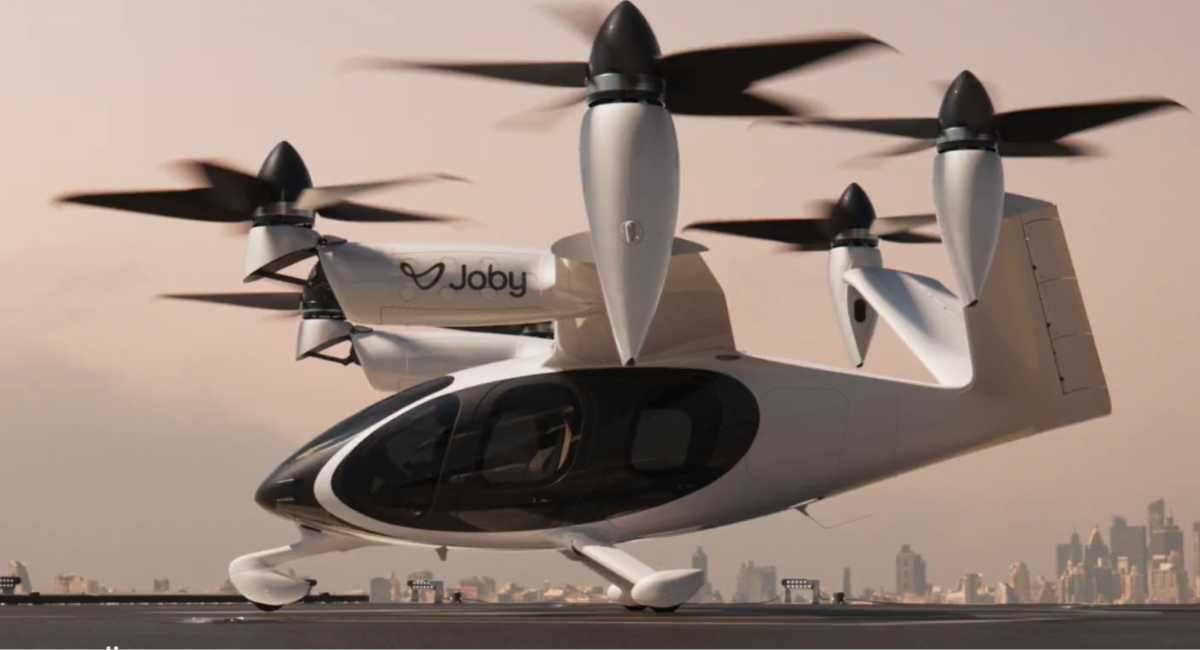
Joby Flying Car (Image Credit: jobyaviation.com)
What to Watch For
When the report drops, investors will be looking for three main things:
- Launch Dates: Will Joby really start flying people by late 2026 or 2027? The company is already planning pilot projects in New York, Texas, Florida, and more.
- Building More Planes: Joby wants to double its manufacturing. The goal is to build 4 aircraft every month.
- The Blade Merger: In 2025, Joby bought Blade Air Mobility. Investors want to see how Joby is using Blade’s 90,000 existing customers to prepare for the future.
Conclusion
Some experts say “Buy” because Joby is the clear leader in the race. Others say “Wait” because the company is spending roughly $370 million every six months. Today’s earnings call will tell us if Joby can turn its successful test flights into a real, profitable business.

Guides
New York Flying Taxis: Complete Timeline, Routes, and Investment Guide
New York City is about to solve one of its biggest headaches: traffic that never stops. Flying taxis are going to be and its not an imagination anymore. Air Taxis are real, tested, and officially arriving. Within just a couple of years, you won’t just be looking at the skyline; you’ll be flying through it.
Companies like Joby Aviation and Archer Aviation aren’t just talking. They’ve already flown over Manhattan, worked with the city government, and secured spots at some of the world’s busiest airports. This is the new reality of New York travel.
When Will Flying Taxis Actually Arrive in NYC?
If you feel like you’ve been hearing “it’s coming soon” for years, you’re not alone. But 2026 has changed everything. In April 2026, the company Joby Aviation completed the first-ever point-to-point test flights in New York City. The company flew their electric aircraft from JFK Airport directly to the Downtown Manhattan Heliport. It wasn’t a computer simulation—it was a real aircraft landing on a New York pier.
The Real Timeline
- Late 2026: This is the big target. The company expects to start limited commercial flights after finishing the final stages of FAA certification.
- 2027: The company Archer Aviation plans to launch its primary “shuttle” service between Newark Liberty International Airport and Downtown Manhattan.
- 2028-2030: This is when things go “mainstream.” Expect to see multiple routes and more than just a few flights a day. By 2030, grabbing a flying taxi to the airport will be as normal as calling an Uber.
Why New York Needs This Now
New York has a massive traffic problem. In 2025 alone, the average NYC driver lost over 100 hours sitting in traffic. That is time you never get back.
The JFK Nightmare: Getting from JFK to Manhattan by car usually takes 60 to 90 minutes. If there’s a crash on the Van Wyck? Good luck—you’re looking at two hours. A flying taxi does that same trip in about 7 minutes.
The Demand is Built-In: Over 130 million people pass through JFK, LaGuardia, and Newark every year. Even if only a small group of business travelers and tourists use this service, the companies will have more customers than they can handle.
The First Routes: Where You’ll Actually Fly
The goal isn’t to fly you from your house to the grocery store. It’s to fix the most painful commutes in the city.
| Route | Car Time | Flying Taxi Time | Likely Launch |
|---|---|---|---|
| JFK to Downtown Manhattan | 60-90 mins | 7-10 mins | Late 2026 |
| Newark to Downtown Manhattan | 50-70 mins | 10 mins | 2027 |
| LaGuardia to Midtown | 30-45 mins | 5-7 mins | 2027 |
| Manhattan to Westchester | 60+ mins | 15 mins | 2028+ |
Why these routes first?
The company Joby is partnering with Delta Air Lines, and the company Archer is teamed up with United Airlines. Because these airlines have “hubs” at JFK and Newark, they want to give their premium passengers a seamless way to get from the plane to the office without touching the Brooklyn-Queens Expressway.

Joby’s electric air taxi flies over New York City during a 10-day flight campaign celebrating the FAA’s eVTOL Integration Pilot Program (eIPP), showcasing quiet, zero operating emissions air
travel across the city, including flights to JFK. (Photo: Joby Aviation)
Cost: Is This Only for the 1%?
Let’s be honest: at launch, it won’t be cheap. However, it is designed to become more affordable as time goes on.
- Early Price: Expect to pay between $150 and $250 per seat for a trip to JFK.
- The Comparison: A private helicopter ride currently costs about $200-$300. An Uber Black can easily hit $150 during surge pricing.
- The Long-term Goal: The company aims to eventually bring the price down to the level of an UberX. As the technology scales and more people fly, the cost of the batteries and maintenance will drop.
Infrastructure: Where Do They Land?
You can’t just land a flying taxi in the middle of Times Square. These aircraft need Vertiports.
The “Downtown Skyport”: In 2025, a company called Skyports Infrastructure took over the Downtown Manhattan Heliport. They are currently overhauling it, adding high-speed electric chargers. By late 2026, it will be the primary “hub” for these flights.
Airport Vertiports: The Port Authority of New York and New Jersey is already part of a federal pilot program. They are working to make sure JFK and Newark have dedicated spaces where these taxis can land and take off without interfering with traditional jet traffic.
Investment Guide: How to Play the Market
If you want to do more than just ride in one, you might be looking at the stocks. This industry is high-risk but offers significant upside.
1. Joby Aviation (JOBY)
The company is currently the leader. They have the most test flights, the most money in the bank (over $3 billion in funding), and a massive partnership with Toyota to help them build the aircraft. They recently acquired Blade Air Mobility’s passenger business, giving them an instant list of wealthy New York customers.
2. Archer Aviation (ACHR)
The company Archer has a major deal with United Airlines. United has already “pre-ordered” $1 billion worth of their aircraft. If you believe in the Newark-to-Manhattan route, Archer is the play. They are also working with Stellantis (the company behind Jeep and Ram) to mass-produce their “Midnight” aircraft.
The Technology: Safety and Noise
Many people ask, “Isn’t it just a loud helicopter?” The answer is a firm no. These are eVTOLs (electric Vertical Take-off and Landing).
- Quiet: When a flying taxi is at 1,000 feet, you won’t even hear it over the sound of a normal New York street. The company Joby claims their aircraft is 100 times quieter than a traditional helicopter.
- Safe: If one motor fails, the others keep the aircraft in the air. There is no “single point of failure” like you have with a helicopter’s main rotor.
The Roadblocks
It’s not all clear skies. The company still faces three big hurdles:
- The FAA: The government is very careful. They won’t let these fly until they are as safe as a commercial airliner.
- Weather: New York winters are brutal. Wind, ice, and snow could ground the fleet for days at a time.
- The Grid: Charging dozens of aircraft at once requires a massive amount of electricity. The company and the city need to ensure the local power grid can handle it.
My (Amit’s) Opinion: NYC’s Aerial Future
In my view, we are watching the biggest shift in transportation since the subway opened in 1904. For over a century, we’ve been trapped on the ground, stuck behind a slow-moving trash truck or a stalled subway train. The arrival of flying taxis in New York is inevitable because the city simply cannot survive more traffic. We have run out of room on the streets.
The 2026 test flights proved that the technology is ready and the noise levels are acceptable for a city environment. Now, it’s just a matter of the government and the companies finishing the paperwork. If you can afford the ticket, you’re about to get your time back. And in New York, time is the only thing more expensive than the rent. The future isn’t a decade away—it’s arriving at JFK next year.
Finally: New York flying taxis are coming. Get ready to look up.
News & Updates
Joby Aviation takes to the skies over NYC with first electric air taxi flight
Joby Aviation just flew its electric air taxi from JFK to Manhattan, turning a long traffic jam into a quick seven-minute trip. This quiet, emissions-free flight marks a huge step toward making flying taxis a real part of New York City travel.
Alright! So finally, the dream of flying over New York City traffic just took a massive leap forward. Joby Aviation (NYSE:JOBY) recently made history by completing its first successful test flight, sending its electric air taxi from JFK International Airport right into Downtown Manhattan.
If you’ve ever been stuck in a taxi watching the minutes tick by while sitting on the Long Island Expressway, you know the struggle. The company wants to turn that stressful hour-long crawl into a smooth, seven-minute trip.
No more noisy engines
One of the biggest complaints about helicopters in NYC is the noise. The company has solved this by going fully electric. During the demonstration at the Downtown Manhattan Heliport.
Unlike loud helicopters that shake your windows, this new eVTOL air taxi is very quiet and sounds more like a soft hum. Since it runs on battery instead of gas, it doesn’t puff out any dirty exhaust. This makes it a much cleaner and friendlier way to travel across the city without the noise or the pollution of regular cars and engines.
“New York has always been a city that defines the future by demanding better,” said JoeBen Bevirt, founder and CEO of Joby. “We first flew here in 2023, and now we’re showing what the next chapter looks like: a quiet, zero operating emissions air taxi service designed to better serve New Yorkers. This week, flying between JFK and Manhattan, we showed what the White House-backed eIPP initiative makes possible and offered New York a look at what’s coming.“
Seamless travel from your phone
The company isn’t just building a plane; they are building a whole new way to travel. By partnering with Delta Air Lines, the goal is to make your trip to the airport feel like one single move.
In the future, you could potentially book a ride through an app, get picked up by a car, fly over the gridlock, and arrive at the terminal in less time than it takes to grab a coffee. It’s all about giving people their time back.
Real progress, not just a dream
This flight wasn’t just a one-off stunt. The company is working hard to meet all the safety rules required to start flying regular passengers. Even the city is getting ready—New York officials are already planning to upgrade heliports with the high-tech chargers these planes need to stay powered up.
While you can’t buy a ticket today, this successful flight from JFK to the city center proves that the tech is ready. We are looking at a future where “flying to work” is a very real choice for New Yorkers.

Joby’s electric air taxi flies over New York City during a 10-day flight campaign celebrating the FAA’s eVTOL Integration Pilot Program (eIPP), showcasing quiet, zero operating emissions air travel across the city, including flights to JFK. (Photo: Joby Aviation)
My Opinion: The end of the airport commute?
Let’s be honest: getting to JFK is usually the worst part of any vacation or business trip. While some people might think flying taxis sound like science fiction, seeing the company actually land a quiet, electric plane in Manhattan makes it feel very real.
If the company can keep the price reasonable, this is going to be a game-changer for anyone who values their time. It’s a smarter, quieter, and much faster way to keep a city like New York moving.
News & Updates
IndiGo Invests in Sarla Aviation: Why India’s Biggest Airline Is Backing Flying Taxis
IndiGo Ventures announces major investment in Sarla Aviation eVTOL startup. India’s biggest airline backs flying taxi technology for Indian cities. Strategic move signals India’s commitment to aviation innovation.
In India the biggest airline has just confirmed officially about a huge investment on the upcoming flying/air taxis. The company has officially announced that its venture capital arm, IndiGo Ventures, is investing in Sarla Aviation. Sarla Aviation is an Indian startup building electric vertical takeoff and landing aircraft (eVTOL).
This is not a small investment. This is a major strategic move. It says India is serious about becoming a player in the global flying taxi market.
IndiGo Ventures Announces Strategic Investment in Indian eVTOL Startup Sarla Aviation
Why This Matters (Three Key Things)
First thing: All we need to understand is IndiGo is not just an airline, its India’s leader in commercial aviation. If the company is all set to invest in eVTOL, it signals confidence that flying taxis are real.
Second thing: India is building its own eVTOL ecosystem. Instead of importing flying taxis from America or Europe, India is creating homegrown solutions. That’s strategically important.
Third thing: This investment will accelerate Sarla Aviation’s development – Money, Resources and Airline expertise.
India’s skies are about to get a lot quieter—and much more electric. IndiGo, the country’s dominant airline, is putting its massive weight behind Sarla Aviation, a homegrown startup building electric vertical takeoff and landing (eVTOL) aircraft.
This isn’t just a small side project; it’s a strategic move by a company that currently defines how India flies. Here is everything you need to know about the players involved and why this partnership is a big deal for the future of travel.
Who is IndiGo?
If you have flown within India, you’ve likely stepped onto an IndiGo plane. Based in Delhi and founded in 2006, IndiGo has grown into a global powerhouse over the last two decades.
- Market Leader: It is the largest airline in India by passenger volume.
- Massive Fleet: They operate over 300 aircraft and serve more than 75 domestic cities.
- Proven Success: With over 60 million passengers annually, they aren’t just a “budget airline”—they are a profitable, publicly traded giant that understands the Indian market better than anyone else.
Why their involvement matters: When a company of this scale invests in electric flight, it adds instant credibility. IndiGo brings nearly 20 years of experience in safety regulations, complex operations, and government relations that a startup simply doesn’t have yet.
Who is Sarla Aviation?
Sarla Aviation is a bold Indian startup aiming to solve one of the country’s biggest headaches: urban traffic. Instead of sitting in a car for two hours to cross Bengaluru or Mumbai, Sarla wants you to fly over it.
- The Mission: Developing fully electric aircraft that take off and land like a helicopter but fly like a plane.
- The Focus: Unlike some global competitors targeting luxury “private jet” crowds, Sarla is focusing on affordability and making urban air mobility accessible for regular commuters.
- India-First Design: Their aircraft are being built specifically to handle India’s unique weather conditions and infrastructure needs.

Image Credit (sarla-aviation.com) & unsplash.com
A Strategic Advantage
Sarla Aviation is currently in the development phase, meaning they are still refining their prototypes and haven’t started mass production. This is where IndiGo comes in.
By partnering with Sarla, IndiGo can provide more than just money. They offer a “masterclass” in how to run an aviation business. From navigating India’s strict aviation laws to preparing for commercial operations, IndiGo is the ultimate mentor.
Fact Check: While IndiGo was founded in 2006, it reaches the 20-year milestone in 2026. Regardless of the exact anniversary, they remain the most influential force in Indian aviation today.
Why they matter:
Most eVTOL companies are American or European. Companies like Joby, Archer, and Lilium are building for American and European markets.
Sarla Aviation is different and the company is building for India. It means:
- Aircraft designed for Indian weather
- Aircraft meeting Indian regulations
- Aircraft affordable for Indian market
- Aircraft optimized for Indian cities
This is important. India has unique needs. Indian weather is different. Indian regulations are different. Indian budgets are different.
The Investment: More Than Just a Check
While the exact financial details of the deal haven’t been fully disclosed, IndiGo Ventures has described this as a “significant” strategic investment. In the world of aviation startups, this likely puts the funding in the multi-million dollar range, providing Sarla Aviation with the runway they need to move from design to physical testing.
IndiGo’s reasons for jumping in now are clear:
- Strategic Positioning: Urban air mobility is no longer a “maybe.” IndiGo wants a front-row seat as the eVTOL market takes off.
- Homegrown Innovation: By backing Sarla, IndiGo is ensuring that India doesn’t have to rely on foreign tech. This is about building an Indian solution for Indian skies.
- Seamless Connections: Imagine landing at an airport and immediately hopping into an electric taxi to your office. The potential for “multi-modal” travel—where your airline ticket and air taxi are part of the same journey—is the ultimate goal.
Why India is the Perfect Proving Ground
India isn’t just another market; it is perhaps the best place on Earth for flying taxis to succeed. Our cities face unique challenges that traditional cars and trains simply can’t solve fast enough.
Several factors make India an eVTOL goldmine:
- Beating the Traffic: Cities like Delhi and Mumbai are famous for gridlock. Vertical takeoff removes the “road” from the equation entirely.
- Tech & Manufacturing: With a massive pool of engineering talent and a growing manufacturing sector, India has the “brain power” to build and maintain these complex machines locally.
- Government Support: Policy shifts are making it easier for drone and eVTOL startups to test and operate, showing that the regulatory wind is blowing in the right direction.
Major hubs like Bengaluru, Hyderabad, and Pune—cities with high-income tech populations and expanding borders—are expected to be the first to adopt these “sky commutes.”
When Can You Book a Flight?
We are closer than you might think. While global cities like Dubai are aiming for launches in late 2026, India’s timeline is following a realistic but ambitious path. Based on current development and testing phases, here is what the roadmap looks like:
- 2027–2028: Intensive testing and prototype flight trials across Indian cities.
- 2028–2029: Finalizing regulatory approvals with aviation authorities.
- 2029–2030: The first commercial routes are expected to go live in major metros.
Within the next three to four years, the sound of electric rotors over our cities could become a common reality. Thanks to the partnership between a giant like IndiGo and a pioneer like Sarla Aviation, India is well-positioned to lead the electric revolution in the air.
Indian eVTOL Companies Landscape
Sarla Aviation is not alone.
Other Indian eVTOL startups:
Sarla Aviation:
- Building passenger eVTOL
- Just got IndiGo investment
- Momentum accelerating
- Building emergency medical eVTOL
- Focus on healthcare transport
- Partnership with hospitals
Other startups:
- Several others in stealth mode
- Many in early development
- Some partnering with foreign companies
Market Competition
This investment puts pressure on other eVTOL companies.
Global eVTOL leaders:
- Joby Aviation – American leader, $3.2B funding
- Archer Aviation – American, United partner, $2.6B funding
- Lilium – European leader, $1.4B funding
- Vertical Aerospace – British company, strong funding
- Volocopter – German leader, European focus
- EHang Holdings – Chinese, already flying passengers
Regulatory Path Forward
How will Sarla Aviation get approved in India?
India’s aviation regulator:
The Directorate General of Civil Aviation (DGCA) oversees aircraft certification in India.
Certification requirements:
Sarla Aviation will need to certify their aircraft as:
- As an aircraft – Meet airworthiness standards
- For the route/operation – Meet operational requirements
- With qualified crew – Pilot licensing and training
This is similar to how FAA certification works in the USA, but following Indian regulations.
Timeline for certification:
Based on global experience:
- Application to DGCA: 2027-2028
- Certification process: 1-2 years
- First commercial approval: 2029-2030
Vision for India’s Flying Taxi Future
IndiGo and Sarla Aviation’s vision:
What they’re probably envisioning:
By 2030:
- Sarla Aviation aircraft flying in Delhi, Mumbai, Bangalore
- IndiGo operating some routes (code-sharing or partnership)
- Thousands of people flying eVTOL monthly
- Multiple vertiports in major cities
- Established network of flying taxi routes
By 2035:
- Flying taxis commonplace in Indian cities
- 50,000+ people flying monthly
- Expansion to secondary cities
- International routes (India to neighboring countries)
- Cargo delivery via eVTOL
- Emergency medical transport network
By 2040:
- Flying taxis are normal transportation
- India a global leader in eVTOL technology
- Multiple Indian manufacturers
- Export of aircraft to other countries
- Sarla Aviation a major global player
My (Amit’s) prediction:
Sarla Aviation will succeed. The combination of IndiGo’s backing, India’s market need, and capable founders is powerful.
Timeline:
- 2029: First commercial flights (probably)
- 2030-2035: Rapid expansion across India
- 2035+: Sarla Aviation becomes established player
Bigger Picture: India’s Innovation Ecosystem
This investment is bigger than just eVTOL.
It signals something important about India: India is not just consuming technology anymore. India is creating technology.
Examples:
- Software/IT: Infosys, TCS, Wipro (global leaders)
- Smartphones: Indians using apps others created
- Now: eVTOL aircraft – India building it, not importing
What this means:
India’s innovation ecosystem is getting better – entrepreneurs,, capital and solutions are on great pace. IndiGo’s investment in Sarla Aviation shows Indian companies have confidence in home country startups.
This will inspire more innovation, startups and competition. Also the better products.
India is becoming a technology leader, not just a market.
What This Means for You
If you live in India:
Within 5 years, you might be flying a Sarla Aviation eVTOL from Delhi airport to your office. This investment brings that future closer.
If you invest in aviation:
Sarla Aviation is now a company to watch. Not just locally. Globally. Indian companies can compete with American and European manufacturers.
If you care about urban air mobility:
India’s market is 1.4 billion people. If flying taxis succeed in India, that’s massive. More scale. Lower costs. Faster adoption worldwide.
If you work in aviation:
Jobs coming. Sarla Aviation will need engineers, designers, technicians, pilots, maintainers. Career opportunities in India’s aviation future.
Conclusion
The dream of “flying taxis” in India is moving out of science fiction and into reality. With IndiGo’s operational muscle and Sarla Aviation’s electric tech, the goal of clean, quiet, and affordable city travel is closer than ever.
Questions About eVTOL and India?
Email us: contact@airtaxicentral.com or amit@airtaxicentral.com
Follow us:
- Twitter: @AirTaxiCentral
- Instagram: @airtaxicentral
- YouTube: @AirTaxiCentral
-
Guides4 weeks agoeVTOL Stock Comparison 2026: Joby vs. Archer vs. Lilium — The Ultimate Guide to the Air Taxi Race
-
Guides4 weeks agoHow to Become an eVTOL Pilot: A 2026 Guide
-
Guides4 weeks agoHow Much Will eVTOL Cost?
-
Company Analysis1 month agoJoby Aviation: The Flying Taxi Company Backed by Toyota
-
Market & Investment1 month agoeVTOL Funding 2026: How Much Money Did Each Flying Taxi Company Raise?
-
Company Analysis1 month agoArcher Aviation: United Airlines Flying Taxi Partner
-
Company Analysis1 month agoJoby vs Archer vs Lilium: Which Flying Taxi Company Will Actually Win?
-
Company Analysis1 month agoLilium: The Jet-Powered eVTOL Company Taking Over Europe
