


Connect with us

News & Updates

Vertical Aerospace Just Saved Itself With $850 Million Funding Deal

Vertical Aerospace just secured $850 million in funding to survive its cash crisis. The company can now focus on what matters: certifying the Valo and becoming a real competitor.

Published

on

Vertical Aerospace Air Taxi

Vertical Aerospace just got the lifeline it desperately needed. The British flying taxi company announced Monday that it secured a nonbinding commitment for up to $850 million in financing.

The funding is specifically designed to help Vertical get its Valo aircraft certified and ready for commercial operations through 2026 and beyond. This is huge news because Vertical was in trouble.

Just weeks ago, the company issued a warning about cash flow concerns. Investors worried Vertical might not have enough money to survive. Now, with this financing package secured, Vertical can breathe again.

How Much Money Is This Really?

Let’s break down what $850 million actually means for Vertical:

Yorkville Advisors Global is providing the bulk: up to $250 million in convertible equity, plus a $500 million credit line over three years. That’s $750 million right there. Mudrick Capital, Vertical’s existing investor, is adding another $50 million in convertible notes. Mudrick also extended the repayment deadline on old debt from December 2028 to December 2030.

But there’s more. Vertical just raised an additional $50 million by selling common equity shares. When you add that to the $93 million Vertical already had in cash (as of the end of 2025) plus expected tax relief and government grants, Vertical now has approximately $160 million available immediately for 2026.

That’s the reality check: Vertical has real money to work with right now.
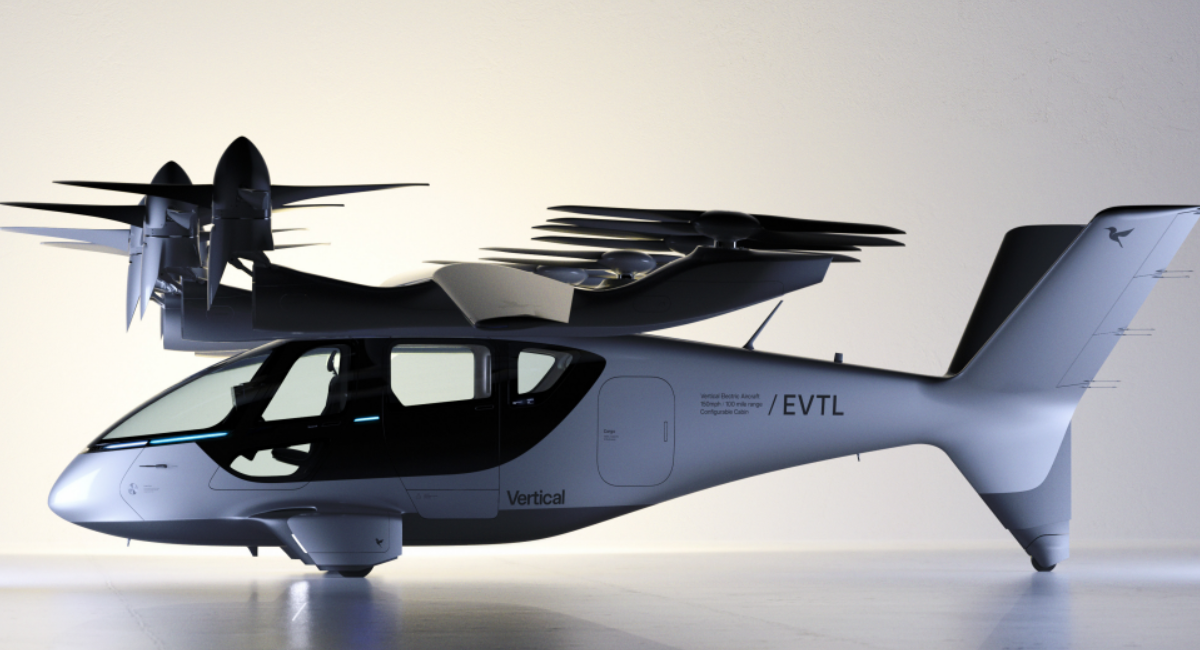
Vertical Aerospace Air Taxi

Vertical Aerospace Air Taxi (Image Credit: vertical-aerospace.com)

Here’s What Vertical Plans to Do With It

Vertical estimates its Valo aircraft will need approximately $700 million to certify. That’s a lot. But now the company has the funding to get it done.

For 2026 specifically, Vertical is planning to spend about $195 million. Where’s that money going? Flight testing, certification work, and manufacturing setup. In other words, Vertical is going all-in on actually building the aircraft.

The company burned through $112 million in 2025, which matches what it expected. The operating loss was $127 million. So Vertical isn’t hidden losses—the company was transparent about the burn rate all along.

CEO Stuart Simpson said this in a statement: “We have assembled a comprehensive, flexible financing package designed to execute our strategic plan and materially strengthened our ability to build and certify Valo.”

Translation: Vertical has the money. Now Vertical can focus on the engineering instead of worrying about bankruptcy.

Vertical Isn’t Dead Anymore

Two months ago, Vertical looked like it might fail. The company had cash concerns. Investors were nervous. The question wasn’t “Will Vertical succeed?” It was “Can Vertical even survive?”

This $850 million commitment changes that conversation completely. Vertical went from “survival question” to “viable competitor” in one announcement.

But here’s what matters: Vertical still has to execute. Money doesn’t guarantee success. Vertical still has to:

  • Pass FAA certification (hardest part)
  • Actually build the aircraft (manufacturing is hard)
  • Deal with legal battles (Archer sued for patent infringement)
  • Compete against better-funded companies (Joby, Archer, Lilium)

Money buys time. It doesn’t buy victory.

The Competition Just Got Fiercer

This financing announcement matters because the eVTOL space is getting crowded.

Joby Aviation is the leader. Archer Aviation has United Airlines backing. Lilium is targeting Europe. EHang is already flying passengers in China. And now Vertical just proved it’s not dying.

That’s six major companies all racing toward commercial operations. The market is getting real. The competition is intensifying. The race is on.

What Vertical’s financing really says: The company is staying in the race.

What Happens Next

Vertical and its financing partners expect to finalize the deal by April 19. Once that happens, the money starts flowing.

Then comes the hard part: certification. The FAA is notoriously slow. Vertical will need to prove its aircraft is safe. That means thousands of test flights. Hundreds of engineering documents. Years of regulatory back-and-forth.

But Vertical no longer has to worry about running out of money while doing it.

The Bottom Line

Vertical Aerospace just went from “struggling startup” to “funded competitor” overnight. The company has $850 million committed (pending finalization). The company has a clear path to certification. The company can focus on engineering instead of raising emergency capital.

Is Vertical guaranteed to succeed? No. The company still has to pass FAA certification, outcompete other companies, and actually deliver a working product.

But Vertical is no longer in survival mode. Vertical is in execution mode. That changes everything.

Update: This article reflects information available on April 1, 2026. Vertical Aerospace Funding terms are nonbinding pending April 19 finalization.

Written by Amit Tiwari, Air Taxi Central. Follow for more eVTOL news and analysis

Company Analysis

Wisk Aero Gen 6: Why This Pilotless Air Taxi Will Beat Joby and Archer

While most flying taxi companies are putting a human pilot in the driver’s seat, Wisk Aero is doing something totally different: their air taxi has no pilot at all. Wisk is playing a smart, patient long game, and they just hit a massive milestone by flying two of their 6th-generation self-flying aircraft at the exact same time. This article breaks down how the new aircraft works, the layers of safety technology keeping it in the air, and why its cheaper running costs could help Wisk beat out rivals like Joby and Archer by 2030.

Published

on

Wisk Aero Gen 6

Most air taxi companies are building aircraft with a pilot inside. Wisk Aero is doing something completely different. Wisk is building a flying taxi that has no pilot at all — not in the cockpit, not remotely controlling it in real time. The aircraft flies on its own, with a human operator on the ground keeping an eye on things.

This is the Wisk Aero Generation 6, also called the Gen 6. And in May 2026, Wisk reached a milestone that very few eVTOL companies have hit: two fully autonomous aircraft flying at the same time in an active flight test program.

Here is everything you need to know about the Gen 6, what makes it different, and why this aircraft could change the way cities think about transportation.

Table of Contents

  1. What Is the Wisk Aero Gen 6?
  2. Two Aircraft, One Goal: Inside Wisk’s Dual-Flight Test Program
  3. Gen 6 Specs: What This Aircraft Can Actually Do
  4. No Pilot Inside — How Does That Actually Work?
  5. Where Does FAA Certification Stand Right Now?
  6. Texas Is the First Market — Here Is the Plan
  7. Wisk Gen 6 vs. Joby, Archer, and Others
  8. When Can You Actually Ride One?
  9. Final Thoughts

What Is the Wisk Aero Gen 6?

Wisk Aero is a company based in Mountain View, California. Wisk is fully owned by Boeing, one of the largest aircraft manufacturers in the world. Wisk has been working on autonomous flying taxis for over a decade.

The Gen 6 is the sixth aircraft Wisk has ever built — and the first one being put forward for FAA type certification. That means this is not a prototype or a test concept. This is the real product that Wisk wants to certify and put into commercial passenger service.

Before the Gen 6 was even built, Wisk had already completed more than 1,750 test flights across its previous five generations of aircraft. All of that data went into designing the Gen 6. No other eVTOL company in the world has flown six generations of the same aircraft type.

Quick Fact: The first Gen 6 aircraft made its maiden hover flight on December 16, 2025, at Wisk’s test facility in Hollister, California. The aircraft followed a pre-programmed flight plan — no human was flying it.

Two Aircraft, One Goal: Inside Wisk’s Dual-Flight Test Program

On May 4, 2026, Wisk tested its second Gen 6 aircraft for the first time. The flight took place at Wisk’s flight test facility in Hollister, California. The aircraft, registered as N607WA, completed vertical takeoff, hover, and what engineers call “chirp” maneuvers. These are controlled movements that help measure how the aircraft’s structure handles different loads and how the flight controls respond.

This happened just four and a half months after the first Gen 6 flew in December 2025. Most eVTOL companies take much longer to build and fly a second aircraft.

Wisk CEO Sebastien Vigneron said: “Seeing the second Gen 6 aircraft take to the skies is a proud moment for Wisk. This pace of execution is exactly what is required to meet the rigorous safety standards of commercial aviation. Having multiple aircraft in flight testing allows us to move faster, learn quicker, and stay on the leading edge of autonomous aviation. Every flight provides crucial data that matures our aircraft and autonomous system, bringing us one step closer to delivering a certified, autonomous air taxi service.”

Wisk Aero Gen 6

Wisk Aero Gen 6 (Image Credit: wisk.aero)

This increase in flight test capacity directly supports Wisk’s path to commercialization, along with the U.S. Department of Transportation’s selection of Wisk’s partner, the Texas Department of Transportation (TxDOT), for the Electric Vertical Takeoff and Landing (eVTOL) and Advanced Air Mobility (AAM) Integration Pilot Program (eIPP). Wisk will use its autonomous systems and aircraft to drive the program’s operational execution, conducting real-world flight operations in the U.S. National Airspace.

Why does having two aircraft matter so much? Because FAA certification is driven by data. The more flights Wisk completes, the more data Wisk collects. The more data Wisk collects, the faster Wisk can prove to the FAA that the aircraft is safe. With two aircraft flying at the same time, Wisk can now run parallel test campaigns — effectively doubling the speed at which Wisk builds its certification case.

Gen 6 Specs: What This Aircraft Can Actually Do

The Gen 6 is not just impressive because it flies itself. The technical specs are genuinely competitive with every other air taxi being developed right now.

Spec Detail
Passengers 4 passengers + luggage
Cruise Speed 120 knots (138 mph / 222 km/h)
Range 90 miles (145 km)
Service Altitude 2,500 to 4,000 feet
Wingspan 50 feet (15 metres)
Propellers 12 total — 6 lift rotors, 6 convertible lift/cruise rotors
Battery 120 kWh
Charging Time 15-minute fast DC charge
Pilot None onboard — fully autonomous
Transition to Forward Flight Approximately 30 seconds

The wing spans 50 feet and sits in a high position on the aircraft. This gives the aircraft more stability and also improves the view for passengers inside. The cabin is designed to feel like a premium car interior — comfortable seats, good window visibility, Wi-Fi, and charging ports.

The 15-minute fast charge is a standout feature. Most electric aircraft take much longer to recharge. If Wisk can maintain this in commercial operations, the Gen 6 can complete multiple short trips per day without long gaps between flights. That is important for making the economics of an air taxi service actually work.

No Pilot Inside — How Does That Actually Work?

This is the part that makes Wisk Aero different from every other major air taxi company in the United States right now. Companies like Joby Aviation, Archer Aviation, and Beta Technologies are all building aircraft where a human pilot sits in the cockpit. Wisk is building an aircraft where no one sits in the cockpit — because there is no cockpit.

So how does the Gen 6 fly safely?

The aircraft uses a combination of advanced computers, sensors, radar, and software to navigate its route. The Gen 6 follows pre-programmed flight paths and can detect and avoid other aircraft on its own. A ground-based operator called a Multi-Vehicle Supervisor monitors the flight and can take control if needed. One operator on the ground can supervise multiple aircraft at the same time.

The safety systems are built in layers. The Gen 6 has triple-redundant autonomous flight systems, 12 independent electric motors, and a whole-airframe parachute for emergency situations. If any single system fails, a backup takes over immediately.

Wisk Vice President of Certification Cindy Comer explained the reasoning behind this approach: “We know that eventually, to scale, this industry needs to have autonomy. We could build an aircraft and put pilots in it, and then later go autonomous. But that would mean certifying twice.” Wisk chose to certify autonomy from the very beginning.

Where does the official safety approval stand?

Getting the Federal Aviation Administration (FAA) to clear these air taxis for paying passengers is the hardest part of the whole business. It takes a massive amount of time, paperwork, and money. But the company is actually much further along than most people think.

Right now, they are in the deep testing phase. Instead of just showing the government plans on paper, Wisk is using real flight data to prove that their 6th-generation aircraft is completely safe to fly in any kind of weather or situation. This is a big deal because it is the first time in U.S. history that an aircraft with no pilot onboard is trying to get certified for passengers. Because this has never been done, there is no official rulebook yet.

Wisk is actually helping the FAA and NASA write the safety rules for the future. To do this, they are flying two test aircraft to push the boundaries—taking them faster, higher, and through tougher maneuvers. Their biggest focus right now is perfecting the trickiest part of the flight: smoothly changing from hovering like a helicopter to flying fast like an airplane.

Texas Is the First Market — Here Is the Plan

In March 2026, the U.S. Department of Transportation selected the Texas Department of Transportation (TxDOT) for the FAA’s eVTOL Integration Pilot Program, known as the eIPP. Wisk Aero was named as TxDOT’s primary private-sector eVTOL partner.

The eIPP is a White House-backed program that allows eVTOL aircraft to begin real-world operations in live U.S. airspace — even before full FAA type certification is complete. This means Wisk can start collecting real operational data while the certification process is still ongoing.

Houston is Wisk’s primary launch market. Los Angeles and Miami are also planned for later expansion.

The Texas program will run in phases. In the first phase, Wisk will operate conventional piloted aircraft on eVTOL routes. This lets Wisk test the route infrastructure, airspace integration, and its SkyGrid airspace management platform — all before the Gen 6 starts flying passengers. In the advanced phase, operations will scale to the Gen 6 aircraft itself, giving the FAA high-frequency data to support final certification.

Wisk’s subsidiary SkyGrid provides the Strata airspace management platform. This software helps manage the flow of autonomous aircraft in shared airspace — a critical part of making autonomous air taxis safe in busy city skies.

Wisk Gen 6 vs. Joby, Archer, and Others

It is fair to ask: how does the Gen 6 compare to the competition?

Company Aircraft Pilot Passengers Speed Target Launch
Wisk Aero Gen 6 No pilot (autonomous) 4 138 mph 2030
Joby Aviation S4 1 pilot 4 200 mph 2026
Archer Aviation Midnight 1 pilot 4 150 mph 2026
Beta Technologies ALIA 1 pilot 5 170 mph 2026–2027

Joby, Archer, and Beta Technologies are all targeting commercial service much sooner — in 2026 or 2027. Wisk is targeting 2030. But the trade-off is significant. Joby, Archer, and Beta still need a human pilot for every single flight. Wisk does not.

A piloted air taxi has one major limitation: you always need a trained, certified pilot. That costs money and limits how fast a company can scale its service. An autonomous air taxi removes that constraint entirely. One ground operator can oversee multiple aircraft at once. Over time, this makes autonomous air taxis far cheaper to operate than piloted ones.

Wisk’s bet is that being the first to certify autonomous flight will give the company a long-term advantage that no piloted air taxi company can easily match or copy.

When Can You Actually Ride One?

Wisk has set a commercial service target of 2030. That is four years from now. The timeline makes sense when you understand how much testing is still ahead.

The current flight test program is working through the transition corridor — the phase where the aircraft moves from hovering to flying like a fixed-wing plane at full cruise speed. This is technically demanding and requires a large amount of data before the FAA is satisfied.

After flight envelope testing is complete, Wisk still needs to complete certification compliance testing, manufacturing certification, and air carrier certification. Each step requires a separate FAA approval.

The eIPP Texas program runs in parallel. If real-world operations in Texas go well, it could build the FAA’s confidence in the Gen 6 and shorten the overall path to full certification. Houston will likely be the first city where paying passengers can board a Gen 6, with Los Angeles and Miami to follow.

Wisk has not confirmed ticket pricing yet, but the long-term goal is to make air taxi rides competitive with rideshare prices as the fleet scales up and operational costs come down.

Amit’s Opinion

While a 2030 launch target might make Wisk look like a laggard compared to Joby or Archer’s 2026 timelines, playing the long game is actually Wisk’s greatest strength.

By skipping the intermediate “piloted” phase, they are absorbing massive regulatory friction upfront so they don’t have to redesign and re-certify an entirely new system later.

The recent addition of a second Gen 6 test vehicle shows they have the capital and discipline to brute-force the data collection the FAA demands.

In the end, the commercial winner won’t be the company that flies passengers first—it will be the company that scales first. Without the burden of pilot wages and pilot shortages, Wisk’s unit economics are going to be incredibly tough for competitors to match when 2030 rolls around.

Final Thoughts

Wisk Aero is not the fastest company in the air taxi race. Joby and Archer are already doing public demonstration flights in New York City and targeting service launches this year. Wisk will not have a commercial product until 2030.

But Wisk is playing a completely different game.

Every other major eVTOL company in the United States is building a next-generation helicopter with a quieter engine and a pilot in the seat. Wisk is building something that has never existed before: a fully autonomous passenger aircraft certified to commercial aviation safety standards.

The Gen 6 is not just a new type of vehicle. It is potentially a new category of aviation altogether.

The fact that two Gen 6 aircraft are now flying simultaneously — just a few months after the first one left the ground — shows that Wisk is executing at a serious and disciplined pace. Boeing’s backing gives Wisk the financial strength to see this through a certification process that could take several more years.

If Wisk succeeds, the air taxi industry looks very different. The cost of operating an air taxi service drops dramatically when you remove the pilot from the equation. That changes the economics of the entire industry — not just for Wisk, but for every company that follows.

That is why the Gen 6 matters. Not because it will fly passengers next month. But because it is the aircraft that could prove autonomous air travel is possible — and in doing so, change everything that comes after it.

Continue Reading

News & Updates

Air Taxis Start Flying in 2026: NYC, Florida, and Texas Lead the Way

Published

on

Air Taxis Start Flying in 2026

Imagine skipping the morning rush hour by hopping over the traffic in a small electric plane. This isn’t a scene from a movie anymore—it’s actually happening. As of May 2026, several companies are working hard to make these flights a regular part of our day. If you live in New York, Florida, or Texas, your daily commute is about to look very different.

Making Science Fiction Real

For a long time, “flying cars” seemed like something that would never actually exist. But companies like Archer are changing that.

Think about how we view self-driving cars today. Just a few years ago, seeing a car drive itself felt strange or even scary. Now, people barely look twice when a Waymo cruises by. These tech companies want the same thing to happen with electric planes. The company is trying to bring eVTOL as a normal part of life.

The New Way to Commute

The goal is huge: companies want 500,000 people in major cities to see these planes flying every single day. Instead of being a rare sight, these quiet, electric aircraft will soon be just another way to get from point A to point B.

The wait is over—the future of travel is officially here.

Where You Will See the First Flights

The company has been working closely with the government to pick the best spots for these early flights. Archer has already sent in paperwork for about a dozen cities. Southern California, Texas, and Florida are at the top of the list. These are places where traffic is famously bad, making them the perfect test ground for a new way to travel.

The U.S. Department of Transportation is finishing up its final list of who gets to participate in this initial rollout. Once those finalists are officially named, the company will start working directly with local city leaders. They need to figure out the small details, like exactly which routes to fly and how to keep things quiet for people living nearby. If everything stays on schedule, we could see public flights starting before the end of this year.

You can’t have electric planes without a place to park and charge them. A company called Joby Aviation is proving this can work in busy places like Manhattan. After finishing successful test flights in New York City, they began the hard work of setting up the equipment needed to keep these planes running.

Right now, the company is installing charging stations at two heliports in Manhattan. This is a big step because it moves the project from “testing” to “working.” It is one thing to fly a plane once for a show, but it is much more important to have a permanent spot where it can plug in every day.

The city is also helping. Local authorities are looking for partners to build a “vertiport” at LaGuardia Airport. This will be a special area for these planes to land and take off. It will help travelers get from the airport to downtown without sitting in hours of tunnel traffic.

Planes That Fly Themselves

While the first air taxis will have a human pilot, that might not be the case forever. Wisk Aero, which is owned by Boeing, is trying something different. They recently finished a successful test flight in California with a plane that flies itself.

Wisk Aero

Wisk Aero (Image Credit: wisk.aero)

Wisk is playing the long game. While other companies are using pilots to get started now, Wisk expects to have self-flying taxis ready for the public by 2030. They are already working with officials in Texas to make sure the technology is safe.

Managing the Growth

Starting a new way to travel is difficult and expensive. Supernal (part of Hyundai) recently hired a new technology leader to help them move from making plans to actually building aircraft.

It hasn’t been easy for everyone, though. There were rumors that Supernal might quit after cutting some of its staff earlier this year. However, the company recently told people to “stay tuned” for more news, proving they are still in the race.

Why This Matters to You

You might wonder why this matters if you don’t plan on flying to work. These companies believe that air taxis help everyone. By moving some commuters into the sky, there will be fewer cars on the highway.

Also, these Air Taxi’s/Flying Taxis are 100% electric. They don’t create the same pollution as buses or traditional helicopters. They are also designed to be very quiet. Once they are a few hundred feet in the air, you probably won’t even hear them over the normal noise of the city.

What Comes Next?

As we move through 2026, keep an eye on the news. The government will soon release a final list of cities that will lead this change. Once those cities are picked, construction on landing pads will speed up in places like Orlando, Dallas, and Los Angeles.

The goal is to make this feel safe and normal. This shouldn’t be a luxury for only the rich; it is meant to be a real choice for anyone tired of wasting time in traffic jams. The technology is ready, the chargers are being installed, and the “science fiction” future is finally landing just a few blocks away.

As we watch these electric planes fill the skies of New York, Florida, and Texas in 2026, the biggest question on everyone’s mind is: “Can I actually afford this?” For a long time, people assumed flying to work would be a luxury reserved for the ultra-rich. However, the companies building this technology have a different plan. They want to make air taxis as affordable as a premium Uber or Lyft ride.

Comparing the Cost to a Car Ride

Right now, in May 2026, the industry is aiming for a price point of about $3.00 to $5.00 per mile. To put that in perspective, a typical ride-share in a busy city like New York can often cost between $2.00 and $4.00 per mile depending on traffic and demand.

While the air taxi might be slightly more expensive at first, you are paying for the one thing money usually can’t buy: time. A trip from JFK Airport to downtown Manhattan that usually takes over an hour in a car can be done in about seven minutes in the air. For many travelers, paying a few extra dollars to save an hour of their day is an easy choice.

Air Taxi Price Estimates by State

Because every city is different, the costs will vary depending on where you are:

  • New York City: Short “hops” are the focus here. A flight from a Manhattan heliport to a nearby airport like Newark or JFK is expected to cost between $100 and $200 per seat. This is designed to compete with the high-end car services that people already use.
  • Florida: In Florida, the focus is on connecting cities like Miami, Fort Lauderdale, and West Palm Beach. Because these distances are a bit longer, companies are looking at “commuter passes.” The goal is to bring the price down so that a professional could use the service a few times a week without breaking the bank.
  • Texas: Texas is all about big distances. Connections between Dallas, Austin, and San Antonio are in the works. In the beginning, these regional flights will likely cost more, but as companies like Wisk move toward self-flying planes with no pilot, the price is expected to drop significantly.

Why Prices Will Get Lower

The main reason these flights are expensive right now is the cost of the pilot and the new technology. However, as more people use the service, the “price per seat” will go down.

Companies like Archer and Joby are building planes that can carry four or more passengers. If every seat is full, the cost is split, making it much cheaper for everyone. Additionally, as charging stations (the “gas stations of the sky”) become more common, the cost to run the planes will decrease.

Archer Aviation Midnight

Archer Aviation Midnight (Image Credit: archer.com)

The long-term goal is simple: by 2030, these companies want a flight across town to cost no more than a standard taxi ride. We aren’t quite there yet, but for the first time in history, the sky is becoming a real option for the everyday commuter.

Continue Reading

News & Updates

Joby Aviation Q1 2026 Earnings: Everything You Need to Know

Published

on

Joby Flying Car

Update: May 06, 2026

Joby Aviation just shared its Q1 2026 earnings, and the company is moving fast from “science project” to a legitimate air taxi service. The big highlight is that that the manufacturing plant in Ohio is officially churning out aircraft, and the company has successfully transitioned from prototype testing to pilot production.

While the company still burning through cash—reporting a net loss as they scale up—their balance sheet remains remarkably healthy with over $800 million in the bank.

For tech fans, the most exciting bit is the progress on their software stack; Joby is now testing the ElevateOS platform in real-world simulations, which will eventually handle everything from booking a ride on your phone to routing the planes through busy city skies.

On the regulatory front, things are looking surprisingly smooth. Joby confirmed that everything is on track for commercial launch in 2026, with the FAA finishing up the final stages of their type certification.

It started training the first batch of commercial pilots and are working closely with partners in Dubai and New York to prep landing pads (or “vertiports”). We’re still a little way off from being able to hail an electric plane like an Uber, but this quarter proves that Joby has the funding and the regulatory momentum to actually pull it off. If you’ve been waiting for the “future” of urban transit, it’s officially getting closer to the runway.

Original article: May 05, 2026

Joby Aviation is set to share its first-quarter financial results today after the stock market closes. This update is a big deal for the flying taxi industry. It comes right after the company finished successful test flights in New York City and hit a major goal with flight regulators.

Here is a simple notes of what to expect and why investors are paying close attention.

The Numbers: What Analysts Expect

Experts think Joby will report a loss this quarter. Developing flying taxis is very expensive. The company is still in its “pre-commercial” phase—meaning they are spending money to build the business before they start charging passengers for rides.

Metric Expected Value
Loss Per Share $0.21
Revenue $20.2 Million
Cash on Hand $2.6 Billion

While revenue is expected to drop by about 35% compared to last quarter, this is normal for a company focusing all its energy on getting government approval.

Big Wins in New York and with the FAA

April 2026 was a massive month for Joby. The company completed the first “point-to-point” flights in New York City. A trip from JFK Airport to Manhattan took less than 10 minutes—a journey that usually takes over an hour in a car.

More importantly, Joby has moved into Stage 4 certification with the FAA (Federal Aviation Administration). This is the second-to-last step before they are legally allowed to fly passengers in the U.S. Joby is currently the first company in the country to reach this final stage.

Joby Flying Car

Joby Flying Car (Image Credit: jobyaviation.com)

What to Watch For

When the report drops, investors will be looking for three main things:

  • Launch Dates: Will Joby really start flying people by late 2026 or 2027? The company is already planning pilot projects in New York, Texas, Florida, and more.
  • Building More Planes: Joby wants to double its manufacturing. The goal is to build 4 aircraft every month.
  • The Blade Merger: In 2025, Joby bought Blade Air Mobility. Investors want to see how Joby is using Blade’s 90,000 existing customers to prepare for the future.

Conclusion

Some experts say “Buy” because Joby is the clear leader in the race. Others say “Wait” because the company is spending roughly $370 million every six months. Today’s earnings call will tell us if Joby can turn its successful test flights into a real, profitable business.

Continue Reading
Advertisement

Trending