Why Boeing’s Secret Aircraft Company Could Change Everything
Here’s a question nobody asks: where’s Boeing in the flying taxi market?
Joby has Toyota. Archer has Stellantis. Lilium has venture capital. But where’s Boeing?
The answer is: Wisk Aero.
As per the official information, the Wisk Aero is Boeing’s secret flying taxi company. Most people don’t know Wisk exists. Nobody talks about it. But Boeing is investing billions on it.
And Wisk is doing something nobody else is doing: autonomous flight. No pilot. No human in the cockpit. Just an aircraft that flies and lands by itself.
That’s different from every other flying taxi company.
Who Is Wisk Aero?
Let me explain what Wisk Aero actually is. Wisk Aero is a flying taxi company founded in back 2019. Wisk is owned by Boeing. Well it is partially owned. Boeing owns 80% of Wisk. The original founders own 20%.
That ownership structure is important. It means Boeing is serious about Wisk. Boeing put real money in. Boeing is committed.
Here’s what Wisk does:
- Wisk builds eVTOL aircraft (electric vertical takeoff and landing aircraft).
- Wisk designs autonomous systems (no pilot needed).
- Wisk is developing urban air mobility solutions (flying taxis for cities).
- Wisk is NOT trying to compete directly with Joby and Archer.
- Wisk is trying to do something different, harder and could be more valuable.
Boeing’s Flying Taxi Strategy
Boeing owns Wisk. Boeing is not just an investor. Boeing is Wisk’s parent company.
Why does Boeing care about flying taxis?
Boeing makes airplanes. Commercial airplanes. Big airplanes. The kind you fly from New York to Los Angeles.
But the aviation market is changing. Electrification is coming. Smaller aircraft are coming. Urban air mobility is coming.
Boeing sees flying taxis as the future of aviation. Boeing doesn’t want to be left behind. So Boeing invested in Wisk.
Boeing’s strategy is simple: Let Wisk build the technology. Let Wisk prove the market works. Then Boeing uses its manufacturing power to scale it.
This is different from other companies. Joby built everything itself. Archer partnered with Stellantis. But Boeing owns Wisk completely.
That means Boeing controls Wisk’s future.

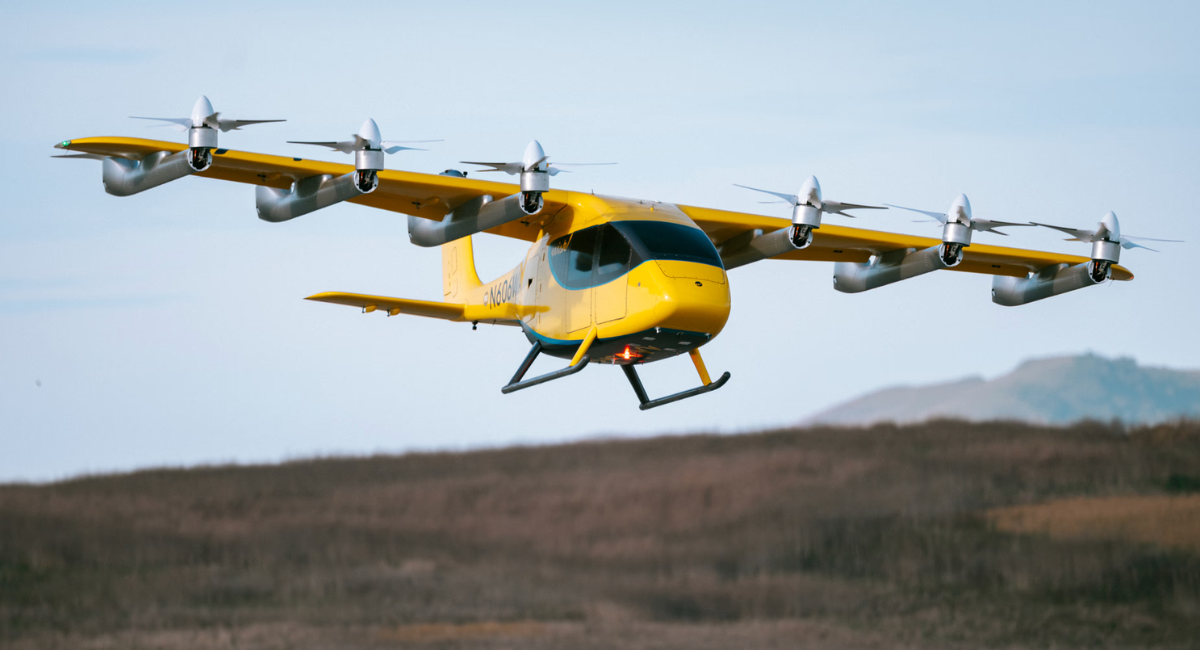
The Autonomous Question: No Pilot
Here’s what makes Wisk different: autonomous flight.
Joby’s aircraft has a pilot. Archer’s aircraft has a pilot. Lilium’s aircraft has a pilot. A human sits in the cockpit and controls the aircraft.
Wisk’s aircraft does NOT have a pilot.
Wisk’s aircraft is fully autonomous. The aircraft flies itself. Lands itself. Makes decisions by itself. This sounds amazing. And it is. But it’s also very difficult.
Why is autonomous flight hard?
Flying is complicated. Weather changes. Wind patterns shift. Air traffic control needs to communicate. Passengers need to feel safe. Making an aircraft that handles all of this without a human is very difficult.
Current status of Wisk’s autonomous system:
Wisk has flown autonomous flights. Wisk has tested the technology. But the technology is NOT ready for passengers yet.
Why? Because regulators don’t trust it yet. The FAA (Federal Aviation Administration) is very careful about autonomous aircraft. The FAA needs to certify that the system is safe. That takes time and testing.
Timeline for autonomous certification:
2026-2027: More testing and validation
2027-2028: FAA certification discussions
2028-2029: Possible limited autonomous service
2030+: Full autonomous service (maybe)
This is slower than other companies. Joby will launch with pilots in 2026-2027. Wisk will be years behind.
But when Wisk launches, it will be different. No pilots means lower operating costs. No pilots means safer operations (fewer human errors).
Wisk’s Aircraft: The Cora
Wisk’s aircraft is called the Cora.
Here’s what Cora does:
Capacity: 2 passengers + 1 autonomous system (no pilot needed)
Range: 20-30 miles (short range)
Speed: 100+ mph
Battery: Electric (like all eVTOL)
Design: Vertical takeoff and landing
Wait. 2 passengers? That’s tiny.
Compare to other companies:
Joby: 4 passengers
Archer: 4 passengers
Lilium: 5 passengers
Wisk: 2 passengers
Wisk’s aircraft is half the size. That’s a problem.
Why is Wisk’s aircraft so small?
Autonomous systems are heavy. The computer systems, sensors, software, batteries—all of it adds weight.
Wisk had to make a choice: make the aircraft bigger (need more power, more weight) OR make the aircraft smaller (reduce weight, but fewer passengers).
Wisk chose smaller.
This is a real disadvantage. If Wisk can only carry 2 passengers per flight, and Joby can carry 4, then Joby makes twice as much money per flight.
Wisk’s Funding: Boeing’s Checkbook
How much money does Wisk have?
Wisk’s funding is complicated. Wisk is owned by Boeing. Boeing is a multi-billion dollar company. Boeing can put as much money as Boeing wants into Wisk.
Public funding announcements by Wisk:
Series A (2019): Wisk raised money from venture capitalists
Series B (2021): More funding from venture investors
Series C (2023): Boeing increased ownership stake
But the total amount is not public. Wisk doesn’t announce exact numbers.
Best estimate: Wisk has access to $500 million to $1 billion in funding. That’s less than Joby ($976 million announced) but more than Lilium ($350 million).
The difference: Joby raised money from multiple sources. Wisk has Boeing. Boeing’s backing is very powerful.
If Wisk needs more money, Boeing will give it. Boeing doesn’t negotiate. Boeing just writes checks.
The Boeing Advantage: Manufacturing Power
Here’s Wisk’s biggest advantage: Boeing.
Boeing is not a startup. Boeing is a $50+ billion company. Boeing has factories. Boeing has supply chains. Boeing has manufacturing expertise.
When it will be the right time for Wisk to produce aircraft at scale, Boeing will make them.
Compare to other companies:
Joby: Building manufacturing capacity from scratch
Archer: Partnering with Stellantis (big help)
Lilium: Building manufacturing capacity from scratch
Wisk: Has Boeing (world’s biggest aircraft company)
Boeing has made 10,000+ commercial airplanes. Boeing knows how to manufacture complex aircraft. Boeing has the factories. Boeing has the supply chains. Boeing has the expertise.
When Wisk needs to build 1,000 aircraft per year, Boeing can do it. Joby and Archer would struggle. Wisk just needs to ask Boeing.
Wisk’s Timeline: Slower But Steady
When will Wisk launch?
Current timeline:
2026: More autonomous testing
2027: FAA certification discussions
2028: Possible limited autonomous service
2029-2030: Full commercial service
This is slower than Joby (2026-2027) and Archer (2027).
Why is Wisk slower?
Autonomous certification takes longer. Regulators need to certify every part of the autonomous system. That takes testing. That takes time.
But Wisk accepted this. Wisk knows autonomous will take longer. But Wisk believes autonomous is worth the wait.
Market Strategy: Start Small
Wisk’s market strategy is different from other companies.
Joby wants to be global. Archer wants to be U.S. focused. Lilium wants to be European.
Wisk wants to start very small. Then expand slowly.
Wisk’s strategy:
Phase 1 (2028-2029): Launch in 1-2 cities (maybe New Zealand or small U.S. cities)
Phase 2 (2029-2030): Expand to 3-5 cities
Phase 3 (2030-2032): Expand to major cities
Phase 4 (2032+): Global expansion
This is slower. But it’s safer. Wisk is being cautious. Wisk wants to prove autonomous works before expanding.
This makes sense. Autonomous is new. Passengers will be nervous. Regulators will be careful. Wisk should start small and prove it works.
Autonomous Technology: The Real Advantage
Here’s why Wisk is interesting: autonomous technology is the future.
Autonomous driving changed cars. Tesla proved autonomous is possible. Other car companies are following.
Flying taxis will be the same. Autonomous flying will be the future. Whoever wins autonomous flying wins the long term.
Wisk is all set to bring on autonomous product. Other companies are all set for pilot based eVTOLs.
If autonomous works (and regulators allow it), Wisk wins.
If autonomous doesn’t work (or takes 20 years to approve), Wisk loses.
This is a big thing!
Why is autonomous better?
Lower operating costs (no pilot salary)
Safer operations (fewer human errors)
More reliable (consistent performance)
Scalable (aircraft can work 24/7)
But if it doesn’t work, all of this is meaningless.
Comparison To Other Companies
Let me compare Wisk to Joby, Archer, and Lilium.
Wisk vs Joby:
Joby: $976 million funding, 4 passengers, 2026 launch, pilots, global strategy
Wisk: $500M-1B funding, 2 passengers, 2028 launch, autonomous, small start
Winner for near term: Joby (more passengers, earlier launch)
Winner for long term: Wisk (if autonomous works)
Wisk vs Archer:
Archer: $550 million + Stellantis, 4 passengers, 2027 launch, pilots, U.S. focused
Wisk: $500M-1B funding + Boeing, 2 passengers, 2028 launch, autonomous, small start
Winner for near term: Archer (earlier launch, more passengers)
Winner for long term: Wisk (if autonomous works)
Wisk vs Lilium:
Lilium: $350 million, 6 passengers, 2027-2028 launch, pilots, Europe focused
Wisk: $500M-1B + Boeing, 2 passengers, 2028 launch, autonomous, small start
Winner for near term: Lilium (more passengers, innovative design)
Winner for long term: Wisk (Boeing backing, autonomous)
The Real Risks: Why Wisk Might Fail
Wisk has big advantages. But Wisk also has real risks.
Risk 1: Autonomous Certification
The FAA has never certified a fully autonomous aircraft for passengers. The FAA will be very careful. Certification could take 10+ years.
If certification takes too long, Wisk won’t launch on time. Other companies will have a 5+ year head start.
Risk 2: Passenger Fear
Passengers are scared of autonomous aircraft. No pilot is scary. Most people won’t fly in a pilotless aircraft. Not yet.
Wisk needs to prove autonomous is safe. That takes time and successful flights. Until then, demand could be low.
Risk 3: Small Capacity
2 passengers per flight is small. Joby carries 4. The fewer passengers, the less money per flight. Wisk makes half as much per flight as Joby.
Wisk can fix this. Make the aircraft bigger. But bigger means more weight. More weight means more batteries. More batteries means less range.
Wisk has to solve this engineering problem.
Risk 4: Competition From Other Autonomous Companies
Wisk is not alone in autonomous aviation. Other companies are working on autonomous aircraft. They might succeed before Wisk. Or they might offer something better.
Risk 5: Boeing’s Commitment
Boeing owns Wisk. If Boeing changes its strategy, Wisk could be abandoned. Boeing focuses on large commercial airplanes. If large airplanes become unprofitable, Boeing might abandon Wisk.
Partnerships And Strategy
Wisk has Boeing. That’s Wisk’s main partnership.
But Wisk is also talking to:
Air traffic control (integrating autonomous into existing systems)
City governments (planning autonomous operations)
Vertiport operators (landing infrastructure)
Insurance companies (coverage for autonomous aircraft)
Wisk needs all of these. Wisk can’t launch without them.
Why Nobody Talks About Wisk
Wisk is not as famous as Joby or Archer. Why?
Reasons Wisk is unknown:
- Wisk is owned by Boeing (not independent)
- Wisk doesn’t raise public funding (announced)
- Wisk doesn’t have celebrity backers
- Wisk doesn’t have major partnerships with airlines
- Wisk’s timeline is far away (2028+)
- Wisk’s autonomous approach is controversial
- Wisk’s aircraft is small (only 2 passengers)
Joby is famous because Joby is independent, raises big funding, has Toyota backing, and launches early.
Wisk is less famous because Wisk is Boeing’s side project.
But that doesn’t mean Wisk is not important. Wisk is very important. Wisk just doesn’t get attention yet.
My (Amit’s) Honest Opinion
Here’s what I really think:
For the next 5 years, Wisk loses. Joby and Archer will launch first. Joby and Archer will build experience. Joby and Archer will establish the market. Wisk will still be testing autonomous systems.
By 2028, Joby will have been operating for 2 years. Archer will have been operating for 1 year. Wisk will just be starting. That’s a huge disadvantage.
But after 2030, Wisk could win. If autonomous works, Wisk has huge advantages. Boeing’s manufacturing. Autonomous technology. No pilots.
Operating a flying taxi with 2 passengers and no pilots is cheaper than operating with 4 passengers and 1 pilot. Over time, cost matters. Wisk’s model is cheaper.
My prediction:
2026-2030: Joby and Archer dominate. They have the early advantage.
2030-2035: Wisk catches up. Autonomous works. Wisk’s costs are lower.
2035+: Wisk wins the long game. But Joby and Archer still survive. The market is big enough for multiple winners.
What scares me about Wisk:
Autonomous takes longer than expected. It always does. Autonomous cars have been “5 years away” since 2015. Flying taxis could be the same.
If autonomous takes 10 years to certify, Wisk is finished. The market moves on. Joby dominates.
What excites me about Wisk:
Boeing’s backing. Boeing is not a venture capitalist. Boeing is a real manufacturing company. When Wisk is ready, Boeing will scale it. No startup struggles with manufacturing. No supply chain issues. Boeing handles it.
That’s powerful.
My honest assessment:
Wisk is the most interesting long-term bet in eVTOL. But Wisk is the riskiest bet for the next 5 years.
If you’re betting on 2026-2030 flying taxi success, pick Joby. Joby will dominate.
If you’re betting on 2035-2050 flying taxi dominance, pick Wisk. Autonomous and Boeing’s manufacturing will win.
For now, Joby wins. But Wisk is the future.
Conclusion
Wisk Aero is Boeing’s flying taxi company. Wisk is building autonomous aircraft. Wisk has Boeing’s manufacturing power.
For the next 5 years, Joby and Archer will dominate. They launch earlier. They have more passengers.
But for the long term, Wisk could win. Autonomous is the future. Boeing’s manufacturing is powerful.
Wisk is the sleeping giant in eVTOL. Nobody talks about it. But Wisk could change everything.
Want To Learn More?
Read our complete eVTOL company guides:
- Joby Aviation: The Flying Taxi Company Backed by Toyota
- Archer Aviation: United Airlines Flying Taxi Partner
- Lilium: The Jet-Powered eVTOL Company
- Vertical Aerospace: The British Company That Just Saved Itself
Also read our analysis articles:
- eVTOL Funding 2026: How Much Money Did Each Company Raise?
- Joby vs Archer vs Lilium: Which Will Actually Win?
- Vertiports: The Hidden Infrastructure Challenge
Questions?
Contact Air Taxi Central at contact@airtaxicentral.com or reach Amit at amit@airtaxicentral.com.